
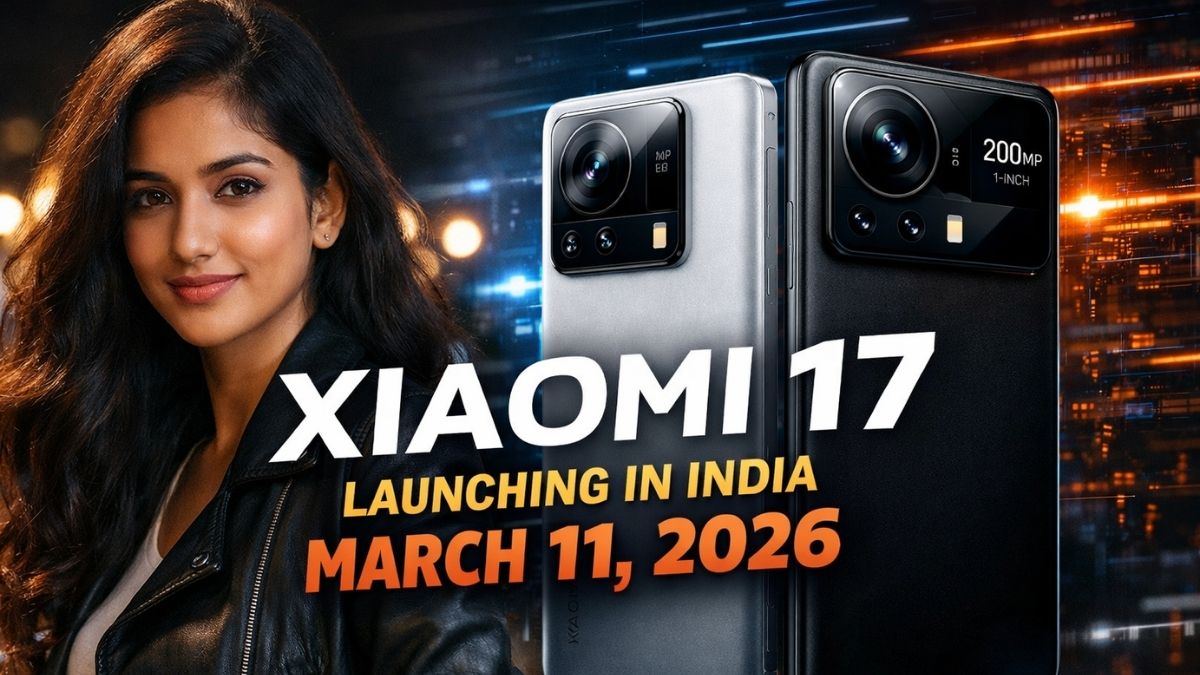

India is about to welcome one of 2026’s most anticipated Android flagships. Xiaomi’s latest model, the Xiaomi 17 series, promises to redefine what a compact premium smartphone can do.
Globally unveiled at MWC 2026 in Barcelona, the series includes both the standard model and the Ultra variant. India will be a day-one market, with the official launch scheduled for March 11, 2026, available via Xiaomi’s official store and Amazon.
For Xiaomi, this launch is more than just a product release — it’s a statement of intent. The company is making a calculated move into the premium segment, targeting consumers accustomed to Samsung and Apple’s high-end offerings. Rising component costs, especially memory chips, have pushed flagship prices higher across the industry. Xiaomi, however, is aiming to maintain competitive pricing while delivering top-tier hardware.
What This Flagship Brings
The standard model is positioned as a compact powerhouse. It blends high-end performance, versatile cameras, and long-lasting battery life into a design that’s surprisingly slim for a flagship.
Key Specifications of the Standard Model
Display: 6.3-inch CrystalRes OLED, LTPO 1–120Hz
Resolution: 2656 × 1220
Peak Brightness: 3,500 nits
Processor: Snapdragon 8 Elite Gen 5 (3nm)
RAM: 12GB / 16GB LPDDR5X
Storage: 256GB / 512GB UFS 4.1
Rear Camera: Triple 50MP Leica-tuned system
Front Camera: 50MP autofocus selfie lens
Battery: 6,330mAh silicon-carbon battery
Charging: 100W wired, 50W wireless
Software: HyperOS 3 based on Android 16
Connectivity: Wi-Fi 7, Bluetooth 5.4, NFC, NavIC
The device sports ultra-thin 1.18mm bezels, making the screen feel edge-to-edge, while Xiaomi Shield Glass enhances durability.
Compact Battery With High Capacity
One standout feature is the 6,330mAh battery. Despite the large capacity, the phone weighs just 191 grams and is only 8.1mm thick. The engineering ensures long-lasting performance without a bulky frame — a combination rare among premium compact phones.
Leica Camera System: Beyond Branding
Xiaomi’s partnership with Leica has matured from co-engineering to true co-creation. On the standard device, the triple-camera setup delivers excellent portrait, street, and landscape shots.
50MP Light Fusion 950 main sensor (OIS)
50MP 60mm floating telephoto lens
50MP ultra-wide lens
The floating telephoto lens adjusts internally for sharper close-range images, offering more accurate portraits than most flagships at this price point.
Ultra Variant: For Creators Who Demand More
The Ultra variant pushes smartphone photography closer to mirrorless quality.
50MP 1-inch Light Fusion 1050L main sensor
200MP telephoto camera with 75–100mm zoom
50MP ultra-wide lens
LOFIC sensor technology for enhanced dynamic range
LOFIC (Lateral Overflow Integration Capacitor) enables the camera to handle complex lighting conditions. In practice, it preserves detail in both bright skies and shadowed areas — ideal for shooting city streets at golden hour, a common challenge in urban Indian photography.
What Makes LOFIC Different?
LOFIC sensors store excess charge during exposure, preventing highlights from blowing out and retaining shadow detail. This enables the Ultra variant to produce high-dynamic-range images in challenging lighting, rivaling dedicated mirrorless setups.
HyperOS 3: AI and Software That Matter
While hardware attracts buyers, software retains them. HyperOS 3 introduces:
HyperCore: performance optimization
HyperConnect: seamless device ecosystem connectivity
HyperAI: on-device artificial intelligence
HyperAI leverages the Snapdragon 8 Elite Gen 5 NPU to run features locally — smart photo editing, AI suggestions, and Gemini AI assistant integration — without sending data to the cloud, enhancing privacy.
The OS also includes cinematic lock screens, improved widgets, and refined search functions. Overall, the experience is cleaner, faster, and less cluttered than previous iterations.
India Launch Details
For the Indian market, Xiaomi will launch only the standard and Ultra models, skipping the Pro variants that include secondary rear displays (China-exclusive).
This decision simplifies the lineup and avoids confusion for consumers, focusing attention on meaningful differentiators like camera performance, battery life, and software experience.
Pricing and Market Implications
Leaked figures suggest a range:
Standard model: ₹75,000–₹1,00,000+
Ultra variant: ₹1,10,000–₹1,40,000
Rising component costs justify part of this increase, but the final pricing will be decisive. Crossing ₹1 lakh for the base model could shift market perception and impact competitiveness against rivals like OnePlus 13, OPPO Find X9, and Vivo X300, which are priced below ₹80,000–₹90,000.
Real-World Scenario: Choosing a Premium Flagship in Mumbai
Imagine a buyer in Mumbai evaluating multiple options:
Battery life: The large 6,330mAh pack is hard to beat.
Camera versatility: Both standard and Ultra models offer Leica-tuned lenses.
Software ecosystem: HyperOS 3 provides a modern, AI-driven experience.
However, Samsung’s Galaxy S26 and Apple’s iPhone continue to hold strong software and update trust. Xiaomi must balance premium pricing with perceived value to succeed in India.
Standard vs Ultra: Feature Comparison
| Feature | Standard Model | Ultra Variant |
|---|---|---|
| Display | 6.3-inch OLED | 6.9-inch HyperRGB OLED |
| Processor | Snapdragon 8 Elite Gen 5 | Snapdragon 8 Elite Gen 5 |
| Main Camera | 50MP Light Fusion 950 | 50MP 1-inch LOFIC sensor |
| Telephoto | 50MP 60mm floating | 200MP continuous zoom |
| Battery | 6,330mAh | 6,000mAh |
| Charging | 100W wired | 90W wired |
| Launch India | March 11, 2026 | March 11, 2026 |
Strategic Importance in India
The Xiaomi 17 series is more than just a device release. It signals Xiaomi’s intent to compete in the high-end smartphone segment. At MWC 2026, the company revealed plans to invest €24 billion in R&D over five years, showing long-term commitment beyond budget phones.
India’s reaction on March 11 will influence how Xiaomi positions itself in the premium space. A standard model priced around ₹75,000–₹85,000 could attract mainstream premium buyers, while prices above ₹1 lakh may push attention toward the upcoming Xiaomi 17T, aimed at the ₹40,000–₹60,000 segment.
Conclusion
Xiaomi has packed high-end performance, Leica-tuned cameras, large batteries, and AI-driven software into the 17 series. The devices check nearly all boxes for a 2026 Android flagship.
Ultimately, India’s response on March 11 will determine whether Xiaomi’s premium ambitions succeed. The launch isn’t just a product release — it’s a litmus test for the brand’s future in the high-end market.
Click to Read More: Xiaomi 17 Pro Max vs Samsung Galaxy S26 Ultra: Ultimate 2026 Flagship Showdown
FAQ
When will the Xiaomi 17 launch in India?
The Xiaomi 17 is officially launching in India on March 11, 2026, with both the standard and Ultra variants available via Xiaomi’s official store and Amazon. Early buyers can expect full online availability on day one.
What are the expected prices of the Xiaomi 17 in India?
The standard Xiaomi 17 could start around ₹75,000–₹85,000, while the Ultra variant may reach ₹1,10,000–₹1,40,000. Exact pricing will be confirmed at the India launch event on March 11, 2026.
What processor powers the Xiaomi 17 series?
Both Xiaomi 17 models are powered by the Snapdragon 8 Elite Gen 5 chipset, built on a 3nm fabrication process, delivering flagship-level performance for Android users in 2026.
How large is the battery on the Xiaomi 17?
The standard Xiaomi 17 features a 6,330mAh silicon-carbon battery with 100W wired and 50W wireless fast charging. The Ultra variant has a slightly smaller 6,000mAh pack but also supports rapid charging.
Does the Xiaomi 17 feature Leica cameras?
Yes. The Xiaomi 17 standard model has a triple 50MP Leica-tuned camera setup, while the Ultra version upgrades to a 1-inch primary sensor and a 200MP telephoto lens with continuous zoom.
Will Xiaomi 17 Pro models be available in India?
No. Only the standard and Ultra Xiaomi 17 models will launch in India. Pro and Pro Max variants with secondary rear displays remain exclusive to the China market.