
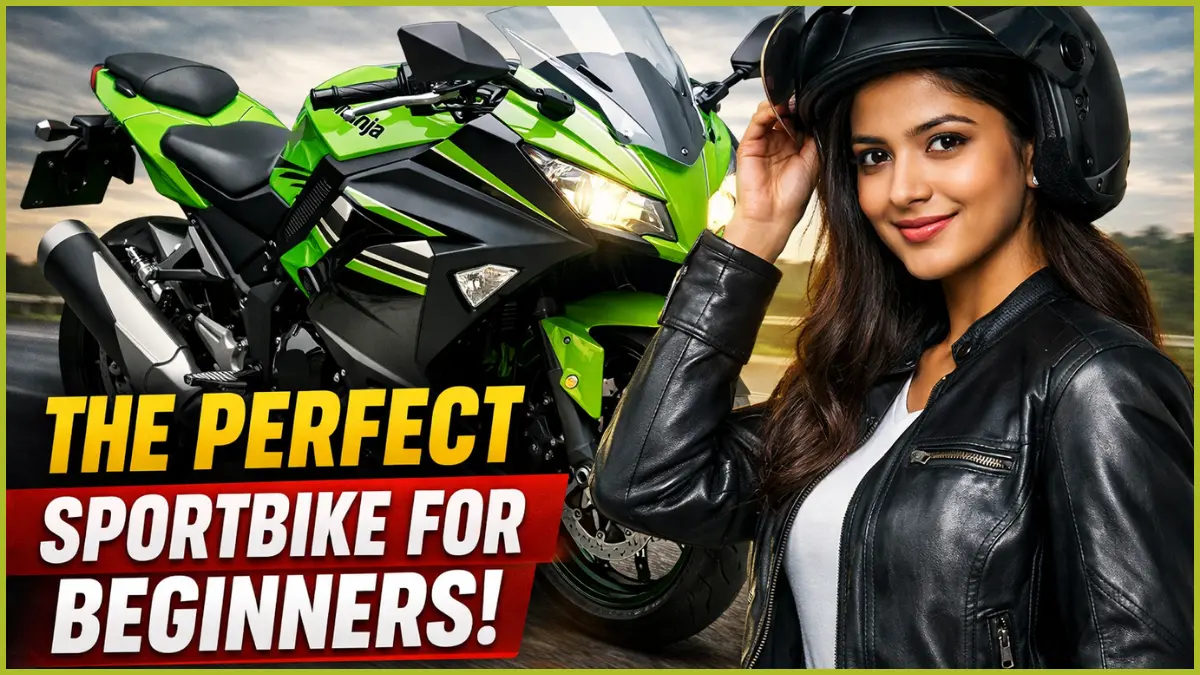

Kawasaki Ninja 300 continues to be one of the most recognizable entry-level sportbikes on Indian roads, and even in 2026 it remains a benchmark for riders stepping into the world of performance motorcycles. Launched as a gateway into Kawasaki’s legendary Ninja family, this 296cc parallel-twin machine delivers a rare mix of approachable power, premium design, and everyday usability.
Priced at around ₹3.17 lakh (ex-showroom), the Ninja 300 is not just another beginner bike. It represents the first true sportbike experience for thousands of riders in India. Even as newer competitors enter the segment, the Ninja 300 retains its reputation thanks to refined engineering, superb balance, and the prestige of the Ninja badge.
In this definitive guide, we break down everything you need to know — performance, features, ride experience, ownership costs, and why this motorcycle still holds strong in today’s competitive market.
- Kawasaki Ninja 300: Engine, Performance and Real-World Power
- Riding Experience: Why the Kawasaki Ninja 300 Is Beginner-Friendly
- Braking and Safety
- Design: Mini Superbike Looks That Still Turn Heads
- Features and Technology
- Kawasaki Ninja 300 Price in India (2026)
- Competitors
- Why This Matters
- Ownership Experience and Reliability
- Who Should Buy the Kawasaki Ninja 300?
- Future of the Ninja 300 in India
- Conclusion
- FAQs
Kawasaki Ninja 300: Engine, Performance and Real-World Power
At the heart of the Kawasaki Ninja 300 lies a 296cc liquid-cooled parallel-twin engine designed to deliver smooth and linear performance rather than intimidating power.
Key Engine Specifications
| Specification | Details |
|---|---|
| Engine | 296cc Parallel Twin |
| Power | 39 PS |
| Torque | 26.1 Nm |
| Gearbox | 6-Speed |
| Cooling | Liquid-Cooled |
| Clutch | Assist & Slipper Clutch |
| Top Speed | ~180 km/h |
The twin-cylinder layout gives the Ninja 300 a major advantage over single-cylinder rivals. Riders experience smoother acceleration, less vibration, and a more exciting high-RPM performance.
Power builds progressively, which makes it ideal for beginners learning throttle control while still delivering enough punch for highway rides.
Riding Experience: Why the Kawasaki Ninja 300 Is Beginner-Friendly
One of the biggest strengths of the Kawasaki Ninja 300 is its balanced riding dynamics.
Ergonomics
Unlike aggressive super sport bikes, the Ninja 300 offers a relaxed yet sporty riding position.
Key highlights:
Comfortable clip-on handlebars
Manageable seat height (~785 mm)
Balanced footpeg placement
Suitable for city and highway rides
This means riders can comfortably commute daily while still enjoying weekend rides.
Handling and Chassis
The lightweight diamond-type steel frame provides excellent stability and predictable handling.
Benefits include:
Quick cornering response
Stable highway performance
Easy maneuvering in city traffic
The suspension setup includes telescopic forks at the front and a preload-adjustable rear mono shock tuned for Indian roads.
Braking and Safety
The Kawasaki Ninja 300 comes equipped with dual-channel ABS as standard.
Braking Setup
| Component | Specification |
|---|---|
| Front Brake | 290mm Disc |
| Rear Brake | 220mm Disc |
| Safety System | Dual Channel ABS |
ABS significantly improves braking stability, especially during emergency stops or wet road conditions.
For beginner riders, this safety feature adds an extra layer of confidence.
Design: Mini Superbike Looks That Still Turn Heads
The Ninja 300 inherits its styling DNA from larger Kawasaki superbikes.
Design highlights include:
Aggressive full fairing
Sharp aerodynamic bodywork
Signature twin headlamp design
Racing-inspired graphics
Despite being an entry-level motorcycle, the Ninja 300 carries the visual presence of a premium sportbike.
Many riders choose it simply because it looks like a scaled-down superbike.
Features and Technology
While the Ninja 300 focuses primarily on performance, it includes several rider-friendly features.
Instrument Cluster
The semi-digital instrument console includes:
Analog tachometer
Digital speedometer
Fuel gauge
Odometer and trip meters
Clock
Though not a modern TFT display, it remains functional and easy to read.
Assist & Slipper Clutch
This feature improves rideability by:
Reducing clutch lever effort
Preventing rear wheel hop during aggressive downshifts
Making gear shifts smoother for beginners
Kawasaki Ninja 300 Price in India (2026)
| Variant | Price |
|---|---|
| Kawasaki Ninja 300 | ₹3.17 lakh (ex-showroom approx.) |
Although competitors sometimes offer more features at similar prices, Kawasaki’s build quality and brand reputation remain major selling points.
Competitors
The Ninja 300 competes with several motorcycles in the entry-level performance segment.
| Bike | Engine | Power |
|---|---|---|
| KTM RC 390 | 373cc | 43 PS |
| Yamaha R3 | 321cc | 42 PS |
| TVS Apache RR310 | 312cc | 34 PS |
While some rivals offer higher power figures, the Ninja 300 is widely considered one of the smoothest and easiest sportbikes to ride.
Why This Matters
The Kawasaki Ninja 300 represents something bigger than just specifications.
It serves as the first real sportbike for thousands of riders entering the performance motorcycle world.
Its importance comes from three factors:
Confidence-building performance
Legendary Ninja branding
Balanced everyday usability
For many riders, this motorcycle is where their passion for sport bikes truly begins.
Ownership Experience and Reliability
Kawasaki motorcycles are known for durability, and the Ninja 300 has built a reputation for reliability over the years.
Long-Term Ownership Pros
Proven twin-cylinder engine
Strong resale value
Solid build quality
Loyal rider community
Maintenance costs can be slightly higher than some Indian brands, but the overall ownership experience remains premium.
Who Should Buy the Kawasaki Ninja 300?
The Kawasaki Ninja 300 suits several types of riders.
Ideal Buyers
Beginner Riders
Easy to control
Forgiving power delivery
Upgrading Riders
Perfect step up from 150cc bikes
Daily Commuters
Comfortable for city rides
Weekend Enthusiasts
Fun on twisty roads and highways
Future of the Ninja 300 in India
Despite being in the market for years, the Ninja 300 continues to sell steadily.
Reasons include:
strong brand recognition
trusted engine platform
iconic Ninja styling
Even as new models enter the segment, the Ninja 300’s legacy keeps it relevant.
Conclusion
The Kawasaki Ninja 300 remains one of the most important motorcycles in the entry-level sportbike category. It delivers smooth twin-cylinder performance, timeless Ninja styling, and beginner-friendly handling in one compelling package.
For riders dreaming of owning their first proper sportbike, few machines offer the same combination of heritage, performance, and usability.
Even in 2026, the Ninja 300 proves that sometimes the classics still lead the race.
Click to Read More: MV Agusta Enduro Veloce MY 2026 Debuts With 931cc Triple and 220 km/h Performance
FAQs
Is Kawasaki Ninja 300 good for beginners?
Yes. Its smooth power delivery, balanced ergonomics, and dual-channel ABS make it one of the best beginner sport bikes.
What is the top speed of Kawasaki Ninja 300?
The Ninja 300 can reach approximately 180 km/h under ideal conditions.
Is Ninja 300 good for long rides?
Yes. Its comfortable riding position and stable chassis make it suitable for highway touring.
What is the mileage of Kawasaki Ninja 300?
Real-world mileage typically ranges between 25–30 km/l depending on riding style.
Does Ninja 300 have slipper clutch?
Yes. It comes with an Assist & Slipper Clutch which improves gear shifts and prevents rear wheel hop.
Is Ninja 300 discontinued in India?
No. Kawasaki continues to sell the Ninja 300 in India with periodic updates and color options.