
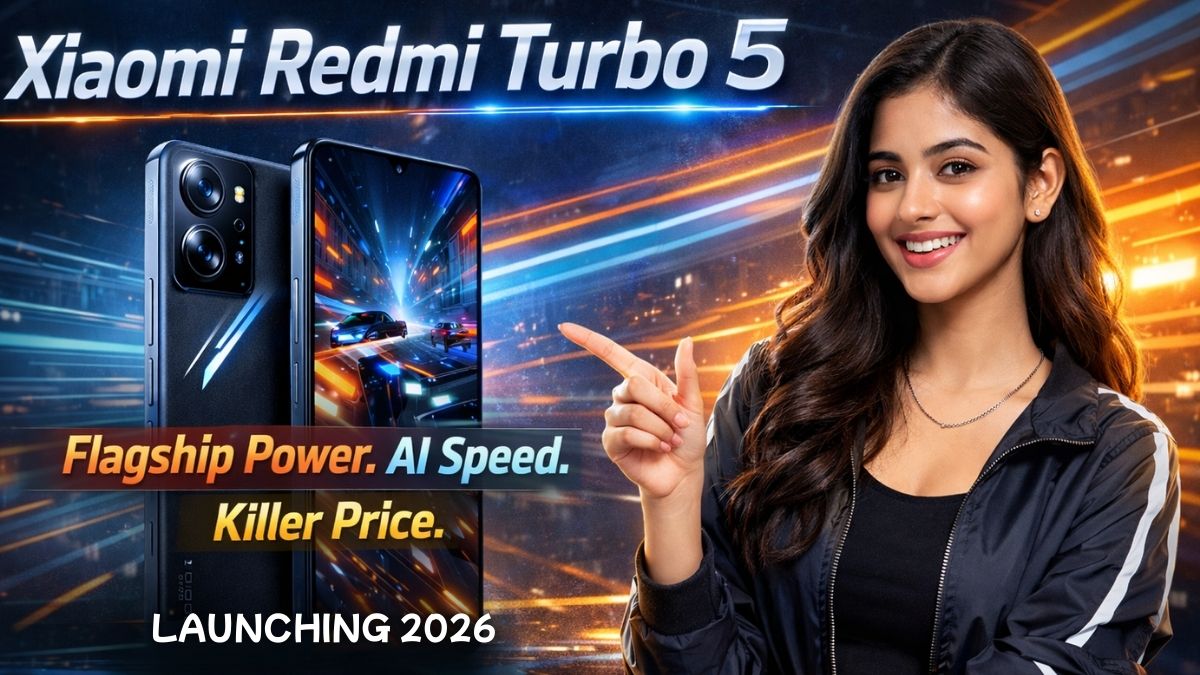

Xiaomi Redmi Turbo 5 is Xiaomi’s latest performance-focused smartphone designed to deliver flagship-grade power at a mid-premium price in 2026. It matters right now because the global smartphone market is shifting toward AI-optimized devices and high-efficiency chipsets, directly impacting gamers, creators, and value-driven buyers seeking top-tier performance without crossing flagship pricing thresholds.
The device arrives at a moment when consumers expect more than raw speed. They want AI acceleration, better thermals, longer battery life, and camera systems that rival premium models. Xiaomi appears to be responding with a device engineered for sustained power rather than just benchmark spikes.
- Market Context: Why Performance Phones Are Back in Focus
- Xiaomi Redmi Turbo 5 Specifications Overview
- Performance Architecture: Built for Sustained Speed
- Display and Gaming Experience
- Camera Strategy: Smart Over Spectacular
- Battery and Charging: Efficiency is the Real Upgrade
- Software: HyperOS and AI Integration
- Why This Matters
- Competitive Positioning
- What Happens Next: Future Impact
- Conclusion
- FAQs
Market Context: Why Performance Phones Are Back in Focus
The mid-range segment has become the most competitive zone in 2026. Brands are compressing flagship performance into lower price brackets due to slower global smartphone replacement cycles and increasing consumer price sensitivity.
With the Turbo lineup, Xiaomi positions itself between its mainstream Redmi Note series and premium Xiaomi-numbered flagships. The Xiaomi Redmi Turbo 5 targets users who prioritize gaming stability, high refresh displays, and AI-backed optimization—without paying ultra-premium prices.
This reflects a broader trend: consumers now compare mid-range devices directly with last year’s flagships.
Xiaomi Redmi Turbo 5 Specifications Overview
| Feature | Expected Specification | Market Relevance (2026) |
|---|---|---|
| Processor | Latest 4nm performance chipset | Flagship-level efficiency |
| Display | 6.67-inch AMOLED, 144Hz | Gaming & smooth UI |
| RAM | Up to 16GB LPDDR5X | Multitasking longevity |
| Storage | UFS 4.0 up to 512GB | Faster app loading |
| Battery | 5000mAh+ | All-day endurance |
| Charging | 90W+ fast charging | Under 30-min top-up |
| OS | HyperOS (Android-based) | AI ecosystem integration |
This configuration signals that Xiaomi is optimizing not just peak power but sustained performance under load—crucial for mobile gaming and long-form content creation.
Performance Architecture: Built for Sustained Speed
The Xiaomi Redmi Turbo 5 focuses heavily on thermal stability. In recent years, consumers have grown wary of phones that throttle under pressure. Xiaomi appears to address this with upgraded vapor chamber cooling and software-level AI resource allocation through HyperOS.
For gamers, this means fewer frame drops. For creators, faster rendering and export times. For everyday users, smoother multitasking across demanding applications.
Direct Answer (Featured Snippet Optimized):
The Xiaomi Redmi Turbo 5 is designed to deliver near-flagship performance at a mid-premium price by combining a 4nm chipset, advanced cooling, high refresh rate display, and AI-powered HyperOS optimization. It targets gamers and power users seeking speed without flagship costs.
Display and Gaming Experience
A 144Hz AMOLED display positions the device squarely in the performance-focused category. In 2026, refresh rate is no longer just about smooth scrolling—it’s about competitive mobile gaming.
Touch sampling improvements and improved GPU optimization suggest Xiaomi is prioritizing frame consistency. Combined with stereo speakers and refined haptic feedback, the Turbo 5 aims to create a full sensory gaming experience.
Direct Answer (Featured Snippet Optimized):
Yes, the Xiaomi Redmi Turbo 5 is suitable for gaming. With a high refresh rate AMOLED display, advanced cooling, and a powerful 4nm processor, it supports stable frame rates and reduced thermal throttling during extended sessions.
Camera Strategy: Smart Over Spectacular
Unlike camera-centric flagships, the Turbo series traditionally emphasizes performance. However, 2026 users expect AI-enhanced photography regardless of segment.
Expect computational photography upgrades, improved night algorithms, and AI scene optimization. Rather than chasing megapixel numbers, Xiaomi appears to be focusing on smarter image processing—aligned with industry trends where software increasingly outperforms hardware upgrades.
Battery and Charging: Efficiency is the Real Upgrade
Battery innovation in 2026 is less about bigger cells and more about smarter energy management.
The Xiaomi Redmi Turbo 5 combines a 5000mAh-class battery with 90W+ charging. More importantly, chipset efficiency improvements mean better real-world endurance even during high-performance usage.
Direct Answer (Featured Snippet Optimized):
The Xiaomi Redmi Turbo 5 is expected to offer over a full day of moderate use thanks to a 5000mAh battery and energy-efficient 4nm processor, with 90W fast charging reducing downtime significantly.
Software: HyperOS and AI Integration
Xiaomi’s ecosystem strategy is evolving. HyperOS is more than a UI layer—it is becoming an AI-driven device coordination system.
On the Turbo 5, AI resource scheduling, gaming boost modes, and cross-device syncing will likely be central selling points. This aligns with a larger 2026 shift: phones are no longer standalone devices but nodes in a connected ecosystem.
Why This Matters
The Xiaomi Redmi Turbo 5 represents a structural shift in smartphone pricing dynamics.
It pressures competitors to justify flagship pricing.
It raises performance expectations in the mid-range tier.
It signals that AI-driven optimization is becoming mainstream rather than premium-exclusive.
For consumers, this means more power per dollar. For competitors, it means thinner margins and higher innovation pressure.
The mid-premium segment is now the battleground that defines brand loyalty.
Competitive Positioning
Compared to typical mid-range devices, the Turbo 5 prioritizes processing power over camera marketing.
Compared to last year’s flagships, it likely offers similar raw speed but at a significantly lower price.
That balance could make it a preferred upgrade path for users who skipped 2024–2025 models.
What Happens Next: Future Impact
Looking ahead to late 2026 and early 2027, devices like the Xiaomi Redmi Turbo 5 could redefine how consumers categorize smartphones.
We may see:
• Flagship chipsets becoming standard in sub-premium tiers
• AI co-processors becoming mandatory for competitive positioning
• Gaming-focused hardware normalization across segments
If Xiaomi maintains aggressive pricing, the Turbo lineup may evolve into a global performance sub-brand, influencing both pricing and feature expectations worldwide.
The real question is not whether this phone performs well—but whether it shifts buyer psychology toward performance-first purchasing decisions.
Conclusion
The Xiaomi Redmi Turbo 5 is not just another incremental upgrade. It reflects a market recalibration where performance, AI efficiency, and pricing strategy intersect.
In 2026, consumers are more informed and less willing to overpay for branding. Devices that deliver measurable value are winning attention.
If Xiaomi executes on thermals, battery efficiency, and sustained performance, the Turbo 5 could become one of the year’s most strategically important launches in the mid-premium segment.
Click to Find More: Xiaomi 17 Pro Max vs Samsung Galaxy S26 Ultra: Ultimate 2026 Flagship Showdown
FAQs
1. What is the Xiaomi Redmi Turbo 5?
The Xiaomi Redmi Turbo 5 is a 2026 performance-focused smartphone offering near-flagship hardware, advanced cooling, and AI-optimized HyperOS at a mid-premium price.
2. Is Xiaomi Redmi Turbo 5 good for gaming?
Yes, it is engineered for gaming with a high refresh rate display, powerful chipset, and improved thermal management.
3. What is the expected price range of Xiaomi Redmi Turbo 5?
While official pricing varies by region, it is positioned below flagship devices but above mainstream mid-range phones.
4. Does Xiaomi Redmi Turbo 5 support fast charging?
Yes, it supports high-wattage fast charging expected to exceed 90W, minimizing charging time.
5. Which users should buy Xiaomi Redmi Turbo 5?
Gamers, multitaskers, creators, and users upgrading from 2–3-year-old flagships will benefit most.
6. Will Xiaomi Redmi Turbo 5 receive long-term updates?
With HyperOS integration, Xiaomi is expected to provide multiple Android and security updates in line with 2026 market standards.




2 thoughts on “Xiaomi Redmi Turbo 5 Brings Flagship Power at a Game-Changing Price 2026”