
- Tesla Latest News: AI Ambitions Shape Its Most Defining Year Yet
- Tesla’s Big Shift: From Electric Cars to AI-Driven Machines
- Financial Reality Check: Profits Slide as EV Growth Slows
- Why Tesla Is Walking Away from Some Iconic Models
- Robotaxis and Cybercab: Tesla’s High-Risk, High-Reward Bet
- Optimus: Tesla’s Most Ambitious Product Yet
- The EV Business Isn’t Dead — But It’s No Longer the Centerpiece
- Investor Sentiment: Divided, Vocal, and Watching Closely
- How This Affects Consumers and the Industry
- What Comes Next in 2026
- Conclusion
- FAQs
Tesla Latest News: AI Ambitions Shape Its Most Defining Year Yet
Tesla is entering 2026 at a turning point few companies ever face. Once celebrated almost exclusively as the world’s most disruptive electric carmaker, Tesla is now reshaping its identity around artificial intelligence, robotics, and autonomous mobility — even as its traditional vehicle business faces slowing demand, shrinking profits, and fierce global competition.
This is not a story of collapse. Nor is it a story of uninterrupted growth. Instead, Tesla’s latest chapter is about reinvention under pressure — a strategic reset that could either redefine the future of transportation or test investor patience like never before.
Here’s what’s happening, why it matters, and what comes next.
Tesla’s Big Shift: From Electric Cars to AI-Driven Machines
Tesla’s leadership has made one thing unmistakably clear: the company no longer wants to be valued purely as an automaker.
Over the past year, Tesla has accelerated its push into artificial intelligence, robotics, and autonomy, redirecting capital, engineering talent, and factory capacity toward products that extend far beyond passenger vehicles. This includes:
Autonomous robotaxis and the Cybercab platform
The Optimus humanoid robot
AI infrastructure to support real-world machine intelligence
Expanded Full Self-Driving (FSD) software deployment
This strategic pivot is unfolding at the same time Tesla’s core EV business is facing its first sustained slowdown.
That contrast defines Tesla’s current moment.
Financial Reality Check: Profits Slide as EV Growth Slows
Tesla’s most recent annual results revealed a sobering milestone: the company posted its weakest annual profit since the pandemic era.
While Tesla remains profitable, the numbers tell a story of tightening margins and slower momentum:
Annual revenue declined year over year for the first time
Net income dropped sharply despite cost-cutting efforts
Global vehicle deliveries fell for a second consecutive year
Several factors contributed to this shift:
Global EV demand softened, particularly in price-sensitive markets
Government incentives expired or were reduced, especially in the U.S.
Competition intensified, led by aggressive pricing from Chinese EV makers
Tesla prioritized margin protection over aggressive volume growth
The result is a company that still dominates headlines — but now must prove its next growth engine.
| Category | Earlier Tesla Focus | Tesla’s Current Direction (2026) | What Comes Next |
|---|---|---|---|
| Core Identity | Electric vehicle manufacturer | AI-driven technology company | Physical AI & robotics leader |
| Main Revenue Source | Vehicle sales | Software, energy, autonomy | Recurring AI & mobility services |
| Key Products | Model S, Model X, Model 3 | Model Y, FSD, Energy Storage | Cybercab, Robotaxis, Optimus |
| Technology Priority | Battery efficiency, range | AI, autonomy, neural networks | General-purpose robotics |
| Manufacturing Focus | Passenger vehicles | Flexible, multi-product factories | Mass robotics production |
| Growth Strategy | Global EV expansion | Platform and ecosystem build | Autonomous & robotic scale-up |
Why Tesla Is Walking Away from Some Iconic Models
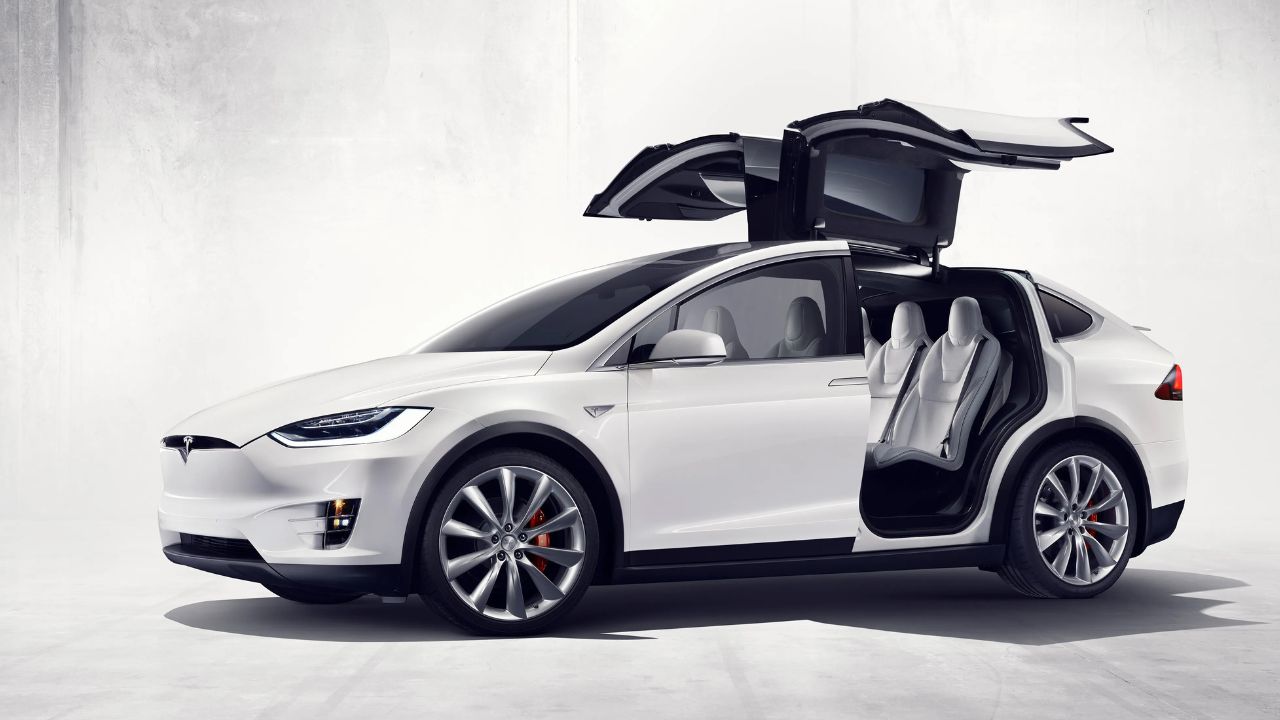
One of the most symbolic developments is Tesla’s decision to wind down production of its long-standing premium vehicles.
Models that once represented Tesla’s innovation leadership are being phased out as the company reallocates manufacturing resources. This move is not about failure — it’s about focus.
Tesla is prioritizing:
Factories optimized for robotics and autonomy
Simplified vehicle platforms
Scalable production for future autonomous fleets
The message is unmistakable: Tesla believes its future value lies less in selling luxury sedans and more in deploying intelligent machines at scale.

Robotaxis and Cybercab: Tesla’s High-Risk, High-Reward Bet
At the center of Tesla’s long-term strategy is autonomous mobility.
The company has reaffirmed plans to begin production of its Cybercab robotaxi platform in 2026, with broader service expansion to follow. Unlike conventional ride-hailing, Tesla’s vision removes human drivers entirely, relying on AI-powered vehicles operating continuously.
If successful, the implications are enormous:
Lower operating costs than traditional ride-sharing
Recurring revenue instead of one-time vehicle sales
A new mobility ecosystem controlled end-to-end
However, challenges remain:
Regulatory approval varies by region
Public trust in fully autonomous systems is still evolving
Technical reliability must scale flawlessly
This is a long game — and investors know it.
Optimus: Tesla’s Most Ambitious Product Yet
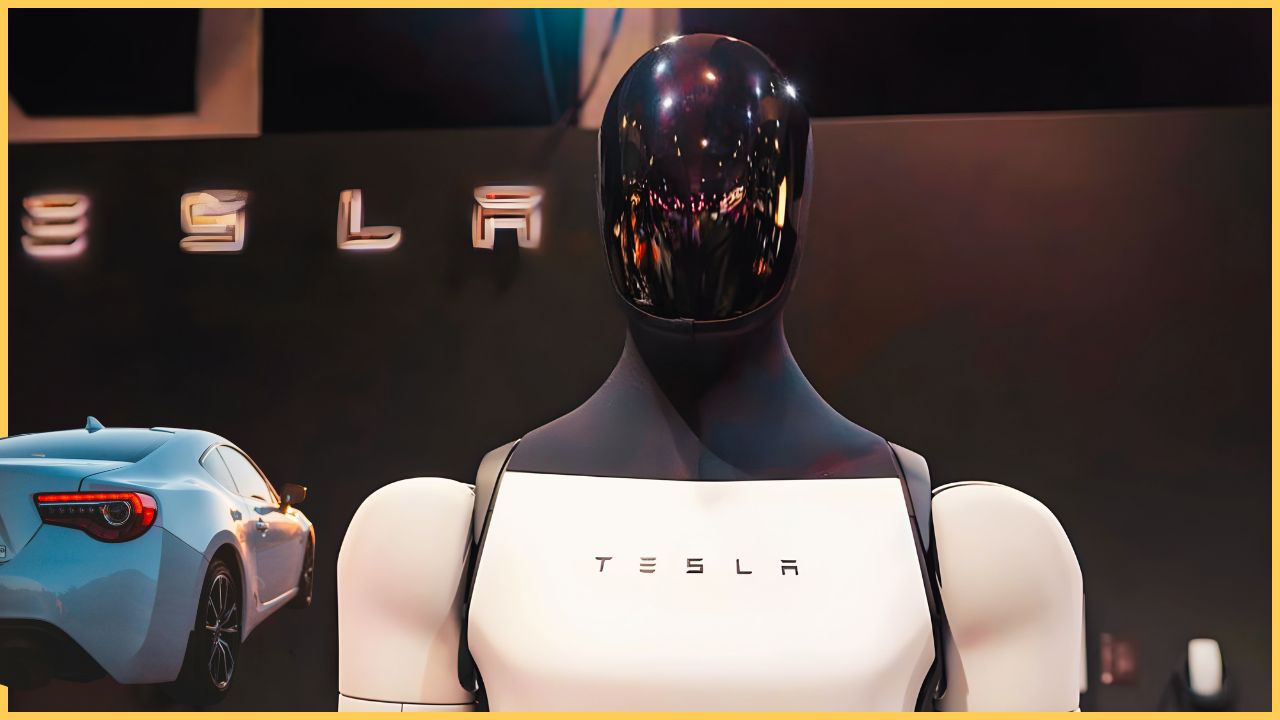
Perhaps the boldest element of Tesla’s transformation is Optimus, its humanoid robot.
Tesla has confirmed that the latest generation of Optimus is nearing production readiness, with internal use cases expanding rapidly inside Tesla’s own factories. The long-term vision is far broader.
Optimus is designed to:
Perform repetitive industrial tasks
Operate in warehouses, factories, and logistics hubs
Eventually enter consumer environments
Tesla believes humanoid robots could become a multi-trillion-dollar market, dwarfing automotive revenue over time. Whether that belief proves accurate will depend on execution, cost control, and real-world usefulness — but the ambition is undeniable.
The EV Business Isn’t Dead — But It’s No Longer the Centerpiece
Despite the strategic shift, Tesla is not abandoning electric vehicles. The company continues to refine its mass-market lineup, improve efficiency, and reduce manufacturing complexity.
Key developments include:
Continued focus on the Model Y as a global volume leader
Gradual improvements to battery cost and range
Expansion of energy storage and grid solutions
Tesla’s energy generation and storage division has quietly become one of its most stable growth segments, providing diversification as vehicle demand fluctuates.
Investor Sentiment: Divided, Vocal, and Watching Closely
Tesla’s stock performance reflects deep uncertainty — and equally deep conviction.
Some investors see the recent slowdown as proof Tesla is maturing into a normal automaker. Others believe the current phase mirrors earlier moments when Tesla invested ahead of revenue.
Supporters argue:
AI, robotics, and autonomy create long-term optionality
Tesla’s vertical integration remains unmatched
Software-driven revenue could reshape margins
Skeptics counter:
Near-term cash flow matters
Competition is eroding Tesla’s pricing power
Execution risk is rising across too many fronts
Both views are grounded in reality — which makes Tesla one of the most closely watched companies in the world.
How This Affects Consumers and the Industry
For everyday buyers, Tesla’s transformation means:
Fewer legacy models, more software-driven features
Greater emphasis on subscriptions and services
Slower rollout of affordable new vehicles
For the broader auto industry, Tesla’s pivot signals something larger: the future of mobility may be defined less by horsepower and more by intelligence.
Traditional automakers are watching closely — not just to compete, but to understand what the next era demands.
What Comes Next in 2026
Several milestones will shape Tesla’s immediate future:
Cybercab production launch and pilot deployments
Expansion of autonomous ride services in select cities
Optimus scaling inside Tesla factories
Further evolution of Full Self-Driving software
Investor clarity on long-term revenue mix
Each of these will influence whether Tesla’s bold strategy pays off — or requires recalibration.
Conclusion
Tesla’s latest news is not about a single product or earnings report. It’s about a company choosing reinvention over stability.
The road ahead will not be smooth. There will be skepticism, volatility, and missteps. But Tesla has never followed conventional paths and its leadership is clearly betting that intelligence, autonomy, and robotics will define the next industrial revolution.
Whether that bet succeeds will determine not just Tesla’s fate, but the future shape of transportation itself.
Read More >>>
FAQs
What is the Tesla Latest News in 2026?
The Tesla Latest News in 2026 highlights a major shift toward artificial intelligence, robotics, and autonomous mobility. According to the Tesla latest news, the company is reducing its reliance on traditional EV growth while focusing on robotaxis, AI software, and humanoid robots as future revenue drivers.
Why is Tesla Latest News focused so much on AI and robots?
Tesla Latest News emphasizes AI and robotics because the company sees these technologies as its long-term growth engines. Recent Tesla latest news confirms that artificial intelligence, Full Self-Driving software, and the Optimus humanoid robot are now central to Tesla’s future strategy.
Is Tesla still profitable according to the latest Tesla news?
Yes, Tesla is still profitable, but Tesla Latest News reports that profits have declined significantly. The latest Tesla news shows that increased competition, slower EV demand, and pricing pressure have reduced margins compared to previous years.
What does Tesla Latest News say about robotaxis and Cybercab?
Tesla Latest News confirms that the company plans to begin production of its Cybercab robotaxi platform in 2026. The latest Tesla news suggests robotaxis will play a key role in Tesla’s shift toward recurring, service-based revenue instead of one-time vehicle sales.
Are vehicle sales declining in the Tesla Latest News updates?
Yes, Tesla Latest News reports that global vehicle deliveries have declined for the second year in a row. According to the latest Tesla news, slower EV adoption and stronger competition have impacted overall sales volumes.
Is Tesla discontinuing any car models based on the latest news?
According to Tesla Latest News, the company is phasing out some older premium vehicle models. The latest Tesla news indicates this move is meant to free up manufacturing capacity for next-generation products like autonomous vehicles and robotics.
What is the Optimus robot mentioned in Tesla Latest News?
Tesla Latest News describes Optimus as a humanoid robot designed to perform repetitive and labor-intensive tasks. The latest Tesla news states that Optimus is expected to be deployed internally first, with broader use cases developing over time.
How does Tesla Latest News affect consumers?
Tesla Latest News suggests consumers will see fewer traditional model launches and more software-focused upgrades. The latest Tesla news also points toward increased use of subscriptions, autonomy features, and AI-powered services.
Is Full Self-Driving still important in Tesla Latest News?
Yes, Full Self-Driving remains a major focus in Tesla Latest News. The latest Tesla news confirms that FSD software is a key component of Tesla’s autonomous and robotaxi ambitions.
What should investors watch next according to Tesla Latest News?
Tesla Latest News advises investors to watch robotaxi production progress, AI development, Optimus robot scaling, and changes in Tesla’s revenue mix. The latest Tesla news suggests 2026 will be a defining year for the company.