
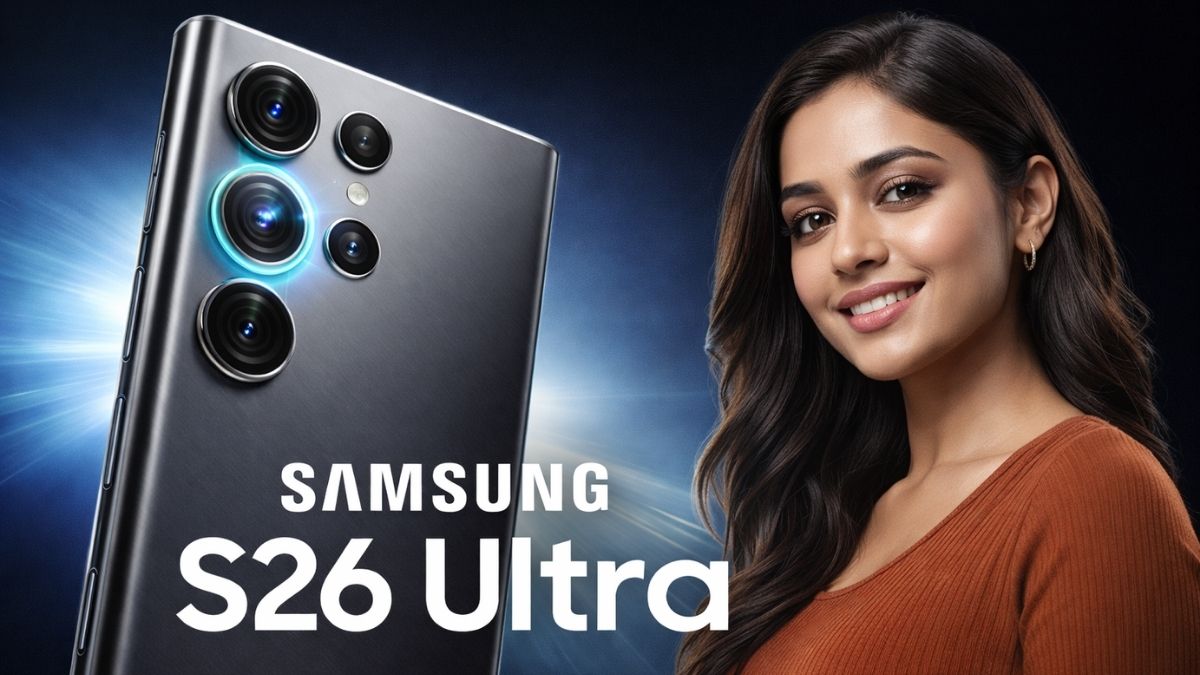

Samsung S26 Ultra is Samsung’s 2026 flagship smartphone, designed to push AI photography, on-device intelligence, and premium performance into a new competitive tier. It matters right now because the global premium smartphone market is tightening, AI features are becoming the primary buying trigger, and power users—from creators to business professionals—are demanding meaningful innovation.
With Apple, Chinese OEMs, and foldable devices reshaping consumer expectations, Samsung’s Ultra series must prove why it still defines the Android high-end. The S26 Ultra isn’t just a spec refresh. It signals where Samsung believes flagship smartphones are headed in 2026.
- Samsung S26 Ultra: What’s New in 2026?
- AI Camera Evolution: Beyond Megapixels
- Performance Shift: Snapdragon vs Exynos Strategy
- Design Refinement, Not Reinvention
- Battery and Charging: A Strategic Upgrade
- Competitive Context: 2026 Flagship Battlefield
- Comparison Snapshot (Flagship 2026)
- Software: One UI 8 and AI Integration
- Why This Matters
- What Happens Next: Future Impact
- Conclusion
- FAQs
- When will Samsung S26 Ultra launch?
- What is the battery capacity of Samsung S26 Ultra?
- Does Samsung S26 Ultra support 144Hz display?
- Will Samsung S26 Ultra use Snapdragon globally?
- Is Samsung S26 Ultra good for photography?
- Will Samsung S26 Ultra support satellite connectivity?
Samsung S26 Ultra: What’s New in 2026?
The Samsung S26 Ultra builds on the foundation laid by the Samsung Galaxy S25 Ultra, but shifts the narrative from hardware dominance to AI-first performance.
Key Highlights at a Glance
| Feature | Samsung S26 Ultra (Expected/2026) |
|---|---|
| Display | 6.8-inch Dynamic AMOLED 2X, 144Hz adaptive |
| Processor | Snapdragon 8 Gen 5 Elite / Exynos 2600 (region-based) |
| AI Engine | On-device generative AI + advanced ISP |
| Camera | 200MP main + periscope zoom refinement |
| Battery | 5,500mAh with faster wired charging |
| Build | Titanium frame 2.0, slimmer bezels |
| Software | One UI 8 based on Android 16 |
| Launch Window | Q1 2026 Global Rollout |
Samsung appears focused on refinement rather than radical redesign—yet the refinements are strategic.
AI Camera Evolution: Beyond Megapixels
The Ultra series has long been associated with megapixel leadership. But in 2026, sensor size and AI processing matter more than resolution alone.
The S26 Ultra reportedly upgrades its 200MP sensor with improved pixel binning and a redesigned periscope zoom system for sharper 10x optical clarity. Low-light capture is expected to see dramatic improvement due to enhanced neural processing integrated directly into the chipset.
Direct Answer (Snippet Optimized)
The Samsung S26 Ultra camera focuses on AI-enhanced image processing rather than just megapixel upgrades. It combines a refined 200MP sensor with advanced on-device AI to improve low-light performance, zoom clarity, and real-time scene optimization.
Samsung is clearly responding to growing competition from brands prioritizing computational photography over raw specs.
Performance Shift: Snapdragon vs Exynos Strategy
In previous years, performance gaps between chip variants sparked debate. For 2026, Samsung is expected to narrow that difference dramatically.
The global model will likely feature Qualcomm’s next flagship chipset, while select regions may receive Samsung’s improved in-house silicon.
Why This Matters
AI workloads are increasing. Real-time language translation, AI photo editing, and on-device summarization tools demand sustained performance—not short bursts.
If Samsung delivers consistent cross-region performance, it restores confidence among global buyers and enterprise users.
Design Refinement, Not Reinvention
Visually, the Samsung S26 Ultra may look familiar. But subtle engineering changes could define the experience:
Flatter titanium edges
Reduced camera module protrusion
Narrower bezels
Improved heat dissipation structure
The aim is clear: preserve brand identity while enhancing daily usability.
In 2026, premium buyers prefer ergonomic improvements over dramatic redesigns that compromise durability.
Battery and Charging: A Strategic Upgrade
Battery expectations are shifting upward across flagship devices.
The S26 Ultra’s rumored 5,500mAh battery suggests Samsung is responding to:
AI-driven power drain
144Hz refresh usage
Higher camera processing loads
Direct Answer (Snippet Optimized)
The Samsung S26 Ultra is expected to feature a larger 5,500mAh battery with improved fast charging support. This upgrade addresses growing power demands from AI features and high refresh rate displays in 2026 flagship smartphones.
Battery life may become one of the Ultra’s strongest selling points if optimization matches capacity.
Competitive Context: 2026 Flagship Battlefield
The S26 Ultra enters a market shaped by:
iPhone 17 Pro Max
Google Pixel 10 Pro
Xiaomi 16 Ultra
Each competitor is investing heavily in AI differentiation.
Samsung’s advantage? Vertical ecosystem control—chips, displays, memory, and software integration under one corporate structure.
If Samsung executes well, the Ultra could remain Android’s benchmark device.
Comparison Snapshot (Flagship 2026)
| Feature | Samsung S26 Ultra | iPhone 17 Pro Max | Pixel 10 Pro |
|---|---|---|---|
| AI Processing | On-device generative AI | iOS-integrated AI suite | Tensor AI-focused |
| Zoom | Advanced periscope | 5x optical | Super Res Zoom |
| Battery | 5,500mAh | ~4,800mAh est. | ~5,000mAh est. |
| Display | 144Hz AMOLED | 120Hz OLED | 120Hz OLED |
Samsung appears to be pushing hardware flexibility plus AI scale.
Software: One UI 8 and AI Integration
One UI 8, built on Android 16, is expected to integrate:
Live AI call transcription
Advanced writing assistance
AI video object removal
Predictive multitasking
Direct Answer (Snippet Optimized)
Samsung S26 Ultra will run One UI 8 based on Android 16, featuring deeper AI integration such as live transcription, enhanced photo editing, and contextual smart suggestions powered by on-device processing.
Samsung is transitioning from feature-based marketing to AI workflow marketing.
Why This Matters
The premium smartphone market is no longer about display size or camera count. It’s about ecosystem intelligence.
Samsung S26 Ultra represents:
AI-first mobile computing
Hardware-software synergy
Premium endurance performance
Long-term Android leadership positioning
For content creators, mobile gamers, business professionals, and tech enthusiasts, this device may define the next productivity cycle.
For investors and industry watchers, it signals Samsung’s response to intensifying Chinese OEM pressure and Apple’s AI strategy.
What Happens Next: Future Impact
Three trends are emerging:
AI processing shifting fully on-device for privacy compliance.
Larger batteries becoming standard for AI-heavy flagships.
Flagship cycles focusing on refinement over radical redesign.
If the S26 Ultra delivers consistent AI speed, improved thermals, and strong battery efficiency, it may influence 2027 design direction across Android OEMs.
Samsung’s real challenge won’t be innovation—it will be differentiation.
Conclusion
Samsung S26 Ultra enters 2026 as a strategic refinement flagship rather than a flashy reinvention. Its success will depend on how convincingly Samsung translates AI capability into real-world utility.
If performance consistency, battery endurance, and computational photography deliver tangible upgrades, this could be one of Samsung’s most important Ultra releases in years.
The flagship war is no longer about specs alone. It’s about intelligent performance.
Click to Find More: Samsung S26 Breakthrough: The AI Flagship Redefining 2026
FAQs
When will Samsung S26 Ultra launch?
Samsung S26 Ultra is expected to launch globally in Q1 2026, following Samsung’s traditional Galaxy Unpacked timeline.
What is the battery capacity of Samsung S26 Ultra?
It is expected to feature a 5,500mAh battery with improved charging speed and AI-based power optimization.
Does Samsung S26 Ultra support 144Hz display?
Reports suggest a 144Hz adaptive Dynamic AMOLED 2X panel for smoother scrolling and gaming.
Will Samsung S26 Ultra use Snapdragon globally?
Most regions are expected to receive Snapdragon 8 Gen 5 Elite, while select markets may get Exynos 2600.
Is Samsung S26 Ultra good for photography?
Yes. The refined 200MP sensor and enhanced AI processing are designed to improve low-light and zoom photography significantly.
Will Samsung S26 Ultra support satellite connectivity?
Satellite messaging support is likely to expand, aligning with industry trends in emergency connectivity.




1 thought on “Samsung S26 Ultra Breakthrough: Massive AI Camera Upgrade & 2026 Flagship Power Unleashed”