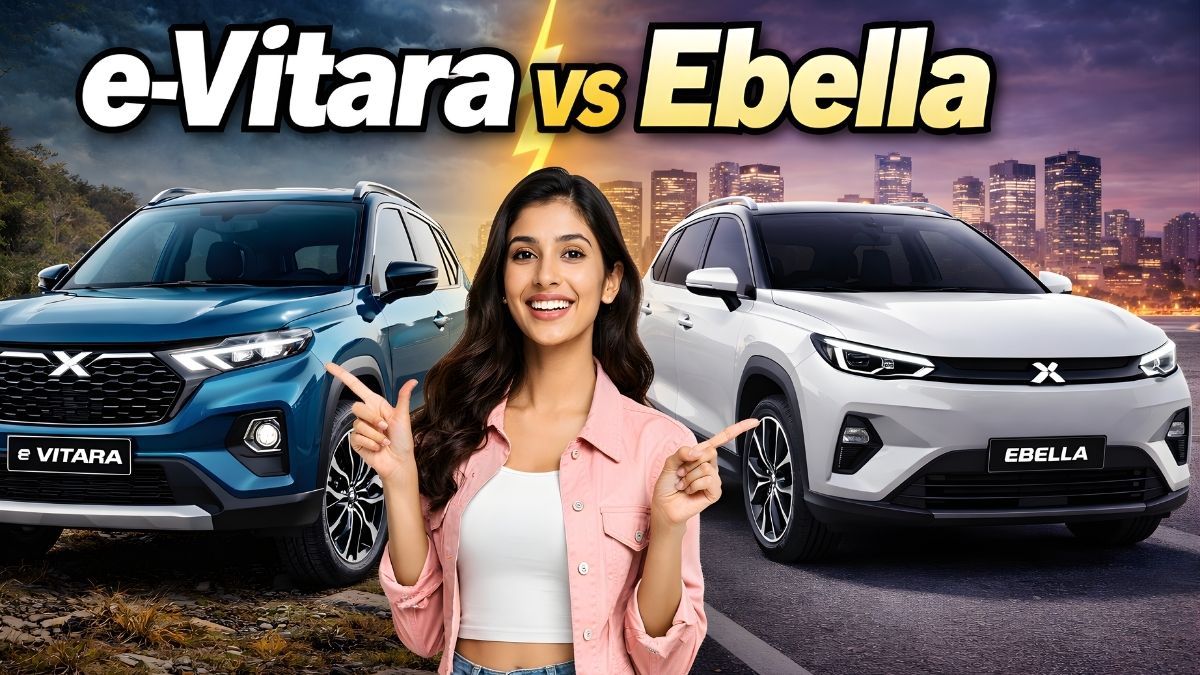

The electric SUV revolution is no longer about range alone — it’s about identity. And e-Vitara vs Ebella perfectly captures this new era of platform-sharing brilliance and visual differentiation.
At first glance, these two electric SUVs seem like close relatives. Look closer, however, and you’ll discover a carefully engineered split personality. While they share their side profile and rear architecture, their front-end design tells two completely different stories.
This is not accidental. It’s strategic. In a fiercely competitive EV market — especially in India where compact electric SUVs are gaining serious traction — manufacturers are using design as a psychological tool. The e-Vitara leans rugged and adventurous. The Ebella leans sleek and urban.
So what’s really happening here? And why does it matter more than ever in 2026?
Let’s break it down.
- e-Vitara vs Ebella: Where the Design Diverges Most
- A Shared Silhouette: One Platform, Two Identities
- Rear Design: Brand Consistency Wins
- Quick Comparison Table
- Why Manufacturers Are Doing This
- Snippet-Optimized Answer: What Is the Main Difference Between e-Vitara and Ebella?
- Do e-Vitara and Ebella Share the Same Platform?
- Emotional Positioning: It’s About Identity
- Why This Matters in 2026
- Future Outlook: Will This Strategy Continue?
- Conclusion
- FAQs
e-Vitara vs Ebella: Where the Design Diverges Most
The biggest visual difference between the two SUVs lies at the front fascia — and it dramatically changes their perceived personality.
e-Vitara: Rugged Confidence
The e-Vitara announces itself boldly. Its defining feature? The striking Y-shaped LED DRLs that create an aggressive and modern light signature.
Key front-end highlights:
Prominent Y-shaped DRLs
Pronounced bumper cladding
Dedicated fog lights
Textured lower skid-style detailing
This design language suggests durability, adventure, and readiness for diverse road conditions — a strong appeal in India’s varied terrain, from urban chaos to semi-rural highways.
The fog lights reinforce utility. The cladding adds toughness. Every angle suggests capability.
This isn’t just aesthetic — it’s emotional positioning.
Ebella: Urban Elegance
The Ebella takes the opposite route. Instead of sharp aggression, it delivers minimalism and sophistication.
Front-end differences include:
Segmented, horizontal DRLs
Cleaner bumper design
No prominent fog lights
Smooth, integrated surfacing
The absence of heavy cladding makes the front look wider and more premium. It feels city-oriented, lifestyle-focused, and aspirational.
Where the e-Vitara says “weekend escape,” the Ebella says “weekday elegance.”
A Shared Silhouette: One Platform, Two Identities
Step to the side — and the similarities become obvious.
Both SUVs share:
Identical roofline and window area
Same aero-optimized alloy wheel design
C-pillar-mounted rear door handles
Door and wheel-arch cladding
Similar shoulder line
This shared silhouette points to a common modular EV platform — a strategy now widely adopted globally to reduce costs while expanding product portfolios.
From a manufacturing standpoint, it’s efficient.
From a branding standpoint, it’s smart segmentation.
Rear Design: Brand Consistency Wins
At the back, differences are subtle.
Expect:
Similar LED tail lamp clusters
Identical tailgate geometry
Comparable bumper structure
Minimal trim or badging variations
This unified rear profile reinforces family resemblance while allowing cost savings in tooling and production.
The real battle for personality is fought at the front.
Quick Comparison Table
| Design Element | e-Vitara | Ebella |
|---|---|---|
| DRL Signature | Y-shaped, bold | Segmented, minimalist |
| Fog Lights | Yes | No |
| Bumper Style | Rugged, cladded | Smooth, integrated |
| Personality | Adventurous | Urban Sophisticated |
| Target Buyer | Explorer mindset | Lifestyle-focused commuter |
Why Manufacturers Are Doing This
Platform sharing in the EV era isn’t new — but visual differentiation is becoming more aggressive.
Why?
Because:
EV architecture is expensive
Battery R&D costs are high
Speed-to-market matters
Consumers demand emotional differentiation
Instead of engineering two completely different vehicles, automakers design one core product and tailor its personality through styling.
This approach:
Reduces development costs
Speeds up launches
Expands brand reach
Captures multiple demographics
In markets like India — where SUV buyers range from first-time EV adopters to premium lifestyle buyers — this strategy maximizes coverage without duplicating engineering.
Snippet-Optimized Answer: What Is the Main Difference Between e-Vitara and Ebella?
The primary difference between the e-Vitara and Ebella lies in their front fascia design. The e-Vitara features bold Y-shaped DRLs, rugged bumper cladding, and fog lights, giving it an adventurous look. The Ebella uses segmented DRLs and a smoother bumper design, emphasizing urban sophistication.
Do e-Vitara and Ebella Share the Same Platform?
Yes. The e-Vitara and Ebella share the same underlying EV platform, including side profile, wheel design, and rear structure. Their key differentiation comes from front-end styling and market positioning.
Emotional Positioning: It’s About Identity
Car design today is less about metal — and more about mindset.
When a buyer stands in a showroom, they aren’t just choosing horsepower or range. They’re choosing how the vehicle represents them.
The e-Vitara projects resilience and adventure.
The Ebella projects refinement and modernity.
Both may offer similar battery range and cabin layout — but emotionally, they live in different worlds.
Why This Matters in 2026
The EV market in India is entering Phase 2.
Phase 1 was about early adopters and government incentives.
Phase 2 is about brand identity, lifestyle alignment, and emotional appeal.
Consumers are now asking:
Does this EV reflect who I am?
Does it stand out in my neighborhood?
Does it align with my personality?
By creating two faces for one platform, manufacturers can:
Capture urban professionals
Appeal to family buyers
Target aspirational youth
Reduce internal product cannibalization
It’s not just smart design. It’s strategic market psychology.
Future Outlook: Will This Strategy Continue?
Absolutely.
Expect future EV lineups to:
Share core battery and chassis architecture
Offer drastically different front fascia treatments
Introduce customizable lighting signatures
Use AI-driven personalization themes
Front-end identity will become even more critical as grilles disappear in EVs.
Lighting will become branding.
And consumers will choose faces — not just features.
Conclusion
The story of e-Vitara vs Ebella isn’t about competition.
It’s about transformation.
Two vehicles.
One platform.
Two completely different emotional outcomes.
The e-Vitara appeals to the explorer within.
The Ebella attracts the urban minimalist.
In the evolving electric SUV era, design is no longer just styling — it’s segmentation strategy.
And this approach is only just beginning.
Click to Find More: Hyundai Exter Facelift Spied: 2026 Launch Confirmed With Bold Design, Bigger Screen & Premium Upgrades
FAQs
Q1: What is the main difference in e-Vitara vs Ebella?
A: The main difference in e-Vitara vs Ebella lies in the front fascia design. The e-Vitara features bold Y-shaped DRLs, rugged bumper cladding, and fog lights, while the Ebella adopts segmented DRLs and a smoother, urban-focused bumper styling.
Q2: Which SUV looks more premium in e-Vitara vs Ebella comparison?
A: In the e-Vitara vs Ebella comparison, the Ebella appears more premium due to its cleaner bumper design and minimalist DRL signature, whereas the e-Vitara projects a rugged and adventurous personality.
Q3: Do e-Vitara vs Ebella share the same platform?
A: Yes, e-Vitara vs Ebella share the same EV platform, including identical side profile, wheel design, and rear structure, with differentiation focused mainly on the front-end styling.
Q4: Is e-Vitara vs Ebella different in rear design?
A: In e-Vitara vs Ebella, the rear design remains largely similar, with comparable tail lamps, tailgate structure, and bumper layout, maintaining brand consistency.
Q5: Which is better for city driving in e-Vitara vs Ebella?
A: Between e-Vitara vs Ebella, the Ebella may feel more suited for urban buyers due to its refined styling, while the e-Vitara appeals to drivers who prefer a bold SUV stance.
Q6: Why is the front fascia important in e-Vitara vs Ebella?
A: The front fascia defines brand identity in e-Vitara vs Ebella, as it creates two distinct personalities from a shared platform, helping the manufacturer target different buyer segments.
Q7: Does e-Vitara vs Ebella impact pricing strategy?
A: While both share core engineering, e-Vitara vs Ebella allows differentiated positioning, which can influence variant pricing based on design appeal and target audience.
Q8: Is e-Vitara vs Ebella a common strategy in EV design?
A: Yes, e-Vitara vs Ebella reflects a growing EV strategy where manufacturers use shared platforms but distinct front designs to maximize market coverage efficiently.