
Top EVs Driving India’s Sustainable Future are no longer just a vision—they are already reshaping how Indians commute, save money, and think about mobility in 2026. With petrol prices staying unpredictable and cities battling pollution, electric vehicles (EVs) are becoming the smart, future-ready choice for millions.
India’s EV market has moved beyond early adoption. Today, buyers are comparing range, features, and long-term savings just like they would with petrol cars. From budget-friendly city EVs to feature-loaded electric SUVs, the options are expanding fast—and so is the ecosystem supporting them.
In this guide, we break down the top electric cars in India, upcoming launches, real-world benefits, and what the future holds.
- India’s EV Boom in 2026: What’s Driving It?
- Top EVs Driving India’s Sustainable Future (Best Models in 2026)
- Upcoming Electric Cars in India (2026–2027)
- Why This Matters
- Real Benefits of EV Ownership (Beyond Fuel Savings)
- Challenges (And What’s Improving)
- Future of EVs in India: What to Expect
- Conclusion
- FAQs
- 1. Are Top EVs Driving India’s Sustainable Future cheaper to run than petrol cars?
- 2. How long do the batteries last in Top EVs Driving India’s Sustainable Future?
- 3. Is the charging infrastructure sufficient for Top EVs Driving India’s Sustainable Future in India?
- 4. Which are the best Top EVs Driving India’s Sustainable Future under ₹15 lakh?
- 5. Can Top EVs Driving India’s Sustainable Future handle long-distance journeys?
- 6. Are Top EVs Driving India’s Sustainable Future safe to drive?
- 7. What makes Top EVs Driving India’s Sustainable Future appealing to Indian buyers?
India’s EV Boom in 2026: What’s Driving It?
India’s electric revolution is not accidental—it’s a mix of economics, policy, and evolving consumer mindset.
Quick Answer:
EV running cost: ₹1–₹1.5/km vs ₹6–₹10/km (petrol)
Maintenance cost: Up to 40% lower
Government subsidies: Available under FAME and state policies
Why EV adoption is accelerating:
Rising fuel prices
Strong government incentives
Expanding charging network
Better battery range (300–500 km now common)
Top EVs Driving India’s Sustainable Future (Best Models in 2026)
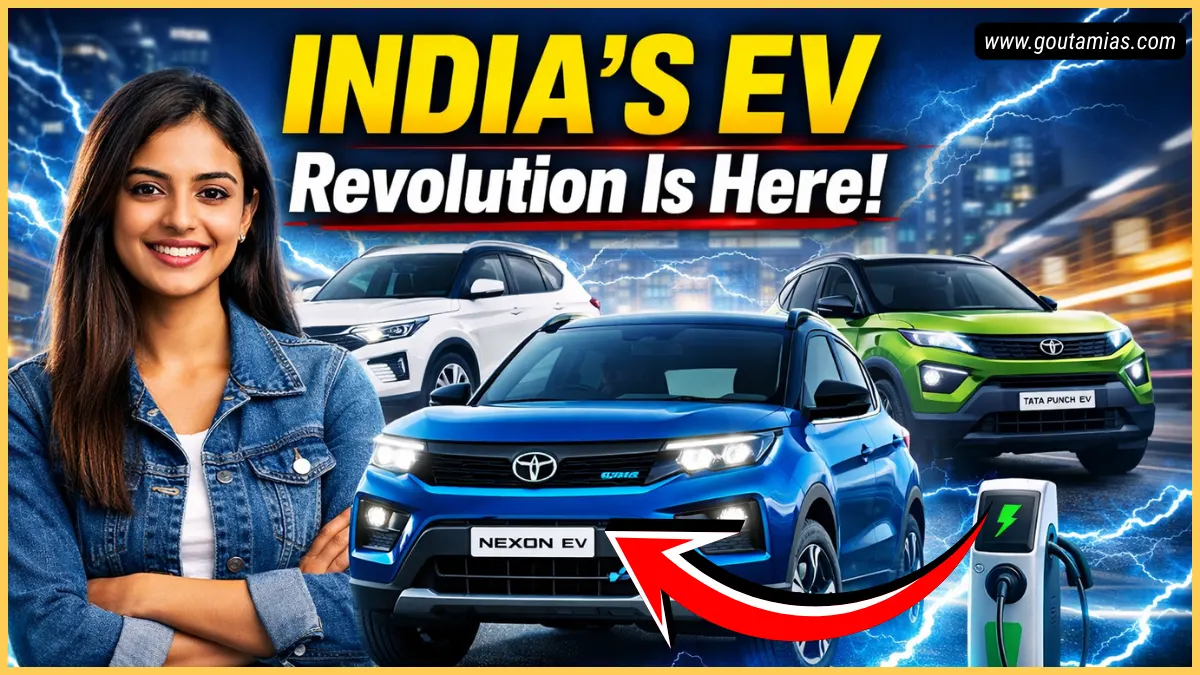
1. Tata Nexon EV (Still the Benchmark)
India’s best-selling electric SUV continues to dominate.
Why it stands out:
Real-world range: 300–450 km
Fast charging support
Strong service network
Best for: Families + long-distance occasional travel
2. Tata Punch EV (Mass Market Game-Changer)
Affordable, compact, and practical—this is where EV adoption is exploding.
Key highlights:
Budget-friendly pricing
Ideal for city driving
Modern infotainment & safety
Best for: First-time EV buyers
3. MG ZS EV (Premium Experience)
A feature-loaded SUV for buyers upgrading to electric.
Top features:
ADAS safety tech
Premium interior
Smooth driving experience
Best for: Tech-savvy urban users
4. Mahindra XUV400 (Performance + Space)
Mahindra’s serious push into EVs.
Why consider it:
Strong acceleration
Spacious cabin
Competitive pricing
5. Citroën eC3 (Budget Urban EV)
Simple, practical, and affordable.
Best for:
Daily commuting
Short city drives
Quick Comparison Table
| Model | Range (km) | Segment | Best Use Case |
|---|---|---|---|
| Tata Nexon EV | 300–450 | Compact SUV | Family + highway |
| Tata Punch EV | 250–350 | Micro SUV | City driving |
| MG ZS EV | 400+ | Premium SUV | Comfort + tech |
| XUV400 | 350–400 | SUV | Performance + space |
| Citroën eC3 | 200–300 | Hatchback | Budget commuting |
Upcoming Electric Cars in India (2026–2027)
The next wave of EVs will push innovation further.
Hyundai Creta Electric
Built on a trusted brand
Expected strong demand
Likely to dominate mid-segment EV market
Mahindra BE.06 (Born Electric Series)
Futuristic design
High-performance EV platform
Premium positioning
MG Windsor EV
Expected feature-packed offering
Likely aggressive pricing strategy
Why This Matters
India’s EV shift isn’t just about cars—it’s about the country’s future.
Reduces oil imports → strengthens economy
Improves air quality in major cities
Creates new jobs in battery & EV tech sectors
Positions India as a global EV manufacturing hub
Real Benefits of EV Ownership (Beyond Fuel Savings)
1. Massive Cost Savings
Electric cars can save ₹50,000–₹1 lakh annually on fuel alone.
2. Lower Maintenance
No engine oil, fewer moving parts = fewer breakdowns.
3. Silent & Smooth Driving
Near-zero noise and instant torque make EVs more enjoyable.
4. Tech-First Experience
OTA updates
Smart dashboards
Connected apps
Challenges (And What’s Improving)
Charging Infrastructure
Still growing in Tier 2/3 cities
Rapid highway expansion underway
High Initial Cost
Gradually reducing with local manufacturing
Range Anxiety
Now mostly solved with 300+ km range EVs
Future of EVs in India: What to Expect
Battery prices will drop further
500+ km range EVs will become common
Charging stations will be as common as petrol pumps
EV resale market will stabilize
India is expected to become one of the top 3 EV markets globally by 2030.
Conclusion
Top EVs Driving India’s Sustainable Future are not just transforming transportation—they’re redefining affordability, technology, and sustainability in India. With strong government support, rapid innovation, and increasing consumer trust, electric vehicles are clearly the future.
If you’re planning your next car purchase in 2026, going electric is no longer a risky decision—it’s the smartest one.
Click to Read More: 2026 Hyundai Verna Facelift Launch: Rs 10.98 Lakh Sedan Gets Bold New Design, Colours and Tech
FAQs
1. Are Top EVs Driving India’s Sustainable Future cheaper to run than petrol cars?
Yes, Top EVs Driving India’s Sustainable Future like Tata Nexon EV and Tata Punch EV cost up to 70–80% less per km compared to petrol vehicles, making them highly economical for daily commuting.
2. How long do the batteries last in Top EVs Driving India’s Sustainable Future?
Most Top EVs Driving India’s Sustainable Future come with batteries lasting 8–10 years or 1.5–2 lakh km, and manufacturers provide long warranties for peace of mind.
3. Is the charging infrastructure sufficient for Top EVs Driving India’s Sustainable Future in India?
The charging network for Top EVs Driving India’s Sustainable Future is rapidly improving, especially in metro areas and along major highways, making long-distance travel increasingly convenient.
4. Which are the best Top EVs Driving India’s Sustainable Future under ₹15 lakh?
The best choices among Top EVs Driving India’s Sustainable Future under ₹15 lakh are Tata Punch EV and Tata Nexon EV, offering excellent range, features, and affordability.
5. Can Top EVs Driving India’s Sustainable Future handle long-distance journeys?
Yes, many Top EVs Driving India’s Sustainable Future now offer ranges above 300 km, and with the growing fast-charging network, longer trips are becoming hassle-free.
6. Are Top EVs Driving India’s Sustainable Future safe to drive?
Absolutely. Modern Top EVs Driving India’s Sustainable Future come equipped with high safety ratings, advanced driver-assistance systems (ADAS), and reinforced EV-specific structures.
7. What makes Top EVs Driving India’s Sustainable Future appealing to Indian buyers?
Top EVs Driving India’s Sustainable Future appeal due to lower running costs, eco-friendly operation, modern features, and strong government incentives, creating a compelling reason to switch from petrol cars.