
Introduction
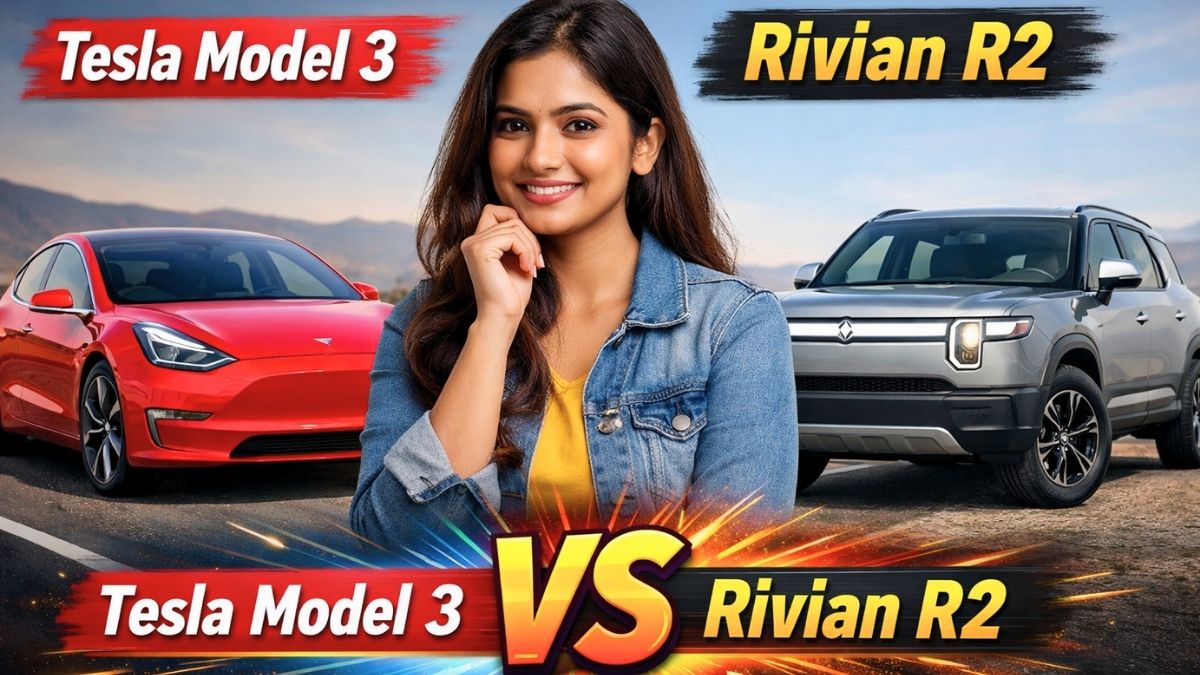
If you’re shopping in March 2026, the Tesla Model 3 vs Rivian R2 decision is one of the most interesting EV cross-shops in the USA right now—because it’s not just sedan vs SUV, it’s two totally different ownership styles.
Here’s the surprising part: for many Americans, the “better EV” won’t be the one with the longer range on paper—it’ll be the one that fits your charging reality, your daily cargo needs, and how often you actually road-trip.
We’ll break down what matters most: real-world usability, performance, charging, software, safety tech, and how to get the best deal without overpaying.
Quick Highlights (comparison table)
Before the deep dive, this quick table shows the buying-facing differences most shoppers care about: body style, charging ecosystem, practicality, and overall value in the USA.
Note: specs and pricing can vary by trim, options, and incentives in your state, so treat these as a smart baseline for shopping in 2026.
| Category | Tesla Model 3 (2026) | Rivian R2 (2026) |
|---|---|---|
| Vehicle type | Compact sedan | Compact SUV |
| Best for | Commute + road trips + charging convenience | Families, cargo, higher seating, outdoor lifestyle |
| Charging advantage | Supercharger access + mature route planning | NACS compatibility expected, but network experience depends on region |
| Driving feel | Low, efficient, sharp handling | Upright, comfortable, SUV visibility |
| Cabin vibe | Minimalist, screen-first | More rugged-premium, practical storage focus |
| Efficiency | Typically higher due to sedan shape | Typically lower due to SUV shape/weight |
| Value play | Often the best deal if incentives apply | Strong if priced aggressively vs small SUVs |
Section 1
This section focuses on the everyday stuff that becomes “the real spec sheet” after the first month: interior comfort, cargo, tech, and how each EV fits your routine.
If you’re also comparing other transportation tech, our Auto Vehicle news and comparisons hub tracks the latest EV updates and buying guides.
Interior comfort, space, and cargo practicality
Tesla Model 3 is still the efficiency champ in this matchup because it’s a sedan: lower roofline, smaller frontal area, and a lighter feel. For solo drivers, couples, and city commuters, it’s easy to park, easy to place on the road, and typically cheaper to run.
But the Rivian R2’s core advantage is simple: it’s an SUV. That means easier entry, a higher driving position, and a cargo area that better matches American life—groceries, strollers, pets, sports gear, and weekend trips without playing trunk Tetris.
If you routinely carry bulky items (or you’re just tired of crouching into a sedan), the R2’s body style can be worth paying more per mile in energy costs. The Model 3 can be practical, but it’s practical in a “clean commute” way, not a “Costco run plus camping gear” way.
Another real-world difference is rear-seat comfort. The Model 3 back seat is fine for adults, but the seating position can feel low on longer rides. Compact SUVs like the R2 often win here with better knee/foot space geometry and easier child seat loading.
Tech, software updates, and daily usability
Model 3’s biggest “tech moat” is still how integrated the experience feels: navigation, charging stops, battery preconditioning, and a UI that most owners learn quickly. Over-the-air updates frequently improve features, efficiency, and small quality-of-life items.
Rivian’s software reputation has grown fast, especially around outdoor-friendly features and vehicle personalization. The question for 2026 shoppers is consistency: Tesla’s system is mature and predictable; Rivian’s is improving quickly but may vary more by region, service capacity, and early-model refinement.
Both brands are screen-centric, but Tesla leans hard into minimalism. If you like a “phone-like” interface and don’t mind learning Tesla’s way of doing things, Model 3 feels clean and fast. If you want an SUV with more practical storage thinking and a different design vibe, R2 may feel more natural day one.
If you care about broader consumer tech ecosystems—phones, wearables, and in-car connectivity—keep an eye on our Science & Technology coverage for updates on EV software, AI features, and charging standards.
Section 2
Now let’s talk about what separates happy EV owners from frustrated ones: charging, road-trip speed, driver assist trust, and cost of ownership in the USA.
This is also where the Tesla Model 3 vs Rivian R2 choice becomes less about specs and more about the infrastructure you’ll actually use every week.
Charging, road trips, and the “time tax” factor
Tesla’s biggest advantage remains the road-trip experience. Supercharger coverage, reliability, and tight integration with route planning reduce “charging anxiety” because the car does a lot of thinking for you—where to stop, how long to charge, and when to precondition the battery for faster speeds.
Rivian is expected to play in a world where NACS (Tesla-style plug) is the mainstream standard in the USA. That’s good news, but the ownership experience still depends on how smooth the handoff is: plug-and-charge behavior, station uptime, and whether your typical routes have consistent high-speed options.
Here’s the practical way to think about it: if you live in an apartment, rely on public fast charging, or take frequent interstate trips, the Model 3 often saves real hours over a month. If you mostly charge at home and road-trip occasionally, the R2’s charging differences may matter far less than its space advantages.
For buyers building a full electric lifestyle—EV plus smaller mobility options—our electric scooter guides can help if you’re planning last-mile commuting while your car charges.
Performance, safety tech, and long-term ownership costs
Model 3 is known for quick acceleration and a planted feel thanks to its low center of gravity. Even non-performance trims tend to feel responsive, and the sedan format rewards you with better efficiency at highway speeds compared to most SUVs.
Rivian R2 is expected to deliver strong torque and confident traction, especially if you choose an AWD setup. The SUV stance typically favors comfort and visibility over razor-sharp handling, which is what many American drivers prefer for daily traffic and family duty.
On driver assist, Tesla’s suite is widely used and constantly updated, but it still requires attentive driving. Rivian’s driver assistance has improved with updates too, and many shoppers will judge it based on how “calm” it feels in real traffic rather than how many features it lists.
Cost-wise, Model 3 often wins on energy use (miles per kWh) and tire costs can be lower depending on wheel choice. R2 may cost a bit more to feed with electricity and may run wider tires, but it can save you money elsewhere if it replaces the need for a second vehicle for hauling and weekend gear.
If you’re also researching two-wheel options to cut commuting costs, our bike buying guides are useful alongside EV ownership planning.
Pros and Cons
These quick lists are designed for buyers who want the punchline without losing the nuance. If a “con” doesn’t apply to your lifestyle, it shouldn’t block the purchase.
Focus on what you do most: commute, road trips, family hauling, or outdoor weekends.
Tesla Model 3 (2026) Pros
- Charging convenience: Supercharger access and excellent route planning in the USA
- Efficiency: Sedan aerodynamics usually mean more miles per kWh
- Value: Often a best deal when incentives and inventory discounts stack
- Performance feel: Quick response and stable handling
- Software maturity: Frequent OTA updates and refined navigation
Tesla Model 3 (2026) Cons
- Lower seating position: Not ideal if you want SUV visibility
- Cargo flexibility: Great for a sedan, but still a sedan
- Minimalist controls: Screen-first layout isn’t everyone’s favorite
Rivian R2 (2026) Pros
- Compact SUV practicality: Better for families, pets, and bulky cargo
- Ride height: Easier entry/exit and commanding view in traffic
- Adventure-ready vibe: Brand DNA built around outdoor use
- Strong performance potential: AWD traction and EV torque for all-weather confidence
Rivian R2 (2026) Cons
- Road-trip predictability: Depends more on your local fast-charging reliability
- Efficiency: SUVs typically use more energy than sedans
- Newer model uncertainty: Early production years can bring small quirks
USA Pricing and Where to Buy
Pricing is the make-or-break factor for a lot of 2026 shoppers, especially with interest rates, insurance premiums, and incentive rules changing by state. Always price your EV as a monthly ownership package: payment, insurance, charging, and tires.
Below are realistic shopping expectations in the USA—final numbers depend on trim, wheels, performance upgrades, and eligibility for federal/state incentives.
Expected pricing in the USA (USD)
Tesla Model 3: Many buyers will see pricing commonly in the mid-$30,000s to mid-$40,000s depending on trim and promotions. Inventory discounts can shift the “best deal” week to week.
Rivian R2: Rivian has positioned R2 as a more attainable SUV, and shoppers should expect competitive pricing that often lands in the low-to-mid $40,000s or higher depending on configuration and demand.
Where to buy in USA and how to get the best deal
Model 3: Most Americans buy directly through Tesla’s online ordering system. The smartest play is to watch inventory pricing and local delivery fees; sometimes a nearby inventory car is the best deal compared to building your own.
Rivian R2: Expect an online-first ordering flow, with availability tied to production ramp and delivery regions. If you want a specific configuration, getting in early may matter more than haggling.
If you’re shopping accessories, chargers, and cleaning kits, some popular items are available on Amazon—but for the car itself, stick to the manufacturer purchase path to avoid sketchy listings and title issues.
Before you sign, compare insurance quotes using the exact trim and wheel size. Also confirm home charging costs, because a slightly cheaper car can become more expensive if your charging setup is complicated.
Final Verdict
If your life is built around commuting, frequent road trips, and you want the smoothest charging experience in America, the Model 3 is still the practical winner. It’s fast, efficient, usually strong on resale, and often shows up as the best deal when incentives and inventory pricing align.
If you need one vehicle to do more things—carry people, pets, and gear while feeling easy to live with day-to-day—the Rivian R2 is the more “American lifestyle” choice. For many buyers, that extra cargo flexibility is worth more than a few extra minutes at chargers.
The clean way to decide is to be honest about your week: if you’ll fast-charge often, lean Tesla; if you’ll load up often, lean Rivian. Either way, Tesla Model 3 vs Rivian R2 is a win-win EV decision in 2026 if you buy the trim that matches your real routine.
FAQs
1) Which is better for road trips in the USA: Tesla Model 3 vs Rivian R2?
In the Tesla Model 3 vs Rivian R2 road-trip comparison, the Tesla Model 3 is usually the easier choice because of its extensive Supercharger network and reliable route planning. In most Tesla Model 3 vs Rivian R2 scenarios across U.S. highways, charging convenience gives the Model 3 a practical advantage. The Rivian R2 can still perform well, but charging coverage may vary by region.
2) Is the Rivian R2 too big compared to the Model 3 in Tesla Model 3 vs Rivian R2?
In Tesla Model 3 vs Rivian R2 size comparison, the R2 is expected to sit in the compact SUV category. While Tesla Model 3 vs Rivian R2 dimensions show the R2 will be taller and offer more cargo flexibility, it is not a full-size SUV and should remain manageable in cities.
3) Which EV is cheaper to own over 3–5 years: Tesla Model 3 vs Rivian R2?
Looking at Tesla Model 3 vs Rivian R2 ownership costs, the Model 3 often wins on energy efficiency and charging economy. In most Tesla Model 3 vs Rivian R2 cost comparisons, lower electricity consumption and wider service availability favor the Model 3, though the R2’s added utility may offset costs for some buyers.
4) Which one is better if I rely only on public charging in Tesla Model 3 vs Rivian R2?
For public-charging-only drivers, Tesla Model 3 vs Rivian R2 comparisons generally favor the Model 3 due to better charging integration and network access. In Tesla Model 3 vs Rivian R2 real-world charging experiences, availability and charging speed consistency matter more than sticker price.
5) Should I wait or buy in 2026 in Tesla Model 3 vs Rivian R2?
In the Tesla Model 3 vs Rivian R2 buying decision for 2026, choose based on incentives, availability, and your daily needs. If you’re closely watching Tesla Model 3 vs Rivian R2 long-term reliability data, waiting may provide clearer insights into ownership experience.
6) Which offers more cargo space in Tesla Model 3 vs Rivian R2?
In Tesla Model 3 vs Rivian R2 cargo capacity comparison, the R2 is expected to deliver more practical storage and rear-seat versatility. Tesla Model 3 vs Rivian R2 interior space differences clearly show the SUV advantage for families and road trips.
7) How does performance compare in Tesla Model 3 vs Rivian R2?
In Tesla Model 3 vs Rivian R2 performance analysis, the Model 3 is known for quick acceleration and sporty handling. Tesla Model 3 vs Rivian R2 driving dynamics may differ, with the R2 focusing more on comfort and light off-road confidence.