
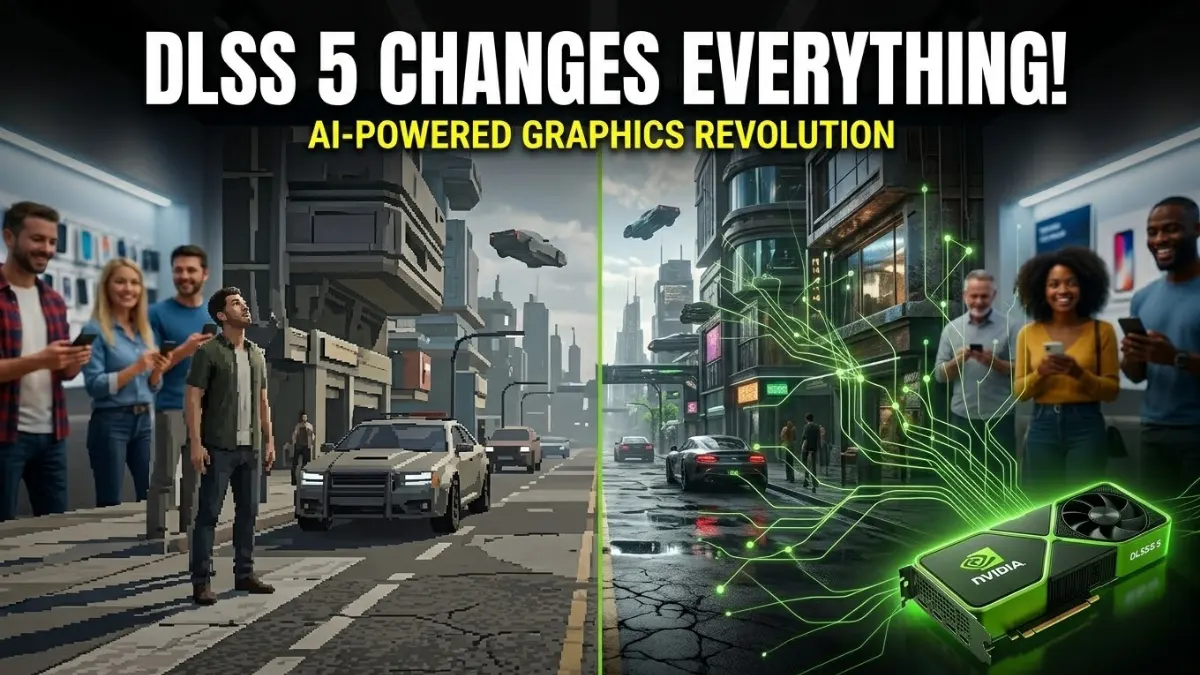

NVIDIA DLSS 5 introduces next-gen AI upscaling for stunning visuals and higher FPS. Discover how it transforms gaming performance and realism.
NVIDIA DLSS 5 Brings AI-Powered Breakthrough to Gaming Visuals
Gaming graphics are evolving faster than ever, and NVIDIA continues to lead the charge with its latest innovation — DLSS 5.
Short for Deep Learning Super Sampling, DLSS has already transformed how games look and perform. Now, with DLSS 5, NVIDIA is pushing the boundaries even further by using advanced AI models to deliver sharper visuals, higher frame rates, and improved realism.
This new version could redefine what gamers expect from modern graphics.
What Is DLSS 5?
DLSS 5 is the latest generation of NVIDIA’s AI-powered rendering technology. It uses machine learning and neural networks to upscale lower-resolution images into high-quality visuals that look nearly identical to native resolution.
Instead of relying purely on raw GPU power, DLSS 5 leverages AI to:
• Increase frame rates
• Improve image clarity
• Reduce system load
• Enhance overall visual quality
This means gamers can enjoy smooth performance without sacrificing detail.
Major Improvements in DLSS 5
DLSS 5 introduces several key upgrades over previous versions.
1. Next-Gen AI Upscaling
The new AI models are more advanced than ever, allowing for:
• Sharper textures
• Better edge detection
• Reduced visual artifacts
Games look cleaner and more realistic, even at lower rendering resolutions.
2. Higher Frame Rates With Better Stability
DLSS has always been about performance, but DLSS 5 takes it further by delivering:
• More stable FPS
• Lower latency
• Improved frame consistency
This is especially important for competitive gamers who rely on smooth gameplay and quick response times.
3. Enhanced Ray Tracing Support
Ray tracing is one of the most demanding features in modern games. DLSS 5 helps offset this by boosting performance while maintaining visual fidelity.
With DLSS 5, players can experience:
• Realistic lighting and shadows
• Better reflections
• Cinematic-level visuals
All without a massive drop in frame rates.
DLSS 5 vs Native Resolution
One of the biggest debates in gaming is whether AI upscaling can truly match native resolution.
With DLSS 5, the gap is smaller than ever.
In many cases, DLSS 5 delivers:
• Comparable or better sharpness
• Improved performance
• Reduced GPU strain
For many gamers, this means they can enjoy higher settings and smoother gameplay simultaneously.
Read more about – Best Phone for Seniors in 2026 — Top Picks for USA Buyers
Why DLSS 5 Matters for Gamers
DLSS 5 isn’t just a minor upgrade — it represents a shift in how graphics are rendered.
Instead of brute-force rendering, NVIDIA is using AI to optimize performance intelligently.
This has several benefits:
Better performance on mid-range GPUs
Even users without high-end hardware can enjoy modern games.
Future-ready technology
As games become more demanding, AI-based rendering will become increasingly important.
Improved gaming experience
Higher FPS and better visuals create a more immersive experience.
Compatibility and Future Adoption
DLSS 5 is expected to roll out across new and upcoming games that support NVIDIA RTX technology.
Developers are increasingly adopting DLSS because it allows them to:
• Push visual boundaries
• Maintain performance across hardware tiers
• Reach a wider audience
As support grows, DLSS 5 could become a standard feature in modern PC gaming.
Read more about – Best Prepaid Phones in the USA (2026): Powerful Budget Phones With No Contract
Final Thoughts
With DLSS 5, NVIDIA is once again redefining what’s possible in gaming graphics.
By combining AI-powered upscaling with performance optimization, this technology delivers a powerful balance between visual quality and smooth gameplay.
As more games begin to support DLSS 5, it’s clear that the future of gaming will be driven not just by hardware, but by intelligent AI technologies.
#NVIDIADLSS5 #GamingTech #RTXGraphics #PCGaming #AIInGaming #GamingPerformance #NextGenGaming #TechNews #GamingSetup #DLSS #GraphicsTechnology