
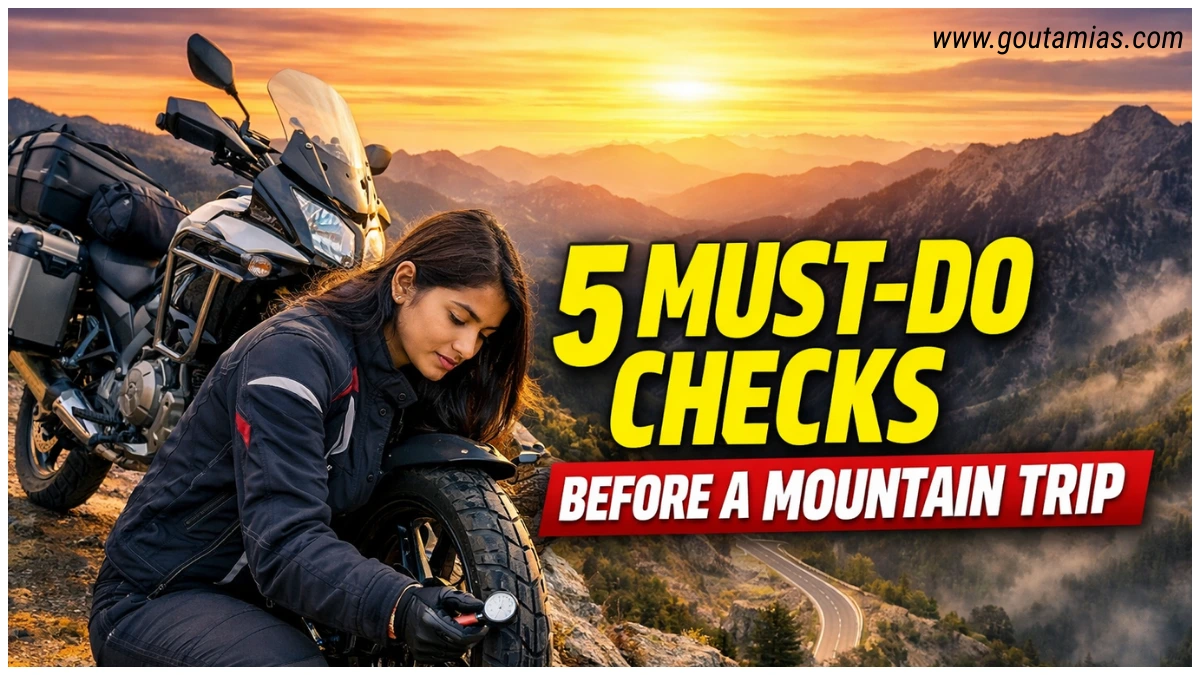

There’s something almost spiritual about riding a motorcycle through the mountains. The winding roads, dramatic cliffs, cool air, and endless curves create an experience few other journeys can match. But 5 Motorcycle Maintenance Checks Before a Mountain Road Trip can make the difference between an unforgettable adventure and a dangerous breakdown.
Mountain terrain places extraordinary stress on motorcycles. Long climbs push engines harder, steep descents test braking systems, and changing temperatures affect tire pressure and grip. Riders often travel through remote areas where help may be miles away.
That’s why preparing your motorcycle before heading into high-altitude roads isn’t optional — it’s essential.
In this guide, we break down the five most important motorcycle checks every rider should perform before a mountain ride. These quick inspections dramatically improve safety, reliability, and riding confidence.
- Why Mountain Riding Demands Extra Motorcycle Preparation
- 1. Tires: Your Most Critical Safety Component
- 2. Brakes: Essential for Mountain Descents
- 3. Fluids: Engine Health on Long Climbs
- 4. Chain or Belt: Power Delivery to the Rear Wheel
- 5. Lights and Electrical System
- Why This Matters
- Conclusion
- FAQs
- 1. Why are the 5 Motorcycle Maintenance Checks Before a Mountain Road Trip important?
- 2. How long does it take to complete the 5 Motorcycle Maintenance Checks Before a Mountain Road Trip?
- 3. Can beginners perform the 5 Motorcycle Maintenance Checks Before a Mountain Road Trip?
- 4. Do the 5 Motorcycle Maintenance Checks Before a Mountain Road Trip apply to all motorcycles?
- 5. Should I perform the 5 Motorcycle Maintenance Checks Before a Mountain Road Trip every time?
- 6. What happens if I skip the 5 Motorcycle Maintenance Checks Before a Mountain Road Trip?
Why Mountain Riding Demands Extra Motorcycle Preparation
Mountain roads are very different from highways or city traffic.
Here’s what makes them more demanding:
| Challenge | Impact on Motorcycle |
|---|---|
| Steep climbs | Engine works harder, heat builds faster |
| Long descents | Brakes overheat and fade |
| Sharp curves | Tires and suspension under constant load |
| Rapid temperature changes | Tire pressure fluctuations |
| Remote roads | Breakdowns become serious problems |
Because of these factors, basic motorcycle maintenance becomes far more critical before riding into mountainous terrain.
Let’s look at the five checks that matter most.
1. Tires: Your Most Critical Safety Component
Tires are the only connection between your motorcycle and the road. On mountain roads with tight corners and steep slopes, tire condition directly affects safety.
Check Tire Pressure
Always check tire pressure before riding when tires are cold.
Incorrect pressure can cause:
Poor cornering stability
Reduced braking performance
Faster tire wear
Increased risk of punctures
Use the manufacturer-recommended pressure listed in your owner’s manual.
Also remember that temperature and altitude changes can alter tire pressure, so carrying a small pressure gauge on long trips is a smart move.
Inspect Tread Depth
Mountain roads often include:
Wet patches
Gravel
Loose surfaces
Worn tires lose grip quickly in these conditions.
Look for tread wear indicators. If the tire is close to these marks, replace it before your trip.
Look for Damage
Check for:
Cracks
Cuts
Bulges
Embedded nails or debris
Even small tire damage can worsen quickly during aggressive cornering.
2. Brakes: Essential for Mountain Descents
When riding downhill for miles, your brakes become your most important control system.
If your brakes fail on a steep mountain road, there is little margin for error.
Inspect Brake Pads
Brake pads should always have enough friction material left.
Warning signs include:
Thin pads
Uneven wear
Squealing sounds
Pads nearing the minimum thickness should be replaced before any long ride.
Examine Brake Rotors
Run your finger across the rotor surface.
Look for:
Deep grooves
Warping
Blue discoloration (sign of overheating)
Damaged rotors reduce braking efficiency and should be replaced.
Check Brake Fluid
Brake fluid absorbs moisture over time. When overheated, old fluid can boil and cause brake fade.
Healthy brake fluid should appear:
Clear
Light amber
Dark or cloudy fluid means it’s time for a flush.
3. Fluids: Engine Health on Long Climbs
One of the most important 5 Motorcycle Maintenance Checks Before a Mountain Road Trip involves inspecting the fluids that keep your motorcycle running smoothly.
Engine Oil
Mountain riding often means:
Higher RPMs
Longer climbs
Increased engine temperature
Make sure oil level is correct and the oil is not excessively dark or dirty.
If your next oil change is close, it’s better to do it before your trip.
Coolant
Overheating is a common issue when climbing steep roads slowly.
Check:
Coolant level in the reservoir
Hoses for leaks
Radiator condition
Low coolant can quickly cause engine overheating in mountain conditions.
Clutch and Hydraulic Fluids
Smooth clutch performance is crucial for:
Hairpin turns
Steep inclines
Stop-and-go mountain traffic
Check clutch fluid levels and inspect for leaks.
4. Chain or Belt: Power Delivery to the Rear Wheel
Your drivetrain transfers engine power to the road.
On mountain rides, frequent gear changes and throttle inputs place extra strain on the system.
Chain Slack
A loose chain can derail. A tight chain can damage bearings.
Use the recommended slack measurement from your owner’s manual.
Check at multiple points along the chain because wear may not be uniform.
Chain Lubrication
A dry chain increases friction and accelerates wear.
Clean and lubricate the chain before leaving.
Good lubrication improves:
Smooth acceleration
Fuel efficiency
Component lifespan
Sprocket Wear
Inspect sprocket teeth.
Replace them if you see:
Hooked shapes
Sharp edges
Uneven wear
Replacing chain and sprockets together often provides the best performance.
5. Lights and Electrical System
Mountain roads can include:
Tunnels
Dense forest shade
Fog
Sudden rain
Visibility becomes critical.
Check All Lights
Confirm that the following are working properly:
Headlight (high and low beam)
Brake light
Tail light
Turn signals
Brake lights should activate with both the hand lever and foot pedal.
Inspect Battery Condition
A weak battery can leave you stranded far from assistance.
Check:
Terminal tightness
Corrosion
Battery age
If the battery struggles during starts, replacing it before a long trip is wise.
Test the Horn
Blind corners are common on mountain roads.
A loud horn can help alert oncoming vehicles.
Why This Matters
Motorcycle adventures in the mountains are thrilling — but also unforgiving if your machine isn’t ready.
Performing 5 Motorcycle Maintenance Checks Before a Mountain Road Trip ensures:
Better braking control
Reliable engine performance
Maximum tire grip
Smooth power delivery
Safer riding in remote terrain
A simple 20–30 minute inspection before departure can prevent dangerous breakdowns and costly repairs.
More importantly, it allows riders to focus on the joy of the journey instead of worrying about their motorcycle.
Conclusion
Few experiences compare to riding a motorcycle through mountain roads filled with sweeping curves and breathtaking views. But the same terrain that makes these rides magical also demands proper preparation.
By completing these 5 Motorcycle Maintenance Checks Before a Mountain Road Trip, riders dramatically reduce risk and improve reliability. Tires, brakes, fluids, drivetrain components, and electrical systems must all be in peak condition before tackling steep climbs and descents.
Prepare your motorcycle properly, pack wisely, and approach mountain riding with respect.
Then the open road — and the mountains — will reward you with one of the most unforgettable riding experiences possible.
Click to Read More: Kawasaki Ninja 300: Why This Iconic Entry-Level Sport bike Still Dominates in 2026
FAQs
1. Why are the 5 Motorcycle Maintenance Checks Before a Mountain Road Trip important?
The 5 Motorcycle Maintenance Checks Before a Mountain Road Trip help riders ensure their motorcycle is ready for demanding terrain like steep climbs, sharp corners, and long descents. These checks improve safety, prevent mechanical issues, and help riders avoid breakdowns in remote mountain areas.
2. How long does it take to complete the 5 Motorcycle Maintenance Checks Before a Mountain Road Trip?
Most riders can complete the 5 Motorcycle Maintenance Checks Before a Mountain Road Trip in about 20–30 minutes. A quick inspection of tires, brakes, fluids, chain, and lights is usually enough to ensure the bike is safe for mountain riding.
3. Can beginners perform the 5 Motorcycle Maintenance Checks Before a Mountain Road Trip?
Yes, even beginner riders can perform the 5 Motorcycle Maintenance Checks Before a Mountain Road Trip with basic tools and a little attention to detail. These checks are simple but extremely effective in preventing unexpected issues on challenging mountain roads.
4. Do the 5 Motorcycle Maintenance Checks Before a Mountain Road Trip apply to all motorcycles?
Yes. The 5 Motorcycle Maintenance Checks Before a Mountain Road Trip apply to most motorcycles including touring bikes, adventure bikes, cruisers, and sport motorcycles. Every bike faces similar stress when riding through mountainous terrain.
5. Should I perform the 5 Motorcycle Maintenance Checks Before a Mountain Road Trip every time?
Ideally, riders should perform the 5 Motorcycle Maintenance Checks Before a Mountain Road Trip before any long-distance ride, especially when traveling through mountains where mechanical problems can become dangerous quickly.
6. What happens if I skip the 5 Motorcycle Maintenance Checks Before a Mountain Road Trip?
Skipping the 5 Motorcycle Maintenance Checks Before a Mountain Road Trip can increase the risk of tire failure, brake overheating, engine issues, or electrical problems during the ride. These issues are far more dangerous on mountain roads with steep slopes and remote locations.