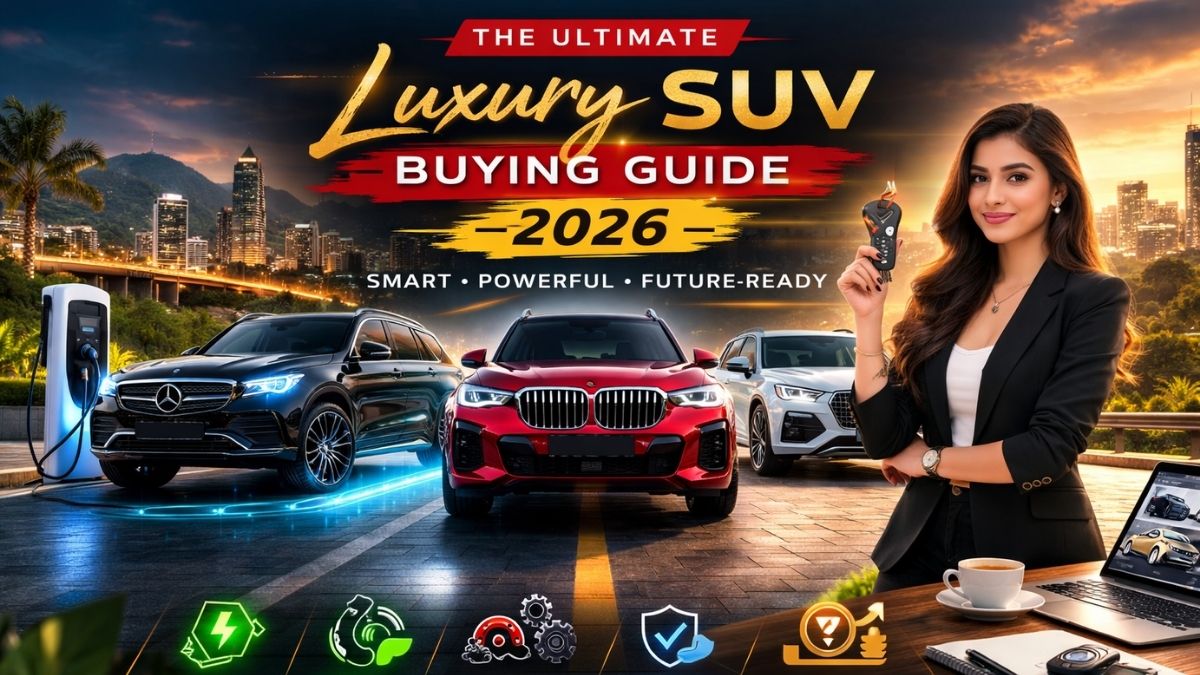

Luxury SUV buying guide 2026 is the definitive framework for choosing a premium sport utility vehicle in a year defined by electrification, AI-assisted driving, and rising ownership costs. It matters now because 2026 marks a transition window—new emission norms, hybrid-first strategies, and next-gen infotainment are reshaping the segment. This guide impacts high-net-worth buyers, business owners, growing families, and status-conscious urban drivers evaluating six-figure investments.
The premium SUV market is no longer just about badge value. It’s about battery range, software ecosystems, ADAS capability, resale strength, and long-term service strategy. The right choice today could save you lakhs tomorrow.
- Market Snapshot: Why 2026 Is a Turning Point
- Luxury SUV buying guide 2026: How to Choose the Right One
- Feature Comparison Table (2026 Segment Overview)
- Technology Checklist: Non-Negotiables in 2026
- Top Contenders to Watch in 2026
- Luxury SUV Segment Positioning (Quick Decision Framework)
- Why This Matters
- What Happens Next: Future Impact (2027–2030 Outlook)
- Quick Buyer Decision Flow
- Conclusion
- FAQs
Market Snapshot: Why 2026 Is a Turning Point
The global luxury SUV segment is undergoing a structural shift:
Electrification acceleration: Plug-in hybrids and full EVs now dominate new launches.
Software-defined vehicles: Over-the-air updates and AI assistants are standard.
Stricter emissions norms: Compliance impacts pricing and availability.
Higher ownership transparency: Buyers are demanding predictable service plans.
Manufacturers such as Mercedes-Benz, BMW, Audi, Volvo, and Lexus are competing aggressively across EV, hybrid, and ICE platforms.
Luxury SUV buying guide 2026: How to Choose the Right One
Buying a luxury SUV in 2026 requires a multi-layered approach.
1. Powertrain Strategy: ICE vs Hybrid vs Electric
Direct Answer (Snippet Optimized – 50 words)
In 2026, luxury SUV buyers should choose powertrain based on usage pattern. City-dominant driving favors electric SUVs for lower running costs. Highway-heavy users benefit from diesel or strong hybrids. Plug-in hybrids offer balance but require charging discipline to maximize efficiency and tax advantages.
2. Ownership Cost Reality
Sticker price is only the beginning. Evaluate:
Extended warranty coverage
Service package duration
Battery replacement warranty (for EVs)
Insurance class rating
Depreciation trends
Premium EV SUVs often cost less per kilometer but may depreciate faster depending on brand perception.
Feature Comparison Table (2026 Segment Overview)
| Feature | ICE Luxury SUV | Hybrid Luxury SUV | Electric Luxury SUV |
|---|---|---|---|
| Running Cost | High | Moderate | Low |
| Maintenance | Moderate-High | Moderate | Low |
| Torque Delivery | Linear | Strong low-end | Instant |
| Resale Value | Stable | Improving | Variable |
| Environmental Impact | Higher | Reduced | Lowest |
Technology Checklist: Non-Negotiables in 2026
Direct Answer (Snippet Optimized – 45 words)
A 2026 luxury SUV must include Level 2 ADAS, adaptive cruise control, 360-degree camera, OTA updates, connected car app, and a digital instrument cluster. Premium buyers should also expect ventilated seats, wireless charging, panoramic sunroof, and advanced voice control systems.
ADAS & Safety Expectations
Level 2 autonomy is baseline. Look for:
Lane keep assist
Blind spot monitoring
Emergency braking
Traffic jam assist
Brands such as Volvo continue to lead in safety architecture integration.
Top Contenders to Watch in 2026
While final buying decisions depend on region, these nameplates dominate global conversations:
Mercedes-Benz GLE
BMW X5
Audi Q7
Volvo XC90
Lexus RX
Each now offers electrified variants or performance trims tailored for 2026 emission norms.
Luxury SUV Segment Positioning (Quick Decision Framework)
| Buyer Type | Ideal Choice |
|---|---|
| Urban Executive | Electric luxury SUV |
| Frequent Highway Traveler | Diesel / Mild Hybrid |
| Family-Focused Buyer | Hybrid with ADAS suite |
| Performance Enthusiast | Turbo petrol / Performance hybrid |
Why This Matters
Luxury SUVs are now long-term software ecosystems, not just mechanical machines. Your purchase locks you into:
A brand’s update cycle
A service network
A battery warranty structure
Resale perception in secondary markets
In 2026, poor selection could mean outdated tech within three years. Smart selection means sustained desirability and stronger resale.
What Happens Next: Future Impact (2027–2030 Outlook)
Expect these trends:
EV penetration to cross 40% in luxury SUV sales.
Subscription-based feature unlocking (heated seats, ADAS upgrades).
AI copilots becoming standard.
Reduced diesel offerings in urban centers.
More direct-to-consumer sales models.
Buyers choosing adaptable platforms today will benefit from OTA software upgrades instead of hardware replacements.
Quick Buyer Decision Flow
How should I choose a luxury SUV in 2026?
Choose based on driving pattern, charging access, and ownership horizon. Compare total cost of ownership, not just ex-showroom price. Prioritize ADAS, resale value, and service coverage. Hybrid offers balance; EV offers future-readiness; diesel still suits heavy highway use.
Conclusion
The luxury SUV segment in 2026 is more strategic than ever. Technology maturity, emission shifts, and digital integration mean buyers must think beyond brand prestige. The smartest buyers are evaluating battery life cycles, ADAS capability, and long-term resale data alongside comfort and performance.
Choose with foresight, not impulse. Your SUV is no longer just transportation—it’s a technology platform on wheels.
Click to Find More: Alfa Romeo Stelvio 2026: The Last True Driver’s SUV Before Electrification?
FAQs
Q1: What is the main purpose of Luxury SUV buying guide 2026?
A: Luxury SUV buying guide 2026 helps premium buyers choose the right SUV by evaluating powertrain options, ownership cost, resale value, technology upgrades, and long-term market trends specific to 2026 transitions.
Q2: Who should follow Luxury SUV buying guide 2026?
A: Business owners, urban executives, high-net-worth families, and performance enthusiasts planning to invest in a premium SUV in 2026 should follow Luxury SUV buying guide 2026 for structured decision-making.
Q3: How does Luxury SUV buying guide 2026 help in choosing between electric and hybrid SUVs?
A: Luxury SUV buying guide 2026 recommends electric SUVs for city-focused driving with charging access, while hybrids suit mixed usage; it also emphasizes total cost of ownership over upfront price.
Q4: Does Luxury SUV buying guide 2026 consider resale value and depreciation?
A: Yes, Luxury SUV buying guide 2026 highlights resale trends, brand perception, battery warranty coverage, and software longevity as key factors affecting long-term depreciation.
Q5: Why is Luxury SUV buying guide 2026 important for future-proof buying decisions?
A: Luxury SUV buying guide 2026 factors in 2027–2030 trends like EV adoption growth, OTA upgrades, AI-assisted driving, and emission regulation shifts to ensure buyers invest in adaptable platforms.
Q6: What features are mandatory according to Luxury SUV buying guide 2026?
A: According to Luxury SUV buying guide 2026, essential features include Level 2 ADAS, adaptive cruise control, 360-degree camera, connected car technology, OTA updates, and comprehensive warranty coverage.
Q7: Is Luxury SUV buying guide 2026 relevant for diesel SUV buyers?
A: Yes, Luxury SUV buying guide 2026 states diesel luxury SUVs remain relevant for high-mileage highway users, though long-term urban restrictions should be considered.
Q8: How can Luxury SUV buying guide 2026 improve financial planning before purchase?
A: Luxury SUV buying guide 2026 encourages evaluating insurance class, extended warranty plans, service packages, fuel or charging costs, and expected resale value before finalizing the purchase.