
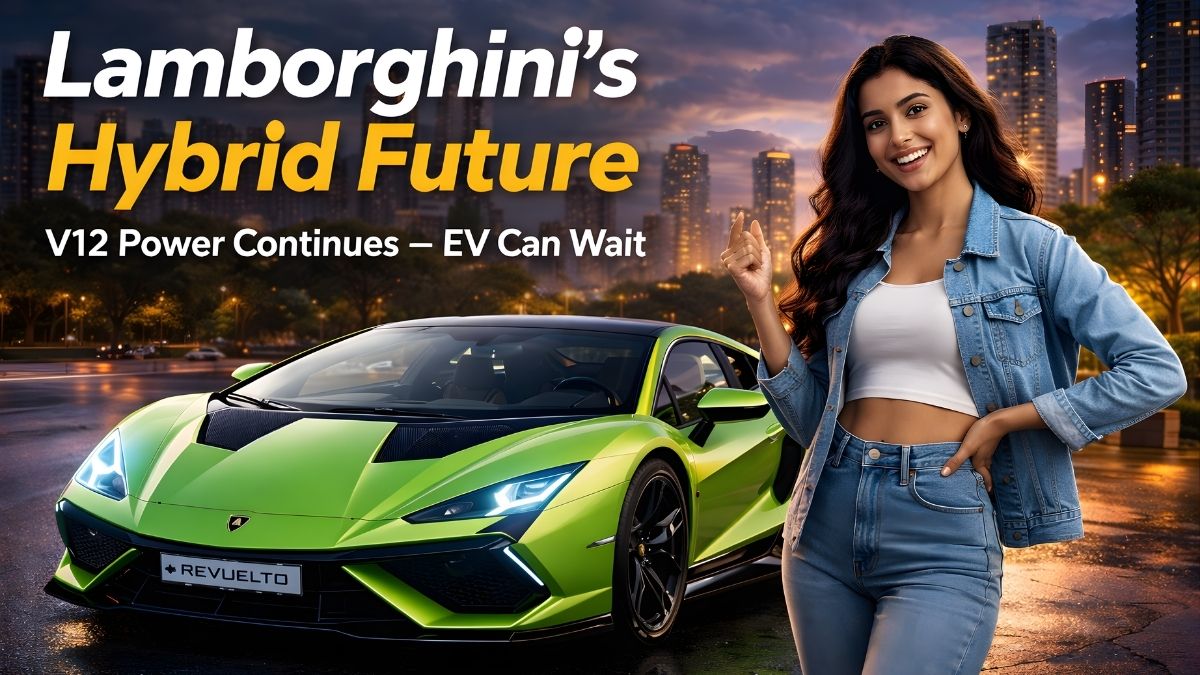

Lamborghini Plug-in Hybrid Strategy is not a compromise. It is a calculated, brand-first roadmap designed to preserve emotion, protect performance DNA, and transition intelligently into an electrified future.
At a time when global luxury automakers are racing toward full EV announcements, Lamborghini’s CEO, Stephan Winkelmann, has outlined a more nuanced path: prioritize plug-in hybrids (PHEVs), extend the life of the iconic V12 for another decade, and carefully time the arrival of full electric models.
For enthusiasts, this means the roar isn’t going silent anytime soon. For India, it could mean a smarter entry point into hybrid supercar ownership. For the industry, it signals that performance brands are rewriting electrification rules on their own terms. This is not hesitation. It’s strategy.
- Lamborghini Plug-in Hybrid Strategy: Why PHEVs Come Before Full EVs
- Direct Answer: Why Is Lamborghini Not Going Fully Electric Yet?
- India: Why This Strategy Makes Strategic Sense
- The V12 Lives On: Heritage as Strategy
- Hybrid vs Full EV: Lamborghini’s Calculated Balance
- A New GT Direction Expands the Brand
- Why This Matters
- Future Impact: What Comes Next?
- Conclusion
- FAQs
Lamborghini Plug-in Hybrid Strategy: Why PHEVs Come Before Full EVs
The core of the Lamborghini Plug-in Hybrid Strategy is simple: electrify without erasing identity.
Unlike mass-market brands, Lamborghini’s customers don’t just buy speed. They buy sound, theatre, mechanical drama, and emotional engagement. A silent EV — no matter how quick — risks losing a key layer of that experience.
Plug-in hybrids offer a bridge.
What PHEVs Deliver for Lamborghini:
Instant electric torque
Reduced emissions compliance
Urban electric-only driving capability
Retention of combustion engine sound and character
Improved efficiency without losing drama
The best example? The Lamborghini Revuelto, which replaces the legendary Aventador. It pairs a naturally aspirated V12 with electric motors, creating a new generation hybrid supercar that feels both futuristic and unmistakably Lamborghini.
This architecture allows the company to comply with tightening global emissions standards while maintaining brand-defining theatrics.
Direct Answer: Why Is Lamborghini Not Going Fully Electric Yet?
Lamborghini is prioritizing plug-in hybrids over full EVs because its core customers still value engine sound, emotional engagement, and long-distance flexibility. PHEVs allow regulatory compliance while preserving performance identity.
India: Why This Strategy Makes Strategic Sense
India is one of the fastest-growing ultra-luxury car markets globally. However, EV infrastructure — particularly fast-charging networks outside metro cities — remains uneven.
For a ₹8–10 crore supercar buyer, convenience matters.
Why PHEVs Fit India Today:
No range anxiety during highway drives
Quick refueling like traditional petrol vehicles
Electric mode for city compliance and sustainability
No dependency on evolving charging infrastructure
While full EV supercars may come later, hybrids are the logical near-term solution for India’s conditions.
However, one major hurdle remains: import duties.
India’s high CBU (Completely Built Unit) import taxes significantly inflate supercar pricing. A calibrated duty structure for hybrid performance vehicles could unlock stronger growth, attract investment, and stimulate the broader luxury automotive ecosystem.
The V12 Lives On: Heritage as Strategy
Perhaps the most emotional element of this roadmap is Lamborghini’s commitment to continue the V12 engine for another decade.
For Lamborghini, the V12 is not just hardware. It is identity.
From the Lamborghini Miura to the Aventador, twelve cylinders have defined the brand’s flagship halo models. Extending its lifespan signals that electrification will enhance — not erase — heritage.
Direct Answer: Will Lamborghini Stop Making V12 Engines?
No. Lamborghini has committed to continuing V12 production for approximately another decade, integrating it into hybrid systems to meet emissions standards while preserving performance.
This is a powerful reassurance to enthusiasts and collectors alike.
Hybrid vs Full EV: Lamborghini’s Calculated Balance
| Factor | Plug-in Hybrid | Full EV |
|---|---|---|
| Engine Sound | Yes | No |
| Instant Torque | Yes | Yes |
| Long-Distance Flexibility | Excellent | Dependent on charging |
| Infrastructure Dependence | Low | High |
| Emotional Engagement | High | Different character |
| India Suitability (2026) | Strong | Limited |
The table explains why Lamborghini’s timing appears deliberate rather than delayed.
A New GT Direction Expands the Brand
Beyond hybridization, Lamborghini is preparing a new Grand Touring (GT) model. This move broadens the brand’s customer base beyond track-focused supercars.
GT models typically offer:
More comfort
Extended cruising capability
Refined luxury
High-speed stability
This strategic diversification helps stabilize sales volumes while keeping halo supercars aspirational.
Global sales for Lamborghini have already reached record highs in recent years, and this broader portfolio may push them even further.
Why This Matters
The Lamborghini Plug-in Hybrid Strategy matters for three major reasons:
1. It Redefines Luxury Electrification
Not every brand must rush into full EVs. Performance manufacturers can chart a middle path that preserves emotional value.
2. It Strengthens India’s Relevance
India is no longer a peripheral luxury market. Strategic product alignment — especially hybrid supercars — positions the country as a serious growth driver.
3. It Signals a Smarter Transition
Battery technology, weight management, and charging ecosystems are still evolving. By buying time, Lamborghini ensures that when its full EV arrives, it will be segment-defining — not experimental.
Future Impact: What Comes Next?
Expect three major developments over the next five years:
Increased hybridization across Lamborghini’s entire lineup
India-focused sales expansion through tailored allocation
A fully electric Lamborghini launched only when performance benchmarks surpass combustion counterparts
When that EV does arrive, it will likely redefine the category — just as the Miura did in 1966.
Until then, hybrid power is the bridge.
Conclusion
Lamborghini is not resisting the future. It is engineering it carefully.
By committing to plug-in hybrids, extending V12 production, and recognizing India’s evolving infrastructure realities, the brand demonstrates that electrification and emotion can coexist.
The Raging Bull is not going silent.
It is simply learning to charge — without losing its roar.
Click to Find More: New Audi RS5 Plug-in Hybrid 630 HP: 0-100 in 3 Seconds, Electric Range & Full Details
FAQs
Q1. What is Lamborghini Plug-in Hybrid Strategy? A. Lamborghini Plug-in Hybrid Strategy is the brand’s long-term electrification roadmap that prioritizes plug-in hybrid supercars while preserving V12 performance and heritage.
Q2. Why is Lamborghini Plug-in Hybrid Strategy focused on hybrids instead of full EVs? A. Lamborghini Plug-in Hybrid Strategy prioritizes hybrids because they balance emissions compliance with emotional driving engagement, engine sound, and long-distance usability.
Q3. How does Lamborghini Plug-in Hybrid Strategy protect the V12 engine? A. Lamborghini Plug-in Hybrid Strategy integrates the V12 with electric motors, allowing the iconic engine to continue for another decade while meeting global regulations.
Q4. Does Lamborghini Plug-in Hybrid Strategy include a future full EV? A. Yes, Lamborghini Plug-in Hybrid Strategy acts as a transitional phase before launching a fully electric Lamborghini once performance benchmarks exceed combustion standards.
Q5. Why is Lamborghini Plug-in Hybrid Strategy relevant for global luxury buyers? A. Lamborghini Plug-in Hybrid Strategy ensures exclusivity, performance continuity, and technological advancement without compromising brand DNA.
Q6. How does Lamborghini Plug-in Hybrid Strategy impact markets like India? A. Lamborghini Plug-in Hybrid Strategy offers flexibility through electric-only city driving and petrol-powered range for long-distance travel, making it practical in emerging luxury markets.
Q7. Is Lamborghini Plug-in Hybrid Strategy aligned with sustainability goals? A. Yes, Lamborghini Plug-in Hybrid Strategy reduces emissions through electrification while maintaining the performance expectations of ultra-high-net-worth customers.




2 thoughts on “Lamborghini Plug-in Hybrid Strategy: Why the V12 Isn’t Going Electric Yet”