
Introduction
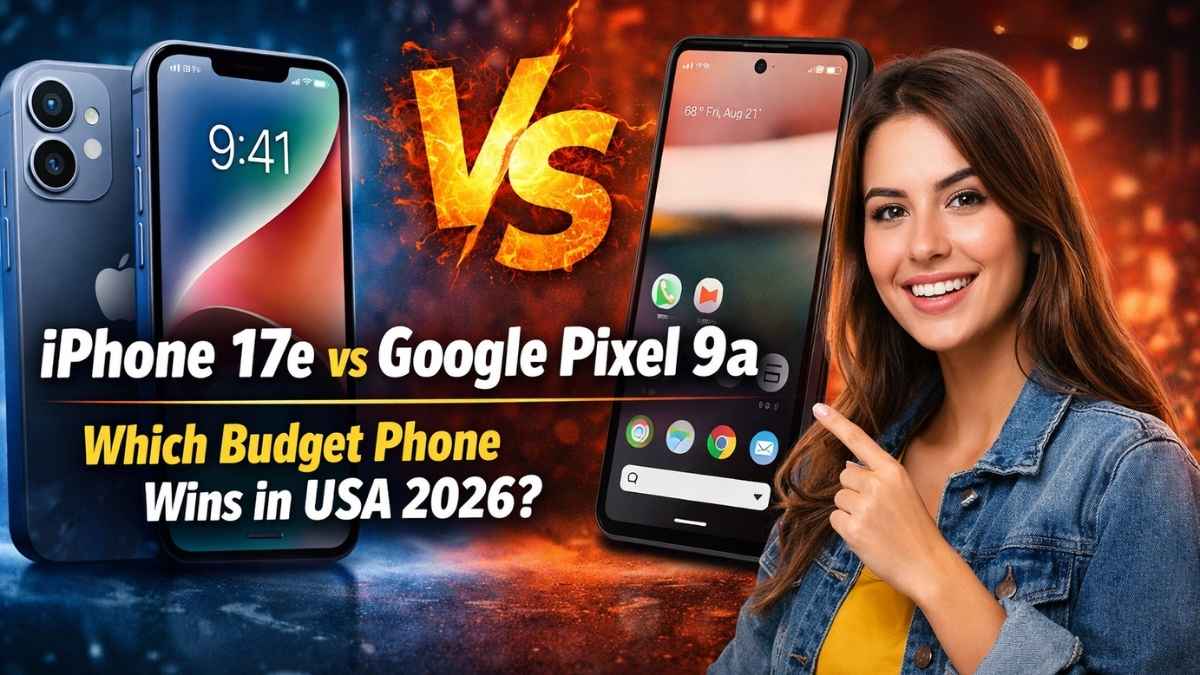
If you’re shopping in March 2026 and trying to decide between iPhone 17e vs Google Pixel 9a, you’re not alone—these two budget-friendly phones are fighting for the “best value in the USA” crown.
Here’s the surprising part: in recent industry tracking across major US carriers, trade-in credits now cover 30%+ of midrange phone sales, meaning your “budget” choice can swing wildly depending on promotions, not just specs.
If you want the best deal, the real question isn’t only which phone is faster—it’s which one fits your apps, your photos, your carrier, and how long you plan to keep it.
Quick Highlights (comparison table)
Before we get deep into the details, this table summarizes what matters most for US buyers: performance, camera consistency, battery life, software support, and real-world value.
Specs can vary by storage and carrier model, but the buying experience in the USA usually comes down to ecosystem fit and promo pricing.
| Category | iPhone 17e | Google Pixel 9a |
|---|---|---|
| Best for | iMessage/FaceTime users, long-term value, smooth apps | Android fans, AI photo tools, Google features for the price |
| Software experience | iOS, tight ecosystem, polished app performance | Android (Pixel UI), smart AI features, clean Google apps |
| Cameras | Consistent video + reliable photos | Often best “point-and-shoot” photos in budget class |
| Battery & charging | Strong efficiency; charging speed typically conservative | Strong battery value; charging varies, usually competitive |
| Security & updates | Long iOS support; fast adoption | Strong update policy; Pixel-first Android updates |
| USA pricing reality | Higher MSRP, better resale, frequent trade-in boosts | Lower MSRP, aggressive discounts, great unlocked value |
iPhone 17e vs Google Pixel 9a: Design, Display, and Daily Feel
This part is where “budget phone” differences show up every single day. The iPhone 17e vs Google Pixel 9a debate isn’t only about benchmarks—it’s about how the phone feels in your hand and how readable it is outdoors.
If you want more phone coverage, our latest USA mobile phone news and reviews hub tracks pricing changes and real-world performance as these devices roll out.
Build quality, comfort, and durability
Apple’s “e” models typically focus on a clean, sturdy build with familiar button placement and excellent haptics. Even if the iPhone 17e skips premium extras, it usually nails the basics: solid frame feel, consistent speaker tuning, and dependable Face ID/biometrics experience (depending on Apple’s final configuration).
Pixel “a” phones tend to be lighter and more playful, with a practical design built for daily use. The Pixel 9a is likely to feel less “luxury,” but it often surprises buyers with comfortable weight balance and a grippy finish that’s great for one-handed scrolling.
For durability in the USA, both should survive normal life with a case, but if you work outdoors or drop your phone often, budget for a tougher case and consider insurance through your carrier or retailer.
Display quality: brightness, smoothness, and streaming
Display experience can decide the winner for many buyers. Apple usually prioritizes color accuracy and smooth animations, which makes iOS feel “fast” even when specs aren’t the biggest. If you binge Netflix, YouTube, and TikTok, the iPhone 17e should look clean and consistent.
The Pixel 9a often counters with a very competitive panel for the money, sometimes offering a higher refresh feel or great outdoor brightness at a lower price. If you’re a heavy Google Maps user, commute a lot, or watch videos outside, Pixel’s brightness tuning and adaptive features can be a real advantage.
One more thing: if you already use AirPods, Apple Watch, and a MacBook, the iPhone 17e’s “it just works” display + ecosystem effect can outweigh a slightly better spec sheet.
iPhone 17e vs Google Pixel 9a: Performance, Cameras, and AI
For most Americans, performance isn’t about peak benchmark scores—it’s about how fast apps open, whether the phone heats up, and if the camera nails the shot when your kid, dog, or friends won’t stay still.
This is where the iPhone 17e vs Google Pixel 9a choice gets interesting, because Apple tends to win on raw, sustained app smoothness, while Google often wins on “smart” camera processing and helpful AI.
Speed, gaming, and long-term performance
Apple’s budget iPhones typically ship with a chip that keeps iOS flying for years. In real life, that means fewer stutters, smoother social apps, and better longevity when iOS updates get heavier. If you keep phones for 3–5 years, iPhone performance stability is a big deal.
The Pixel 9a should feel fast for daily tasks, especially with Google’s software optimization, but Android midrange devices can vary more across heat management and heavy gaming. If you play competitive games, edit lots of video, or multitask hard, the iPhone 17e is usually the safer bet.
For more on how chips and AI features are changing gadgets, check our science and technology news section, where we track on-device AI and battery efficiency trends.
Camera reality: photos, video, and “keep the moment” shots
Pixel “a” phones have a reputation in the USA for punching above their price in photos. The Pixel 9a is likely to deliver excellent HDR, strong night shots, and the kind of “tap and it looks great” results that make casual photographers happy.
The iPhone 17e usually answers with more consistent video, natural skin tones, and fewer weird misses in mixed lighting. If you post Instagram Reels, TikToks, or record family moments, iPhone video stability and audio capture can be a major win.
Google’s advantage often shows up in computational photography and editing tools. Apple’s advantage shows up in reliability across apps—Snapchat, Instagram, and third-party camera tools often behave more predictably on iPhone.
Pros and Cons
If you’re deciding fast, these pros and cons reflect what typically matters to US buyers: ecosystem, reliability, camera style, and how long the phone stays “good” without feeling slow.
Remember: carrier deals can flip the value overnight, so pair this list with the pricing section below.
iPhone 17e: Pros
- Best long-term smoothness for common apps and updates
- Stronger resale value in the USA used market
- Great video consistency for social posting
- Top-tier ecosystem: iMessage, FaceTime, AirDrop, Apple Watch integration
iPhone 17e: Cons
- Typically higher MSRP than Pixel “a” models
- Charging speed and included accessories may feel conservative
- Less customization than Android
Google Pixel 9a: Pros
- Excellent value with frequent discounts and promos
- Standout photo processing and helpful AI camera tools
- Clean Android experience with Pixel-first updates
- Great Google services integration (Assistant, Maps, Photos)
Google Pixel 9a: Cons
- Video can be less consistent than iPhone in tricky lighting
- Performance under heavy gaming can vary vs Apple
- Resale value often trails iPhone in the USA
USA Pricing and Where to Buy
For Americans, “budget phone” shopping is really about promotions. The same phone can cost $499 unlocked, $0 with credits, or $15/month depending on carrier and trade-in timing.
Below are realistic USA buying paths, plus where you’ll typically see the best deal.
Expected USA pricing (unlocked and carrier)
While final MSRPs vary by storage and launch promos, a common pattern is: iPhone “e” models price a bit higher, and Pixel “a” models start lower but discount faster.
As a practical guide for 2026 shopping in the USA, expect these ranges:
- iPhone 17e: often around $499–$599 unlocked depending on storage, with strong trade-in offers at major carriers
- Google Pixel 9a: often around $399–$499 unlocked, with aggressive seasonal discounts
Carrier math matters: if you have a decent trade-in, iPhone 17e monthly pricing can drop dramatically. If you buy unlocked and want the lowest upfront cost, Pixel 9a frequently wins.
Where to buy in USA (best deal strategies)
For most shoppers, the best deal comes from comparing three options: unlocked retail, carrier financing, and online promos. If you want to keep your plan flexible, unlocked is the cleanest route.
Common places where these phones are often available on Amazon and other major US retailers include Amazon, Best Buy, and direct from Apple/Google. Watch for bundled gift cards and instant discounts that effectively lower the price without locking you into a long carrier contract.
If you’re also shopping for commuting tech, our auto and vehicle news and electric scooter guides cover phone mounts, charging accessories, and road-trip gear that pairs well with either device.
One more tip: students and families often save more by stacking deals—trade-in + new line credits + seasonal promos—than by chasing the lowest MSRP.
Final Verdict
If you live inside Apple’s ecosystem, keep your phone for years, and care about consistent video and resale value, the iPhone 17e is the safer, longer-lasting buy—even if it costs more upfront.
If you want the lowest price for a genuinely great camera, love Google features, and prefer buying unlocked, the Pixel 9a is often the smarter value play, especially when discounts hit.
For most shoppers comparing iPhone 17e vs Google Pixel 9a in the USA, the winner comes down to this: iPhone for long-term reliability and ecosystem benefits, Pixel for maximum features per dollar and photo-centric AI.
Frequently Asked Questions
Q1: Which is better for most people in the USA, iPhone 17e or Pixel 9a?
A: If your friends and family use iMessage/FaceTime and you plan to keep the phone 3–5 years, iPhone 17e is usually the better “set it and forget it” choice. If you want the best value unlocked and love Google services, Pixel 9a is hard to beat.
Q2: Which phone has the better camera for Instagram and TikTok?
A: Pixel 9a often wins for quick photos and night shots, but iPhone 17e tends to be more consistent for video and for camera performance inside social apps.
Q3: Where can I find the best deal in the USA?
A: The best deal is usually either a carrier trade-in promo (often favoring iPhone) or an unlocked retailer discount (often favoring Pixel). Check Amazon, Best Buy, and your carrier’s online store the same week.
Q4: Is the Pixel 9a good for gaming compared to iPhone 17e?
A: Pixel 9a should handle everyday games well, but iPhone 17e typically delivers smoother long-term performance and fewer frame drops in heavier titles.
Q5: Which one should I buy if I use a Windows PC and Google apps?
A: Pixel 9a is usually the better fit if you rely on Gmail, Google Photos, Google Drive, and Windows—especially if you want customization and strong Google integration.