
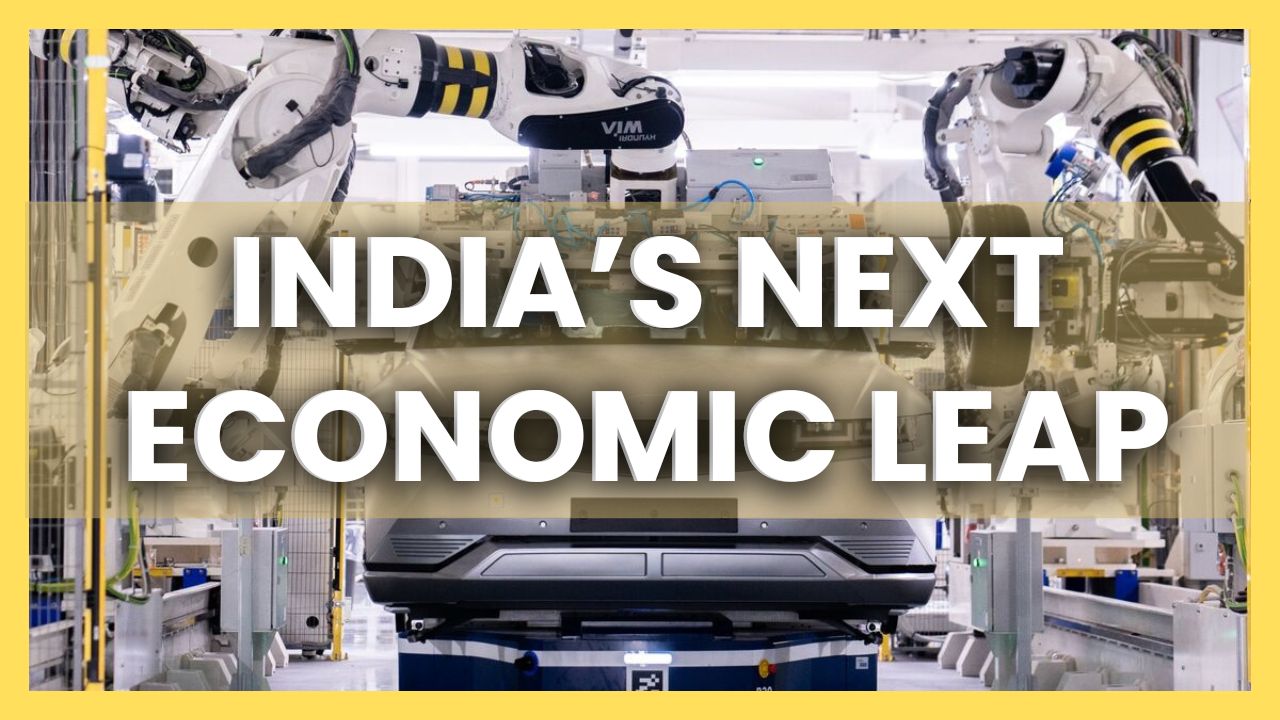

- India Manufacturing Growth Explained: How Automotive Strength and AI Innovation Are Driving the Economic Renaissance
- India’s Current Growth Engine: Strong Domestic Fundamentals
- Why Manufacturing Is Central to India’s Long-Term Prosperity
- Moving Beyond Assembly: Deepening Industrial Capabilities
- Automotive Industry: India’s Manufacturing Backbone
- Artificial Intelligence: The Digital Force Multiplier
- Automotive + AI: A Powerful Industrial Convergence
- Government Policy Push: Building the Right Ecosystem
- Challenges Ahead: Risks That Must Be Managed
- Conclusion: India’s Path to Global Economic Leadership
- FAQs
India Manufacturing Growth Explained: How Automotive Strength and AI Innovation Are Driving the Economic Renaissance
India today occupies a rare and powerful position in the global economic landscape. At a time when much of the world is struggling with slowing growth, fragmented supply chains, inflationary pressures, and geopolitical uncertainty, India continues to stand tall as the fastest-growing major economy. This performance is not accidental. It is the result of strong domestic demand, consistent public investment, structural reforms, and a demographic advantage that very few nations can replicate.
Yet, sustaining this momentum over the next two to three decades will require more than resilience. It will demand strategic depth. For India to transform from a high-growth economy into a globally dominant industrial and innovation powerhouse, it must accelerate its manufacturing capabilities and deepen its industrial ecosystem. Two sectors, in particular, will determine whether India can achieve this leap: the automotive industry and Artificial Intelligence (AI).
Together, these sectors are not only engines of economic growth but also catalysts for technological leadership, employment generation, and global competitiveness.
India’s Current Growth Engine: Strong Domestic Fundamentals
India’s economic strength begins at home. A rapidly expanding middle class, rising income levels, urbanization, and a young population have created one of the world’s most consumption-driven markets. Domestic demand cushions the economy against global downturns, making India less vulnerable to external shocks than export-dependent nations.
Government capital expenditure has further reinforced this foundation. Large-scale investments in highways, ports, railways, airports, renewable energy, and digital public infrastructure have created a multiplier effect across industries. Platforms like UPI, Aadhaar, and GST have formalized the economy, increased transparency, and improved productivity.
Despite global headwinds such as supply chain disruptions and tightening financial conditions, India’s diversified economic structure spanning services, manufacturing, agriculture, and digital innovation — has ensured stability and continuity.
Why Manufacturing Is Central to India’s Long-Term Prosperity
While services have powered India’s growth for decades, manufacturing is indispensable for sustained, inclusive, and high-quality economic expansion. Manufacturing creates large-scale employment, especially for semi-skilled and skilled workers, absorbs new entrants into the labor force, and strengthens export competitiveness.
A strong manufacturing base also enables:
Higher value addition
Technology transfer and innovation
Supply chain resilience
Reduced import dependence
The “Make in India” vision marked a turning point in India’s industrial strategy. Over the years, reforms in taxation, labor laws, and infrastructure development have improved India’s attractiveness as a manufacturing destination. However, the next phase must go beyond assembly-based production and focus on design-led, technology-intensive manufacturing.
Moving Beyond Assembly: Deepening Industrial Capabilities
For India to truly compete with global manufacturing leaders, it must deepen its industrial capabilities across the value chain.
Key Pillars of Industrial Deepening
| Area | Strategic Importance |
|---|---|
| Research & Development | Enables innovation, patents, and global competitiveness |
| Skilled Workforce | Ensures productivity and adoption of advanced technologies |
| Infrastructure | Reduces logistics costs and improves efficiency |
| Technology Adoption | Drives Industry 4.0 transformation |
| Supply Chain Integration | Positions India in global value chains |
Investment in R&D must increase substantially, with stronger collaboration between industry, academia, and startups. Skill development programs need to align with emerging technologies such as robotics, automation, AI, and green manufacturing. Smart factories, powered by IoT and data analytics, will be essential to improve efficiency and reduce waste.
Automotive Industry: India’s Manufacturing Backbone
The automotive sector is one of India’s most mature and globally competitive industries. India is already among the largest manufacturers of two-wheelers, three-wheelers, and passenger vehicles. The sector contributes significantly to GDP, exports, and employment.
Electric Vehicles: A Defining Opportunity
The global transition towards electric mobility has created a once-in-a-generation opportunity for India. With supportive government policies, incentives, and a growing domestic market, India can build a complete EV ecosystem.
This ecosystem includes:
EV manufacturing
Battery cell and component production
Charging infrastructure
Software and electronics
Recycling and circular economy solutions
By localizing these segments, India can reduce import dependence, particularly on batteries and critical components, while creating new industrial clusters and export opportunities.
Artificial Intelligence: The Digital Force Multiplier
Artificial Intelligence represents India’s most powerful lever for future growth. With a large pool of engineers, data scientists, and technology entrepreneurs, India has a natural advantage in AI development and deployment.
AI is already transforming sectors such as healthcare, agriculture, finance, logistics, and governance. Predictive analytics, automation, and machine learning are improving efficiency, reducing costs, and enhancing decision-making.
Strategic Advantages in AI
Large digital population generating data
Strong startup ecosystem
Digital public infrastructure
Growing government focus on ethical AI
India’s emphasis on responsible and inclusive AI ensures that technological progress aligns with social impact, making innovation both scalable and sustainable.
Automotive + AI: A Powerful Industrial Convergence
The real breakthrough lies at the intersection of automotive manufacturing and Artificial Intelligence.
AI is reshaping the automotive value chain through:
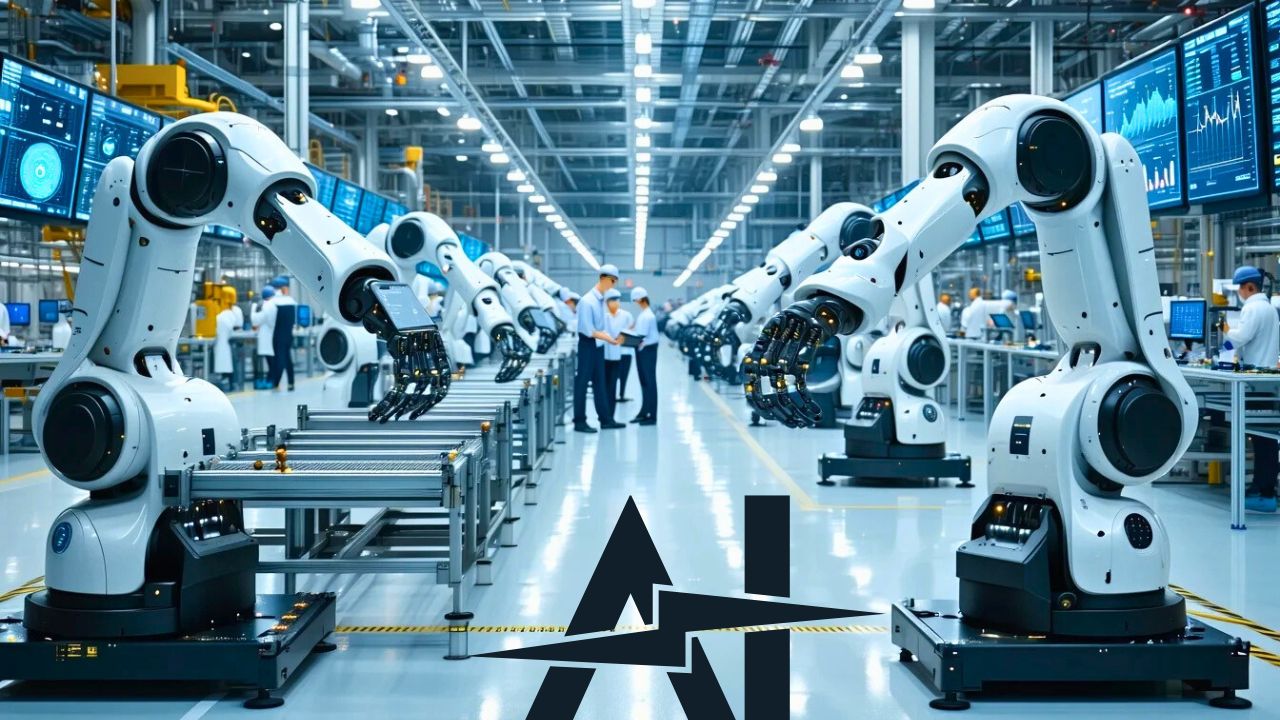
Smart manufacturing and predictive maintenance
Advanced driver-assistance systems (ADAS)
Autonomous and connected vehicles
Supply chain optimization
Quality control through computer vision
This convergence enables India to leapfrog traditional manufacturing stages and establish leadership in next-generation mobility solutions.
Government Policy Push: Building the Right Ecosystem
Government initiatives have played a decisive role in accelerating industrial transformation.
Key Policy Instruments
| Initiative | Impact |
|---|---|
| Production Linked Incentive (PLI) | Boosts scale, competitiveness, and investment |
| Digital India | Enables tech adoption and innovation |
| Startup India | Encourages entrepreneurship |
| Skill India | Builds future-ready workforce |
| R&D Incentives | Promotes innovation and patents |
PLI schemes, in particular, have attracted global manufacturers and strengthened domestic production across sectors such as automotive, electronics, and batteries.
Challenges Ahead: Risks That Must Be Managed
Despite strong momentum, India faces structural challenges:
Global supply chain volatility
Need for regulatory stability
Skill mismatches
Environmental sustainability concerns
Balancing rapid industrialization with climate commitments and inclusive growth will be critical. Strategic partnerships, continuous reforms, and adaptive policymaking will determine success.
Conclusion: India’s Path to Global Economic Leadership
India stands at a historic inflection point. Strong domestic fundamentals have provided a solid base, but the next phase of growth will be shaped by manufacturing depth, automotive innovation, and AI-driven productivity.
By aligning industrial policy with technological advancement and human capital development, India can transform into a global manufacturing and innovation leader. The synergy between automotive strength and AI excellence offers a rare opportunity to redefine India’s role in the global economy.
The coming decade will not just decide India’s growth rate — it will define its global standing.
Read More >>>
FAQs
Q1. Why is manufacturing important for India’s economic growth?
Manufacturing drives employment, exports, value addition, and technology adoption, making it essential for sustained and inclusive economic growth.
Q2. How does the automotive industry support India manufacturing growth?
The automotive sector creates jobs, boosts exports, supports MSMEs, and enables technology transfer, making it a backbone of India manufacturing growth.
Q3. What role does Artificial Intelligence play in India’s economy?
AI improves productivity, optimizes industries, enhances public services, and enables innovation across sectors, strengthening India’s global competitiveness.
Q4. How are electric vehicles shaping India’s manufacturing future?
EVs are creating new manufacturing ecosystems in batteries, electronics, and software, helping India reduce imports and expand exports.
Q5. Can India become a global manufacturing hub?
With policy support, skilled talent, and technological integration, India has the potential to emerge as a leading global manufacturing hub.
Q1. Why is India manufacturing growth important for the country’s economic future?
India manufacturing growth is essential for building a strong and self-reliant economy. It creates large-scale employment, boosts exports, improves productivity, and reduces dependence on imports. Sustained India manufacturing growth also strengthens India’s position in global supply chains.
Q2. How does India manufacturing growth support long-term economic stability?
India manufacturing growth provides long-term economic stability by diversifying income sources beyond services. A strong manufacturing base ensures that India manufacturing growth remains resilient during global recessions and geopolitical disruptions.
Q3. What role does the automotive sector play in India manufacturing growth?
The automotive industry is a backbone of India manufacturing growth. It supports millions of direct and indirect jobs, encourages component manufacturing, boosts exports, and drives innovation, especially in electric vehicles and advanced mobility solutions.
Q4. How are electric vehicles contributing to India manufacturing growth?
Electric vehicles are accelerating India manufacturing growth by creating new industries around battery production, electronics, software, and charging infrastructure. EV manufacturing strengthens localization and opens global export opportunities for India.
Q5. Why is Artificial Intelligence important for India manufacturing growth?
Artificial Intelligence enhances India manufacturing growth by enabling smart factories, automation, predictive maintenance, and quality control. AI-driven manufacturing improves efficiency, reduces costs, and helps Indian industries compete globally.
Q6. How do government policies accelerate India manufacturing growth?
Government initiatives such as Make in India, Production Linked Incentive (PLI) schemes, and infrastructure investment directly support India manufacturing growth by improving ease of doing business, scaling production, and attracting global investments.
Q7. Can India manufacturing growth help reduce unemployment?
Yes, India manufacturing growth is one of the most effective tools to reduce unemployment. Manufacturing absorbs workers across skill levels and creates long-term jobs, especially for India’s growing youth population.
Q8. Which sectors will lead India manufacturing growth in the coming decade?
Sectors expected to lead India manufacturing growth include automotive manufacturing, electric vehicles, electronics, semiconductors, renewable energy equipment, defense production, and AI-enabled industrial manufacturing.
Q9. How does India manufacturing growth improve global competitiveness?
India manufacturing growth improves global competitiveness by lowering production costs, enhancing product quality, encouraging innovation, and integrating Indian companies into global value chains.
Q10. Is India manufacturing growth necessary for becoming a developed economy?
India manufacturing growth is absolutely necessary for becoming a developed economy. Historically, every developed nation has achieved prosperity through strong and sustained manufacturing growth.