
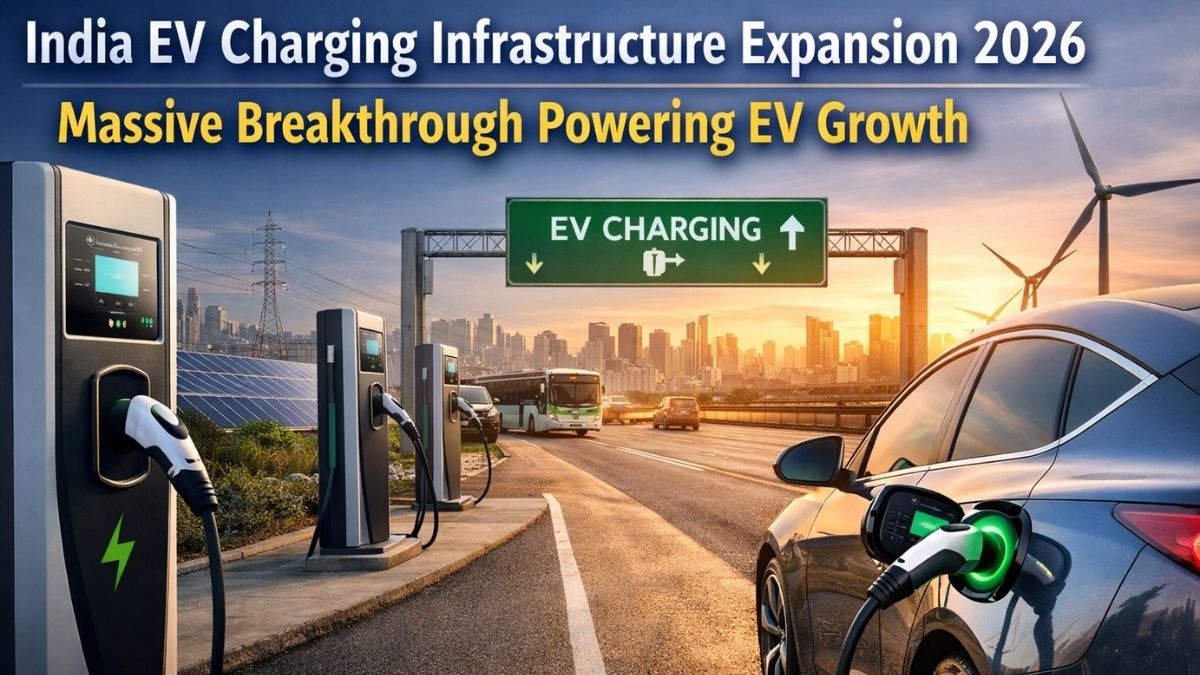

India EV charging infrastructure expansion 2026 is accelerating at a scale never seen before in the country’s mobility history. This matters right now because electric vehicle sales are rising sharply across metro and Tier-2 cities, and charging reliability has become the deciding factor for buyers, fleet operators, and policymakers.
In 2026, infrastructure is no longer a supporting element of the EV story — it is the foundation.
Where India Stands Today
Over the past three years, India has moved from pilot-based charger installations to structured, corridor-based deployments. Public charging stations are now visible in:
Metro cities
Tier-2 commercial hubs
Expressways
Fuel stations
Corporate campuses
Residential complexes
Energy and infrastructure leaders driving this scale-up include:
Tata Power
Indian Oil Corporation
Reliance BP Mobility
Adani Total Gas
These companies are transforming traditional fuel retail spaces into hybrid energy stations — petrol, diesel, CNG, and EV charging under one roof.
Charging Infrastructure Types Explained
| Type | Power Output | Use Case | Charging Time |
|---|---|---|---|
| AC Home Charger | 3–7 kW | Overnight residential | 6–8 hrs |
| Public AC | 7–22 kW | Office / malls | 3–5 hrs |
| DC Fast | 30–60 kW | Urban quick charge | 45–90 mins |
| Ultra-Fast DC | 100–150 kW+ | Highway corridors | 20–40 mins |
The 2026 focus is clearly on DC fast charging and ultra-fast networks to reduce highway travel anxiety.
Direct Answer: Is India ready for mass EV charging?
India EV charging infrastructure expansion 2026 has significantly strengthened metro and highway readiness. While Tier-3 and rural areas still face gaps, the national trajectory indicates broad readiness within the next 24–36 months.
What Is Driving Rapid Expansion?
1. Policy Push
Central and state incentives under EV adoption schemes are encouraging private investment.
2. Automaker Momentum
With more electric SUVs launching, charging density must scale to sustain demand.
3. Fleet Electrification
Logistics and ride-sharing operators require predictable, high-volume charging hubs.
4. ESG and Corporate Targets
Companies are committing to decarbonization, pushing commercial fleet charging demand.
Infrastructure Challenges
Despite strong growth, challenges remain:
Charger uptime consistency
Standardization across connectors
Payment interoperability
Grid load balancing
Solving these issues will determine long-term stability.
Why This Matters
Infrastructure visibility influences consumer psychology. When charging stations become as common as fuel pumps, EV hesitation declines dramatically. India EV charging infrastructure expansion 2026 is therefore shaping buying behavior — not just enabling vehicles.
Future Outlook (2026–2028)
Expect:
Renewable-powered charging hubs
Battery swapping standardization
AI-based charger availability tracking
Smart grid load optimization
Private housing societies are also expected to see a major surge in AC home charger installations.
Strategic Insight
The charging race is no longer about quantity alone. Reliability, uptime, and app integration will define user satisfaction. Companies that combine infrastructure scale with digital ecosystem strength will dominate.
Conclusion
India EV charging infrastructure expansion 2026 marks the transition from early adoption to ecosystem maturity. While challenges remain, the growth trajectory suggests India is entering a decisive EV adoption phase driven by infrastructure confidence.
Click Here to Know More: Maruti E Vitara Launched: Battery Rental EV That Could Transform India
FAQs
Q1: What is India EV charging infrastructure expansion 2026?
India EV charging infrastructure expansion 2026 refers to the nationwide growth of public and private charging stations to support rising electric vehicle adoption across metro and Tier-2 cities.
Q2: Why is India EV charging infrastructure expansion 2026 important now?
India EV charging infrastructure expansion 2026 is crucial because EV sales are accelerating and charging availability directly impacts buyer confidence.
Q3: How many charging stations are being added under India EV charging infrastructure expansion 2026?
India EV charging infrastructure expansion 2026 includes thousands of new chargers across highways, cities, and fuel stations, though rollout density varies by state.
Q4: Which companies are leading India EV charging infrastructure expansion 2026?
India EV charging infrastructure expansion 2026 is being driven by Tata Power, Indian Oil, Reliance BP Mobility, and Adani Total Gas.




1 thought on “India EV Charging Infrastructure Expansion 2026: The Massive Breakthrough Reshaping Electric Mobility”