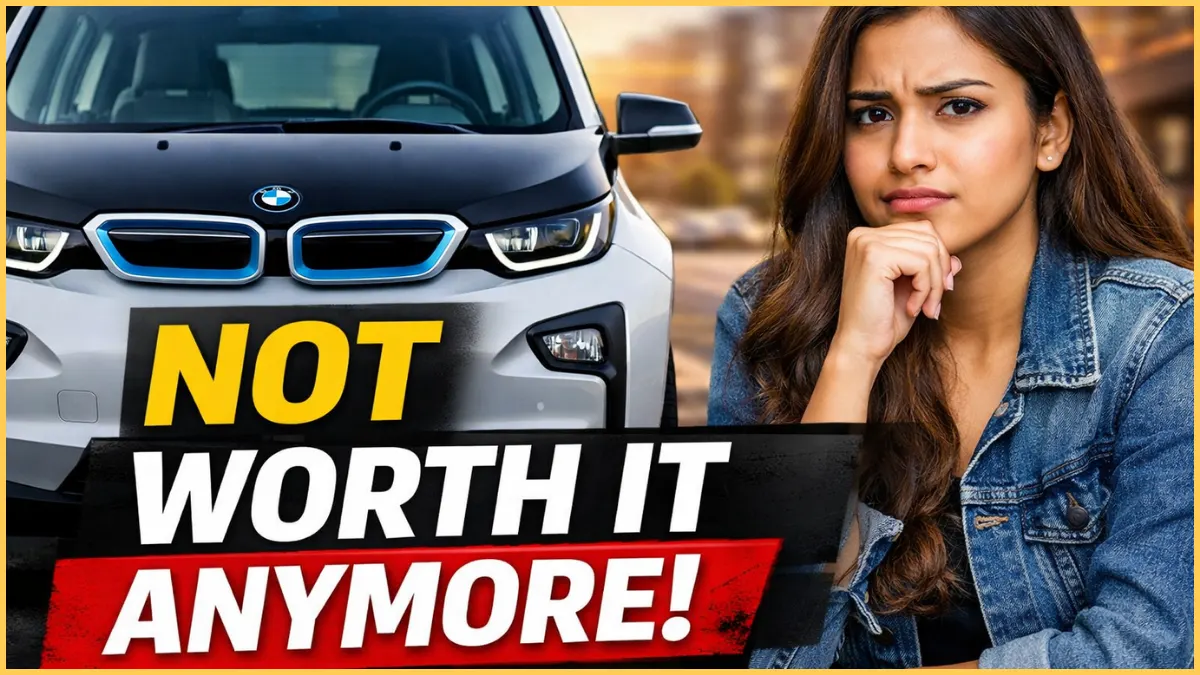

- The BMW i3 Was Ahead—But 2026 Tells a Different Story
- What Made the BMW i3 So Unique?
- BMW i3 Specs: Still Impressive on Paper?
- Why BMW i3 Feels Outdated in 2026
- Real-World Example: An Indian Buyer’s Dilemma
- Driving Experience: Still a City Champion
- Direct Answer: Is BMW i3 a Good Used EV in 2026?
- The Bigger Problem: Market Misalignment
- BMW i3 vs Modern EVs (2026 Reality Check)
- Range Extender: A Clever but Temporary Fix
- Direct Answer: Why Was BMW i3 Discontinued?
- Design: Still Ahead of Its Time
- Editorial Take: Brilliant Vision, Wrong Timing
- What Happens Next for BMW EV Strategy?
- Conclusion: A Car That Was Too Early for Its Own Good
- FAQs
The BMW i3 Was Ahead—But 2026 Tells a Different Story
The BMW i3 was once one of the most radical electric cars ever built—but in 2026, it raises a critical question: can early innovation survive in a fast-moving EV market? With modern electric cars offering double the range, better tech, and stronger value, the i3 now feels both iconic and outdated at the same time.
For buyers in India and globally, this isn’t just about one car. It’s about how quickly the EV landscape has evolved—and how even bold ideas can age faster than expected.
What Made the BMW i3 So Unique?
When BMW launched the i3, it didn’t just build an EV—it reimagined what a car could be.
Key Highlights:
Carbon-fiber reinforced body (extremely rare even today)
Purpose-built EV platform (not a converted petrol car)
Sustainable interior materials
Compact urban-focused design
Optional range extender (REx)
At a time when competitors were playing safe, BMW took a leap.
And that’s exactly where things get interesting.
BMW i3 Specs: Still Impressive on Paper?
| Feature | BMW i3 |
|---|---|
| Battery | Up to 42.2 kWh |
| Range (WLTP) | ~285 km |
| Real-World Range | ~220–250 km |
| Power | 168–181 hp |
| 0–100 km/h | ~7.3 seconds |
| Drive Type | RWD |
On paper, the performance still feels respectable for city use.
But here’s the catch.
Range—arguably the most critical EV metric today—is where the i3 starts to fall behind.
Why BMW i3 Feels Outdated in 2026
The BMW i3 feels outdated in 2026 because it cannot match modern EV expectations in range, technology, and practicality. Today’s electric cars routinely offer 400–600 km range, advanced infotainment, and better value, making the i3’s compact design and limited range harder to justify.
That’s where things shift.
The market didn’t just evolve—it redefined what buyers expect from an EV.
Real-World Example: An Indian Buyer’s Dilemma
Imagine a buyer in Delhi or Gurgaon in 2026 considering a used BMW i3 electric car.
They’re drawn to:
Premium BMW branding
Unique futuristic design
Sustainable appeal
But then reality hits.
For a similar price, they could get:
A new Tata Nexon EV with ~450 km range
Better service network
Lower maintenance anxiety
That’s where the i3 loses its edge—not emotionally, but practically.
Driving Experience: Still a City Champion
Let’s be fair—the BMW i3 still excels where it was designed to shine.
In urban environments:
Instant torque feels responsive
Compact size makes parking effortless
Tight turning radius is a huge advantage
For congested Indian cities, this is genuinely useful.
But take it on highways, and limitations become obvious:
Range anxiety kicks in quickly
Stability at high speed isn’t confidence-inspiring
Long-distance comfort isn’t its strength
This is not a versatile EV—it’s a specialized one.
Direct Answer: Is BMW i3 a Good Used EV in 2026?
The BMW i3 can still work as a used EV if your driving is limited to city use. However, its limited range, aging battery technology, and lack of widespread service support make it less practical than newer EVs available in India today.
The Bigger Problem: Market Misalignment
BMW didn’t fail with the i3 because of poor engineering.
It failed because it misread the market.
What buyers actually wanted:
Longer range
Familiar design
Practical space
Strong resale value
What BMW delivered:
Radical design
Limited range
Premium pricing
Niche appeal
That mismatch proved costly.
In India especially, where value and practicality dominate decisions, the i3 would have struggled even more.
BMW i3 vs Modern EVs (2026 Reality Check)
| Factor | BMW i3 | Modern EVs |
|---|---|---|
| Range | ~250 km | 400–600 km |
| Price Value | Weak | Strong |
| Tech | Outdated | Advanced |
| Practicality | Limited | High |
| Service Support | Weak in India | Strong |
This comparison makes one thing clear.
The BMW i3 review 2026 story is no longer about innovation—it’s about relevance.
Range Extender: A Clever but Temporary Fix
BMW tried to solve range anxiety with a petrol-powered range extender.
On paper, it sounded like the perfect bridge between EVs and ICE cars.
But in reality:
Small fuel tank limited usefulness
Added complexity
Increased maintenance
It was smart—but not scalable.
Direct Answer: Why Was BMW i3 Discontinued?
The BMW i3 was discontinued because it failed to meet evolving EV expectations around range, scalability, and pricing. As buyers shifted toward longer-range, more practical electric vehicles, the i3’s niche positioning became increasingly difficult to justify.
Design: Still Ahead of Its Time
Even today, the i3 doesn’t look outdated.
That’s rare.
Its tall stance, minimalist interior, and eco-conscious materials still feel futuristic. In fact, many modern EVs are only now adopting sustainability concepts BMW explored years ago.
But design alone isn’t enough anymore.
Buyers now prioritize function over form.
Editorial Take: Brilliant Vision, Wrong Timing
Here’s the honest truth.
BMW didn’t just misjudge the market—it moved too early.
The i3 solved problems that buyers weren’t ready to prioritize. Sustainability, lightweight materials, and urban mobility were forward-thinking ideas—but range and practicality mattered more.
And in the auto industry, timing is everything.
What Happens Next for BMW EV Strategy?
BMW has clearly shifted direction.
Instead of experimental urban EVs, it now focuses on:
Premium long-range EVs (iX, i7)
Performance-focused electric sedans (i4, i5)
Scalable EV platforms
Interestingly, many ideas from the i3—especially sustainability—are quietly influencing future models.
So while the i3 is gone, its impact isn’t.
Conclusion: A Car That Was Too Early for Its Own Good
The BMW i3 wasn’t a failure—it was a preview of the future.
But in 2026, the EV market has moved toward practicality, range, and value. And that’s where the i3 struggles to stay relevant.
If launched today with updated specs, it might have been a hit.
But as it stands, the i3 remains a fascinating reminder that being first isn’t always enough.
Click to Read More: Renault’s Duster Relaunch Could Disrupt the SUV Market Again
FAQs
What is the BMW i3 range in real-world conditions?
The BMW i3 delivers around 220–250 km in real-world driving, depending on conditions and driving style.
Is BMW i3 still worth buying in 2026?
It’s only worth buying if your usage is city-focused. For most buyers, newer EVs offer better range and practicality.
Why did BMW stop the i3?
BMW discontinued the i3 due to declining demand and a shift toward more practical, longer-range EV models.
Is BMW i3 available in India?
No, the BMW i3 was never officially launched in India and is only available via imports.
What made BMW i3 special?
Its carbon fiber construction, sustainable materials, and dedicated EV platform made it one of the most innovative electric cars ever built.