
- Rivian R2 Explained: A Compact Electric SUV Built for the Next Phase of EV Adoption
- What Is the Rivian R2?
- Why the Rivian R2 Matters More Than Any Rivian Before It
- Rivian R2 Design Philosophy: Minimal, Modern, Functional
- Performance and Range Expectations (What Buyers Actually Care About)
- Current Scenario: Where Rivian R2 Stands in 2026
- Rivian R2 vs Rivian R1S: Who Should Choose What?
- Rivian R2 vs Tesla Model Y: The Real Battle
- Ownership Experience: What Rivian Must Get Right
- Limitations and Risks Buyers Should Know
- Who Should Seriously Consider the Rivian R2?
- The Bigger Picture: Why Rivian R2 Could Shape the EV Market
- Conclusion Is the Rivian R2 Worth Waiting For?
- FAQs
Rivian R2 Explained: A Compact Electric SUV Built for the Next Phase of EV Adoption
The electric vehicle market is crowded, noisy, and brutally competitive. Every brand claims innovation. Every launch promises disruption. Yet only a few vehicles genuinely signal a turning point — not just for buyers, but for the company behind them.
The Rivian R2 is one of those vehicles.
Positioned as Rivian’s first truly mass-market electric SUV, the R2 is more than a new model. It represents a strategic reset — a chance for Rivian to move beyond niche adventure vehicles and into the mainstream EV conversation dominated by Tesla, Hyundai, and legacy automakers.
As we move deeper into 2026, interest around the Rivian R2 is accelerating. Search trends are climbing, investor sentiment is shifting, and potential buyers are asking a simple question:
Is the Rivian R2 the EV that finally makes Rivian a household name?
Let’s break it down — realistically, critically, and with today’s market context in mind.
What Is the Rivian R2?
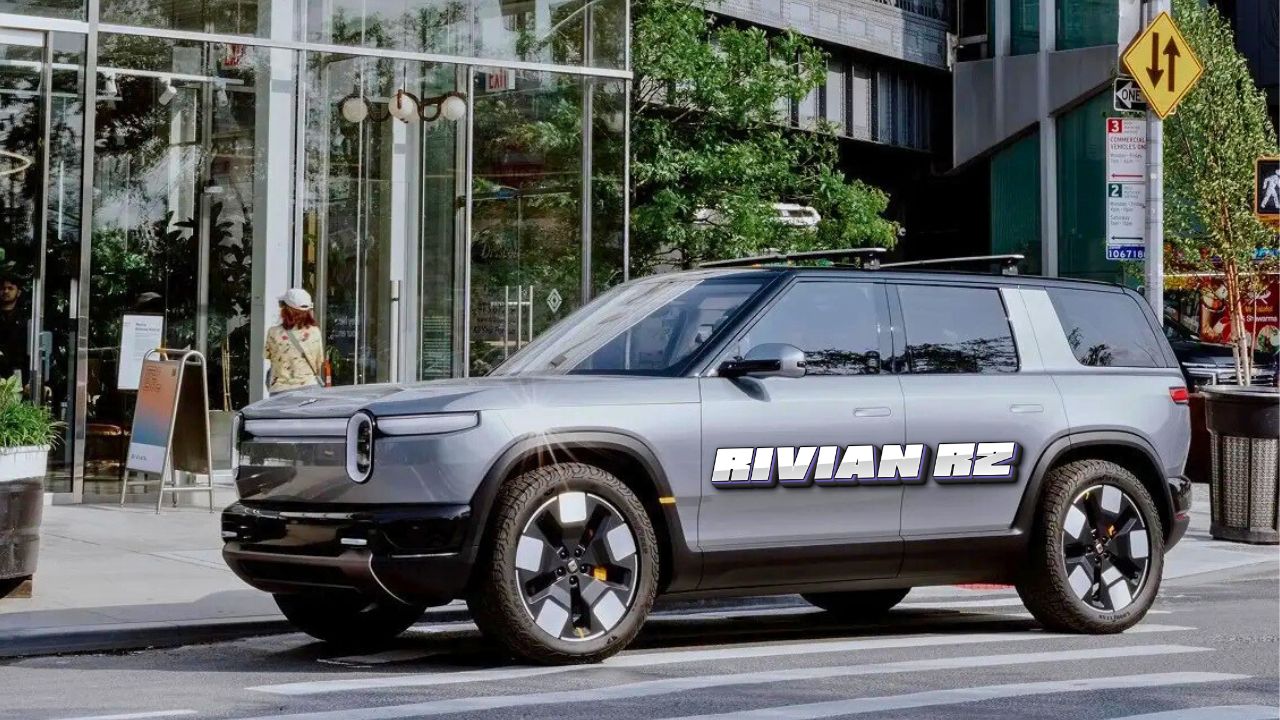
The Rivian R2 is an upcoming compact electric SUV, designed to sit below the R1S in both size and price. It is part of Rivian’s next-generation R2 platform, created specifically to:
Reduce production costs
Scale global manufacturing
Appeal to urban and suburban buyers
Compete directly in the $40,000–$50,000 EV segment
Unlike the rugged, premium-priced R1 lineup, the R2 is built for volume, efficiency, and everyday usability.
Key Positioning at a Glance
| Aspect | Rivian R2 |
|---|---|
| Segment | Compact Electric SUV |
| Platform | R2 (new scalable architecture) |
| Expected Launch | 2026 |
| Target Price | ~$45,000 (before incentives) |
| Core Focus | Mainstream buyers, global scale |
This shift matters — because Rivian’s survival depends on it.
Why the Rivian R2 Matters More Than Any Rivian Before It
Rivian has never struggled with product appeal. The R1T and R1S are widely praised for design, performance, and off-road capability. The problem has always been price and scale.
The R2 addresses both.
Strategic Importance of the R2 Platform
Lower Bill of Materials (BOM) compared to R1 vehicles
Simplified wiring and electronics architecture
Fewer variants, more standardization
Global-ready design for markets beyond North America
For Rivian, the R2 isn’t just a new SUV. It’s the foundation for future models, including potential R2 derivatives and international expansion.
Rivian R2 Design Philosophy: Minimal, Modern, Functional
Rivian’s design language has always been distinct — friendly yet purposeful. The R2 continues that theme, but with restraint.
Exterior Design Highlights
Smaller footprint than R1S
Cleaner surfaces and tighter proportions
Signature Rivian lighting with a softer, urban edge
Aero-focused shaping for improved efficiency
The goal is not to scream “adventure truck.”
It’s to quietly say, “I fit into your daily life.”
Interior: Less Gimmick, More Practical
Early previews and official statements point toward:
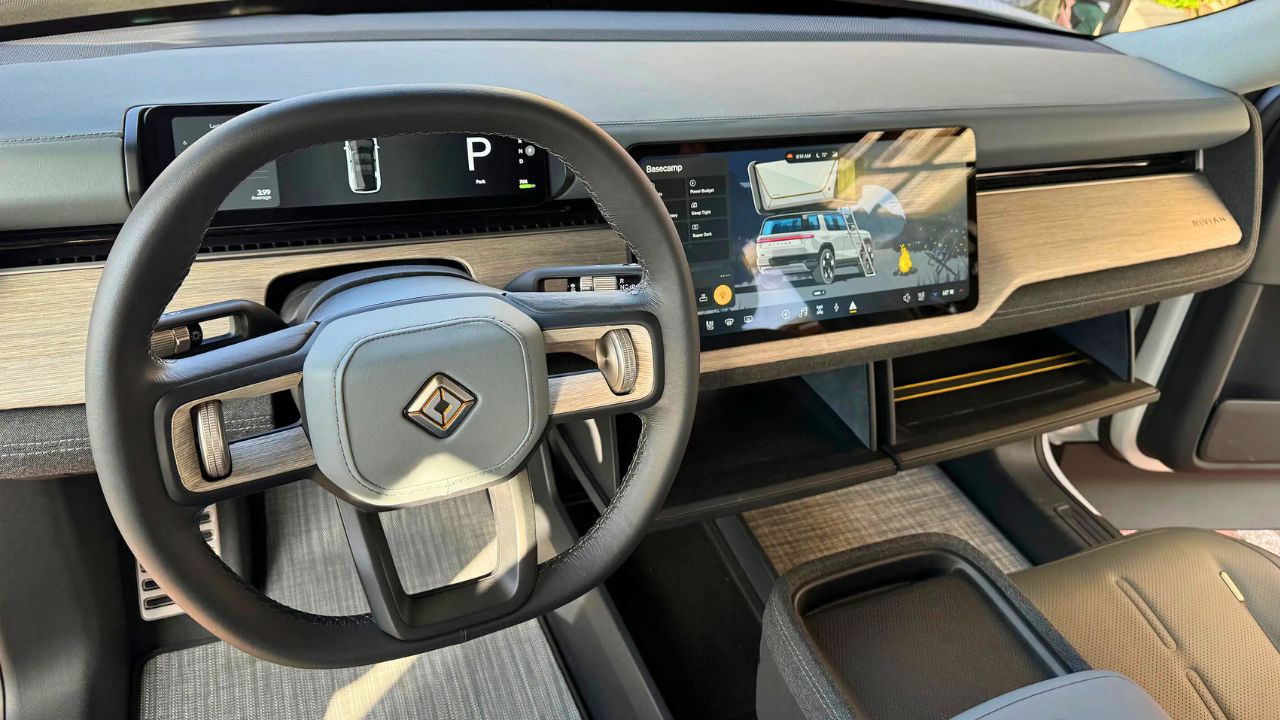
A simplified dashboard layout
Fewer physical buttons, but not screen overload
Sustainable materials with better durability
More rear-seat and cargo efficiency than expected
This is Rivian learning from real-world customer feedback — and it shows.
Performance and Range Expectations (What Buyers Actually Care About)
Rivian has not released final specs, but based on platform targets and market positioning, expectations are clear.
Expected Rivian R2 Performance Targets
Range: ~300 miles (EPA estimate)
Drivetrain: Single-motor and dual-motor options likely
0–60 mph: Sub-6 seconds (dual motor)
Charging: Fast-charge capable on CCS + NACS access
This places the R2 squarely against:
Tesla Model Y
Hyundai Ioniq 5
Ford Mustang Mach-E
Volkswagen ID.4
And that competition is intense.
Current Scenario: Where Rivian R2 Stands in 2026
As of 2026, the Rivian R2 sits at the center of Rivian’s comeback narrative.
What’s Happening Right Now
Rivian has publicly committed to the R2 platform as its path to profitability
Manufacturing plans emphasize cost discipline over rapid expansion
EV buyers are shifting from early-adopter enthusiasm to value-driven decisions
Government incentives are increasingly tied to affordability and local production
In simple terms:
The market now favors exactly what the R2 is trying to be.
Consumer Behavior Shift
Buyers today are asking:
“Is this EV worth it long-term?”
“Will this brand survive?”
“Can I service it easily?”
The R2 must answer all three convincingly.
Rivian R2 vs Rivian R1S: Who Should Choose What?
| Feature | Rivian R2 | Rivian R1S |
|---|---|---|
| Price | Lower | Premium |
| Size | Compact | Full-size |
| Target Buyer | Urban / family | Adventure / off-road |
| Platform | R2 | R1 |
| Volume Focus | High | Limited |
If the R1S is a statement vehicle, the R2 is a decision vehicle — bought with logic as much as emotion.
Rivian R2 vs Tesla Model Y: The Real Battle
This comparison will define the R2’s success.
Where Rivian R2 Could Win
Interior build quality
Brand differentiation
Driving dynamics
Less “appliance-like” feel
Where Tesla Still Dominates
Charging ecosystem
Software maturity
Global scale
Brand recognition
For many buyers, the R2 isn’t about beating Tesla outright — it’s about offering a credible, appealing alternative.
Ownership Experience: What Rivian Must Get Right
Rivian’s biggest challenge isn’t hardware. It’s experience.
Critical success factors for the R2 include:
Reliable service network expansion
Predictable software updates
Transparent pricing
Strong resale confidence
If Rivian delivers here, the R2 becomes sticky. If not, buyers will hesitate.
Limitations and Risks Buyers Should Know
No vehicle is perfect, and the Rivian R2 carries real risks:
Launch delays could hurt momentum
Pricing creep could weaken its value proposition
Competition is evolving rapidly
Rivian’s financial runway remains under scrutiny
Honest buyers should factor these in — not ignore them.
Who Should Seriously Consider the Rivian R2?
The R2 makes the most sense for:
First-time EV buyers who want something different from Tesla
Families seeking a premium-feeling compact SUV
Urban professionals who value design and sustainability
Buyers waiting for Rivian to become more accessible
If you loved Rivian’s idea but not its price — this is your moment.
The Bigger Picture: Why Rivian R2 Could Shape the EV Market
The EV industry doesn’t need more six-figure halo vehicles. It needs credible, desirable, affordable EVs that normal people actually buy.
That’s the role the Rivian R2 is trying to play.
If Rivian executes well, the R2 won’t just sell units — it will legitimize Rivian as a long-term automaker, not a startup experiment.
And in 2026, that distinction matters more than ever.
Conclusion Is the Rivian R2 Worth Waiting For?
The Rivian R2 is not hype for hype’s sake. It’s a calculated, necessary, and potentially transformative move — for Rivian and for buyers tired of the same EV choices.
If Rivian stays disciplined on pricing, delivers solid range, and nails ownership experience, the R2 could become one of the most important electric SUVs of the decade.
Not the flashiest. Not the fastest.
But possibly the most meaningful.
Read More>>>
FAQs
1. What is the Rivian R2?
The R2 is an upcoming compact electric SUV designed as Rivian’s most affordable and mass-market vehicle, expected to launch in 2026.
2. What will the Rivian R2 price be?
The R2 is expected to start around $45,000 before incentives, positioning it below the R1S and closer to mainstream EV competitors.
3. When will Rivian R2 launch?
Rivian has confirmed the R2 is targeted for a 2026 launch, with production focused on scalability and cost efficiency.
4. How much range will Rivian R2 offer?
Industry expectations point to approximately 300 miles of EPA-estimated range, depending on configuration.
5. Is Rivian R2 smaller than R1S?
Yes, the R2 is a compact SUV, significantly smaller and more city-friendly than the full-size R1S.
6. Will Rivian R2 compete with Tesla Model Y?
Directly. The R2 is positioned as a premium alternative to the Tesla Model Y in the compact electric SUV segment.
7. Why is Rivian R2 important for Rivian?
The R2 is crucial for Rivian’s long-term profitability, market expansion, and transition from niche to mainstream EV manufacturer.