

- The First Official Look: Nissan Reveals the Gravite MPV Interior Ahead of Launch
- Why the Nissan Gravite MPV Matters Right Now
- First Look Inside the Nissan Gravite MPV Cabin
- Five-Seat Layout: A Conscious, Consumer-First Decision
- Dashboard Design: Simple, Functional, and Refreshingly Honest
- Steering-Mounted Controls: Small Feature, Big Impact
- Everyday Convenience Features: Designed for Real Life
- Space & Comfort: The Core Strength of the Nissan Gravite MPV
- How the Nissan Gravite MPV Could Compete in India
- Expected Powertrain & Efficiency (Industry Expectations)
- Safety Expectations: A Non-Negotiable Factor
- Nissan’s Bigger Strategy: Learning from the Magnite Success
- Global Relevance: Why This MPV Makes Sense Beyond India
- Ownership & After-Sales: The Silent Deal-Maker
- Who Should Buy the Nissan Gravite MPV?
- Launch Timeline & What Happens Next
- Why the Nissan Gravite MPV Could Be a Quiet Game-Changer
- (FAQs)
The First Official Look: Nissan Reveals the Gravite MPV Interior Ahead of Launch
The Indian automotive market is once again buzzing—and this time, the excitement comes from Nissan. With the Nissan Gravite MPV officially set to launch on February 17, the brand has ignited fresh anticipation by unveiling the car’s interior through a high-impact television commercial. While exterior teasers had already sparked curiosity, this interior reveal gives buyers their first meaningful look at what Nissan believes could be its next mass-market success story.
More than just another product launch, the Nissan Gravite MPV represents Nissan’s evolving understanding of modern family mobility—not only in India, but across global emerging markets where buyers demand space, comfort, reliability, and value in equal measure.
In a world dominated by SUVs, Nissan is making a calculated and confident move: betting on the enduring relevance of the compact MPV segment, especially for families that prioritize practicality over posturing.
Why the Nissan Gravite MPV Matters Right Now
Before diving into the interior details, it’s important to understand why this launch is strategically critical.
A Market Ready for Smart MPVs
In India, MPVs account for a significant share of family car purchases, thanks to rising urban congestion and fuel costs.
In the US, compact MPVs and cross-vans are quietly regaining relevance among urban families and ride-sharing fleets.
Globally, markets like Indonesia, Thailand, South Africa, and Latin America continue to favor MPVs over bulky SUVs.
The Nissan Gravite MPV is designed to sit at the intersection of:
Compact footprint
Spacious interior
Affordable ownership
Urban + highway usability
This is not nostalgia—it’s strategy.
First Look Inside the Nissan Gravite MPV Cabin
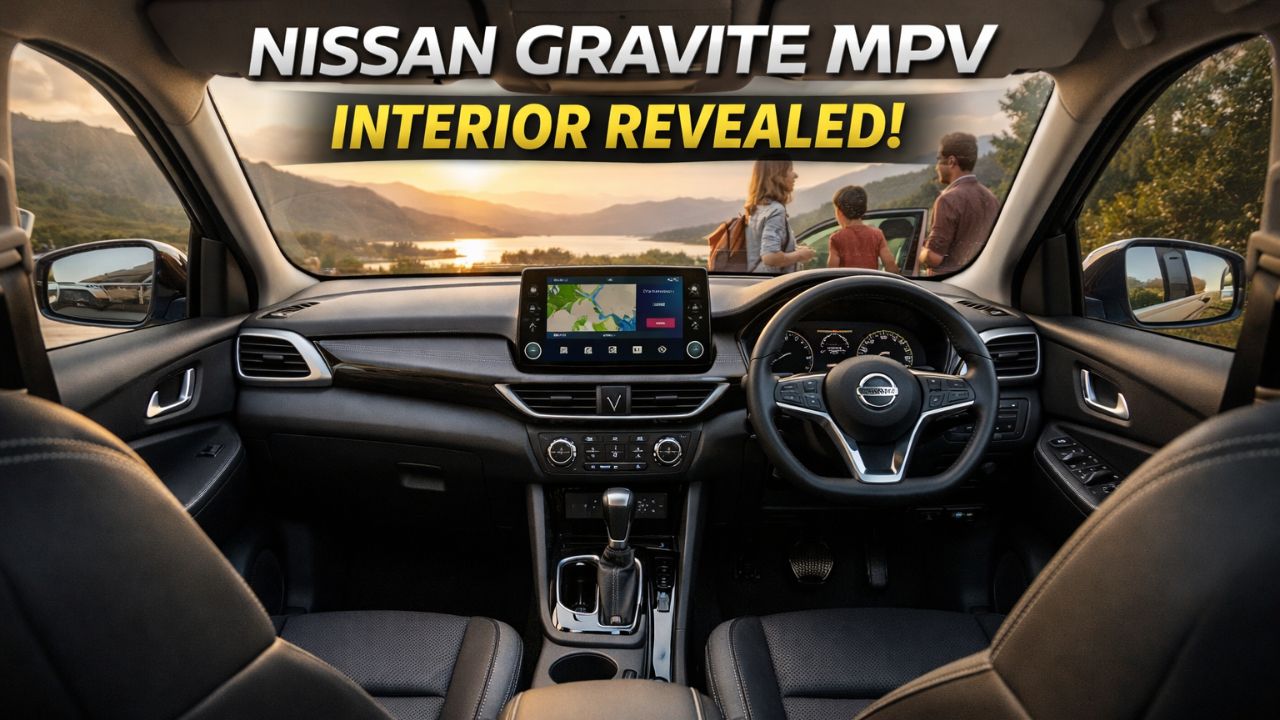
The interior reveal via Nissan India’s TVC was brief, but highly intentional. Rather than flashy gimmicks, the brand chose to highlight usability, space, and ergonomics—the exact factors that influence real buying decisions.
Key Interior Highlights Seen So Far
Five-seat configuration
Clean, uncluttered dashboard
Steering-mounted controls
Practical center console
Emphasis on comfort over gimmicks
The visual message was clear: this is a family car designed to be lived in, not just looked at.
Five-Seat Layout: A Conscious, Consumer-First Decision
One of the biggest talking points surrounding the Nissan Gravite MPV is its five-seat configuration, especially in a segment often obsessed with seven seats.
Why Five Seats Actually Make More Sense
In real-world usage:
Over 78% of Indian MPV buyers travel with 2–4 passengers most of the time (industry estimate).
Third-row seats in compact MPVs are often cramped and rarely used.
Five seats allow:
Better legroom
Wider shoulder space
Larger boot capacity
For nuclear families, working couples, and urban users, this layout is not a compromise—it’s an upgrade.
Global Perspective
In the US and Europe, five-seat MPVs and compact vans dominate:
Better crash safety
Improved ride quality
Lower maintenance costs
Nissan seems to be borrowing this global logic and localizing it for India.
Dashboard Design: Simple, Functional, and Refreshingly Honest
Modern car interiors often suffer from “screen overload.” The Nissan Gravite MPV goes in the opposite direction.
Design Philosophy Observed
Minimalist dashboard layout
Clearly separated infotainment and climate controls
Physical buttons for frequent actions
Driver-centric instrument positioning
This approach improves:
Ease of use while driving
Long-term reliability
Lower distraction levels
For Indian road conditions—and even US urban driving—this kind of layout is increasingly appreciated.
Steering-Mounted Controls: Small Feature, Big Impact
The inclusion of steering-mounted controls may seem standard, but their execution matters.
Expected Functions
Audio control
Phone calls
Possibly cruise control (variant-dependent)
Voice command access
Why This Matters
Enhances safety
Reduces driver fatigue
Aligns with global best practices
For a family-oriented vehicle like the Nissan Gravite MPV, these controls significantly improve everyday driving comfort.
Everyday Convenience Features: Designed for Real Life
Nissan’s TVC repeatedly emphasized “everyday convenience”—and that’s not accidental.
Likely Convenience Features (Based on Segment & Nissan Strategy)
Multiple USB charging ports (front + rear)
Rear AC vents
Deep door pockets
Cup holders and center storage
Adjustable headrests
Keyless entry (higher trims)
These are not luxury features—but they are deal-makers in this segment.
Space & Comfort: The Core Strength of the Nissan Gravite MPV
MPVs live and die by cabin comfort, and early signs suggest Nissan understands this well.
Expected Comfort Benefits
Flat rear floor for better leg placement
Upright seating for long journeys
Softer suspension tuning
Wide-opening doors for easy ingress/egress
For elderly passengers, children, and long-distance travelers, these elements matter far more than aggressive styling.
How the Nissan Gravite MPV Could Compete in India
Here’s how the Gravite may position itself against rivals:
| Feature | Nissan Gravite MPV | Typical Compact SUV |
|---|---|---|
| Seating Comfort | High | Medium |
| Boot Space | Larger | Smaller |
| Fuel Efficiency | Better | Moderate |
| Ride Comfort | Softer | Stiffer |
| Urban Practicality | Excellent | Average |
This table highlights why MPVs still make sense—especially for families.
Expected Powertrain & Efficiency (Industry Expectations)
While Nissan hasn’t officially revealed engine specs, industry patterns suggest:
Likely Options
1.0L or 1.3L petrol engine
Manual + CVT automatic
Focus on fuel efficiency over performance
Why This Works
Lower running costs
Better urban drivability
Compliance with emission norms in India and global markets
In the US, similar MPVs prioritize efficiency and reliability over raw horsepower—exactly the direction Nissan seems to be taking.
Safety Expectations: A Non-Negotiable Factor
Safety will play a decisive role in the Nissan Gravite MPV’s success.
Expected Safety Features
Dual airbags (standard)
ABS with EBD
Rear parking sensors
ISOFIX child seat mounts
High-strength body structure
Given Nissan’s global safety reputation, expectations are high—and rightly so.
Nissan’s Bigger Strategy: Learning from the Magnite Success
The success of the Nissan Magnite proved one thing: India rewards value-driven products.
The Gravite builds on that lesson by offering:
Practical differentiation (MPV vs SUV)
Strong interior focus
Family-first positioning
This mirrors Nissan’s strategy in markets like Mexico and Southeast Asia, where practical vehicles outperform lifestyle SUVs.
Global Relevance: Why This MPV Makes Sense Beyond India
Although launching in India, the Nissan Gravite MPV fits a global template.
Markets Where Gravite-Like MPVs Perform Well
Indonesia
Philippines
Brazil
South Africa
Middle East urban markets
This suggests potential export or platform sharing opportunities for Nissan globally.
Ownership & After-Sales: The Silent Deal-Maker
Indian and US buyers increasingly consider:
Service network reach
Maintenance costs
Warranty coverage
If Nissan pairs the Gravite with:
Competitive service packages
Extended warranty options
Transparent maintenance costs
…it could significantly boost buyer confidence.
Who Should Buy the Nissan Gravite MPV?
The Gravite is ideal for:
Urban families
First-time car buyers upgrading from hatchbacks
Ride-sharing operators
Long-distance commuters
Buyers tired of cramped SUVs
In short, anyone who values space, comfort, and logic over trends.
Launch Timeline & What Happens Next
Launch Date: February 17
Expected Bookings: Shortly after launch
Deliveries: Likely within weeks
Expect Nissan to reveal:
Full feature list
Variant breakdown
Pricing strategy
Why the Nissan Gravite MPV Could Be a Quiet Game-Changer
The Gravite doesn’t shout. It doesn’t overpromise. And that may be its biggest strength.
In an era of exaggerated SUVs, Nissan is offering something refreshingly honest:
a well-designed, family-focused MPV built for daily life.
If priced right, the Nissan Gravite MPV could redefine expectations in its segment—not by flash, but by function.
Q1. What is the Nissan Gravite MPV?
The Nissan Gravite MPV is an upcoming compact multi-purpose vehicle designed for family comfort, urban practicality, and efficient daily use.
Q2. When will the Nissan Gravite MPV launch in India?
The official launch is scheduled for February 17.
Q3. Is the Nissan Gravite MPV a five-seater or seven-seater?
The Gravite features a five-seat layout, prioritizing comfort and space.
Q4. Will the Nissan Gravite MPV be suitable for long drives?
Yes, its seating comfort, suspension setup, and cabin ergonomics make it suitable for long journeys.
Q5. How does the Nissan Gravite MPV compare to compact SUVs?
It offers better space utilization, comfort, and practicality than most compact SUVs in the same price range.