
- Who Should Buy Honda Dio in 2026?
- Honda Dio 2026 Overview: What Makes It Relevant Today?
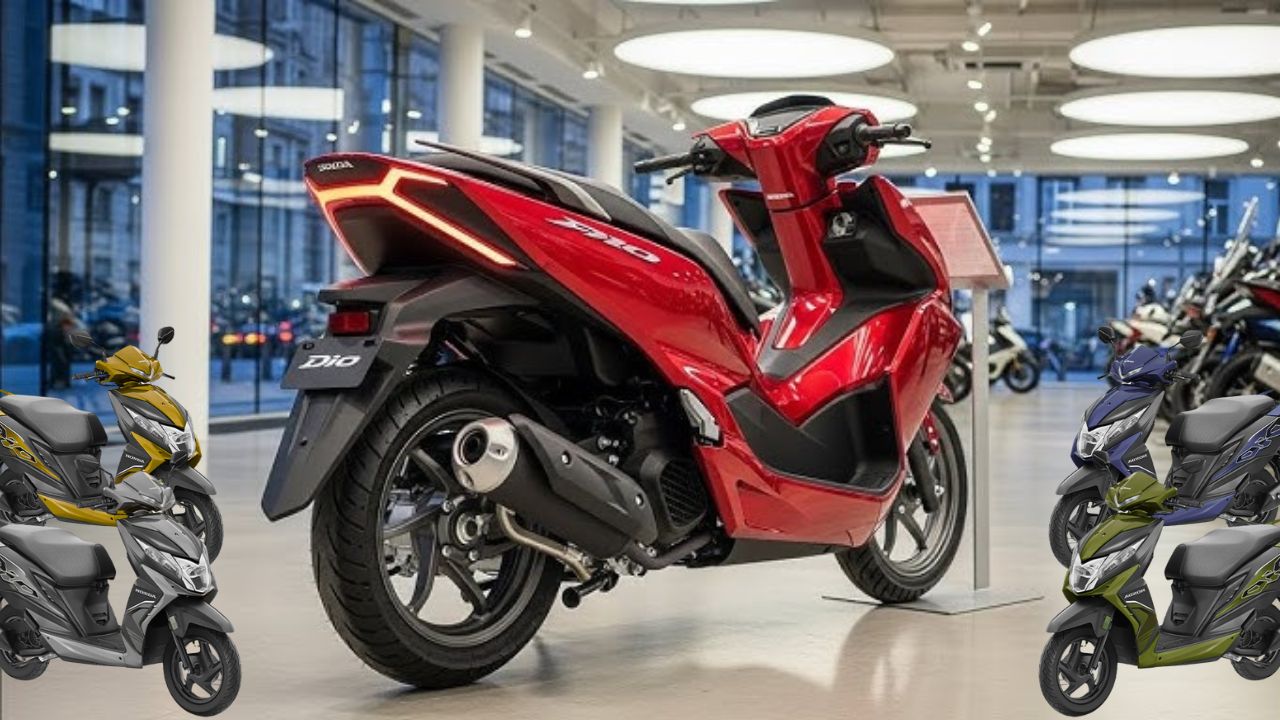
- Design and Styling: Still a Youth Favorite
- Engine and Performance: The 125cc Conversation in 2026
- Real-World Mileage: What You Can Expect
- Ride Quality and Handling: Built for City Conditions
- Features and Technology: Practical, Not Overdone
- Comfort and Ergonomics: Daily Usability Matters
- Current Scenario 2026: Where Honda Dio Fits in Today’s Market
- Honda Dio vs Other Scooters in 2026
- Maintenance, Service, and Ownership Experience
- Who Should Consider Honda Dio 2026?
- Limitations to Keep in Mind
- Long-Term Value and Resale Potential
- Conclusion:
- FAQs
Who Should Buy Honda Dio in 2026?
The Indian scooter market in 2026 is more competitive than ever. Buyers today are not just looking for affordability; they want performance, reliability, modern features, and long-term value. Amid rising electric scooter adoption and frequent petrol price fluctuations, Honda continues to rely on one of its strongest youth-oriented brands—the Honda Dio.
With growing discussions around a more powerful Honda Dio 125cc for 2026, interest in the model has surged again. Whether you are a college student, a first-time buyer, or a daily commuter considering a petrol scooter over electric, this detailed guide answers the most important question: Is the Honda Dio still worth buying in 2026?
This article covers real-world mileage, design, performance expectations, ownership experience, and the current market scenario—without hype, and with practical clarity.
Honda Dio 2026 Overview: What Makes It Relevant Today?
Honda Dio has always been positioned as a sporty alternative to conservative family scooters. In 2026, that positioning matters even more.
Core appeal of Honda Dio:
Youth-focused design language
Proven Honda engine reliability
Easy city usability
Strong resale and service network
With discussions and expectations around a 125cc Honda Dio variant, the model is being viewed not just as a style statement, but as a more capable daily scooter.
Design and Styling: Still a Youth Favorite
Honda has retained the aggressive visual identity of the Dio while refining it over time.
Key design highlights:
Sharp front apron with angular panels
Sporty headlamp design with modern lighting elements
Bold body graphics and dual-tone color options
Lightweight yet muscular stance
Unlike neutral scooters designed for all age groups, Honda Dio clearly targets younger riders and urban commuters who want something visually energetic.
Engine and Performance: The 125cc Conversation in 2026
Traditionally, Honda Dio has been powered by a 110cc engine. However, in 2026, buyer interest has shifted toward more powerful scooters, especially in the 125cc segment.
Expected performance direction:
Better pickup for city traffic
Improved cruising comfort
Smoother throttle response with fuel injection
Compliance with latest emission norms
A 125cc Honda Dio makes sense in today’s market because riders now expect quick acceleration, effortless overtakes, and stability with a pillion—especially in expanding urban areas.
Real-World Mileage: What You Can Expect
Mileage remains one of the biggest deciding factors for Indian buyers, even in 2026.
Expected real-world fuel efficiency:
City usage: approximately 45–50 km/l
Mixed conditions: around 50 km/l
While a 125cc engine naturally consumes more fuel than a 110cc unit, Honda’s engine tuning typically prioritizes efficiency without sacrificing refinement.
Ride Quality and Handling: Built for City Conditions
Honda Dio’s lightweight construction has always been one of its biggest strengths.
Riding experience highlights:
Easy maneuverability in traffic
Light steering and stable handling
Beginner-friendly control
Stress-free parking and U-turns
Even with a higher-capacity engine, the Dio is expected to retain its agile character, making it suitable for dense city riding and daily commutes.
Features and Technology: Practical, Not Overdone
Honda Dio focuses on useful everyday features rather than excessive technology.
Expected feature set:
Digital instrument cluster
External fuel filling
Engine start-stop switch
Combined braking system (CBS)
Side-stand engine cut-off
This approach keeps the scooter reliable and easy to maintain while still meeting modern expectations.
Comfort and Ergonomics: Daily Usability Matters
Despite its sporty styling, Honda Dio remains comfortable for regular use.
Comfort factors:
Upright riding posture
Adequate seat cushioning for short to medium rides
Balanced weight distribution
Good legroom for average-height riders
For extended highway rides, a scooter is never ideal, but for daily city travel, the Dio performs well.
Current Scenario 2026: Where Honda Dio Fits in Today’s Market
The two-wheeler market in India is currently divided between petrol and electric scooters.
Market reality in 2026:
Electric scooters are growing but still face range and charging concerns
Petrol scooters remain dominant in Tier-2 and Tier-3 cities
Buyers prioritize reliability, resale value, and service availability
In this environment, Honda Dio continues to be a safe, trusted option, especially for buyers not ready to switch to electric mobility.
Honda’s extensive service network and long-term brand trust give Dio a significant advantage over newer, less-proven competitors.
Honda Dio vs Other Scooters in 2026
Compared to 110cc scooters:
Dio offers a sportier design
Better appeal among young riders
Compared to 125cc scooters:
Dio focuses more on balance than raw performance
Expected to be lighter and more efficient
The Dio sits in a sweet spot between practicality and style.
Maintenance, Service, and Ownership Experience
One of the strongest reasons behind Honda Dio’s long-standing success is low ownership stress.
Ownership benefits:
Affordable service costs
Widely available spare parts
Proven engine durability
Strong resale demand
This makes it particularly attractive for students, office commuters, and families looking for a dependable scooter.
Who Should Consider Honda Dio 2026?
Honda Dio is a good choice if you:
Want a sporty-looking scooter for daily use
Prefer petrol reliability over electric experimentation
Are a first-time two-wheeler buyer
Value resale and low maintenance
It may not suit riders seeking advanced connectivity features or highway touring performance.
Limitations to Keep in Mind
To be realistic, Honda Dio has some drawbacks:
Limited advanced connectivity
Focused mainly on city riding
Design updates are evolutionary, not radical
However, these limitations are acceptable for its intended audience.
Long-Term Value and Resale Potential
Honda Dio consistently performs well in the used scooter market.
Reasons include:
High brand trust
Reliable engine platform
Strong demand among young buyers
This reduces the effective cost of ownership over time.
Conclusion:
The Honda Dio remains relevant because it does not try to be everything. It focuses on what most Indian riders actually need: reliability, ease of use, acceptable mileage, and strong after-sales support.
If the 125cc direction materializes fully, the Dio becomes even more compelling in 2026—offering better performance without losing its core identity.
For buyers looking for a dependable petrol scooter with a sporty personality, Honda Dio continues to justify its popularity.
Read More: goutamias.in
FAQs
Is Dio suitable for daily commuting in 2026?
Yes, it is well-suited for daily city commuting due to its lightweight build and smooth engine.
What mileage can Dio deliver in real-world conditions?
Expect around 45–50 km/l in normal city riding conditions.
Is a 125cc Dio better than the 110cc version?
A 125cc version offers better pickup and riding comfort, especially with a pillion.
Is Dio good for beginners?
Yes, its handling and manageable power delivery make it beginner-friendly.
How is Dio’s maintenance cost?
Maintenance costs are generally low, supported by Honda’s wide service network.
Is Dio still worth buying over electric scooters?
For buyers concerned about charging, range, and long-term reliability, Honda Dio remains a practical choice.