

- Bharat Taxi: The new ride-hailing app aims to improve driver earnings and fare transparency as India rethinks gig economy regulation
- Why the Existing Ride-Hailing Model Needed a Reset
- What Is Bharat Taxi and Why It’s Different
- Zero-Commission Model That Directly Increases Driver Income
- Driver Ownership Model: From Gig Worker to Stakeholder
- No Surge Pricing: Predictable Fares for Indian Commuters
- Sustainable Revenue With Reinvestment Into Driver Welfare
- Government Backing: The Trust Multiplier
- How Bharat Taxi Could Reshape India’s Gig Economy
- Challenges Bharat Taxi Must Overcome
- Bharat Taxi vs Private Ride-Hailing Apps
- What Means for the Future of Urban Mobility
- Conclusion
- FAQs
Bharat Taxi: The new ride-hailing app aims to improve driver earnings and fare transparency as India rethinks gig economy regulation
India’s urban mobility ecosystem is at a turning point. For nearly a decade, ride-hailing apps reshaped how millions commute daily, promising convenience, speed, and affordability. Yet behind the glossy interfaces and rapid growth, cracks began to show. Drivers struggled with shrinking earnings due to high commissions. Riders faced unpredictable fares triggered by surge pricing. Trust—once the strongest asset of app-based mobility—slowly eroded.
Against this backdrop, Bharat Taxi has emerged not as just another competitor, but as a system-level reset. Backed by the Indian government, Bharat Taxi introduces a radically different approach to ride-hailing—one centered on driver welfare, transparent pricing, and long-term sustainability. This is not incremental change. It is structural reform.
In an industry dominated by aggressive algorithms and surge-driven pricing, Bharat Taxi introduces a public-interest approach to ride-hailing that could redefine how India moves.
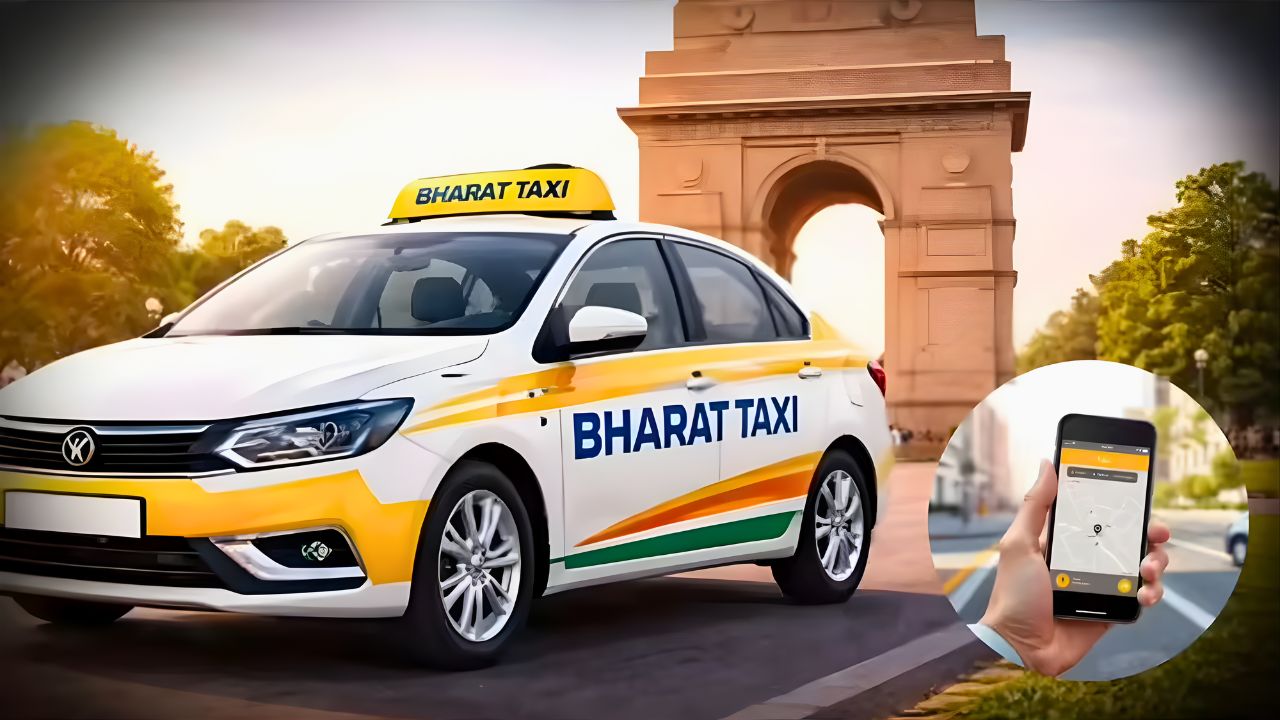
Why the Existing Ride-Hailing Model Needed a Reset
Before understanding Bharat Taxi’s significance, it’s essential to look at the pain points that dominated the industry.
Driver Challenges That Could No Longer Be Ignored
High platform commissions (20–30%)
Opaque incentive calculations
No long-term social security
Algorithm-driven penalties without human recourse
Zero ownership or profit participation
For many drivers, ride-hailing became a survival job rather than a growth opportunity.
Rider Frustrations in Daily Commutes
Surge pricing during peak hours and bad weather
Inconsistent fares for the same route
Declining service quality
Trust issues around cancellations and pricing fairness
The result was a system that scaled fast—but not fairly.
What Is Bharat Taxi and Why It’s Different
Bharat Taxi is a government-backed ride-hailing platform designed to rebalance the ecosystem. Instead of optimizing solely for platform profit, it prioritizes driver income stability, pricing transparency, and public trust.
At its core, Bharat Taxi is aligned with India’s broader digital public infrastructure vision—where technology enables inclusion rather than extraction.
Zero-Commission Model That Directly Increases Driver Income
One of the most disruptive elements of Bharat Taxi is its zero-commission launch model.
How This Changes the Economics for Drivers
| Factor | Private Ride Apps | Bharat Taxi |
|---|---|---|
| Commission | 20–30% per ride | 0% (initial phase) |
| Earnings Visibility | Algorithm-controlled | Transparent |
| Incentive Dependency | High | Low |
| Take-Home Pay | Reduced | Maximum |
For drivers, this means every rupee earned goes home—no silent deductions, no confusing incentives.
This isn’t just a recruitment tactic. It’s a trust-building mechanism that immediately improves driver livelihoods and reduces financial stress.
Driver Ownership Model: From Gig Worker to Stakeholder
Bharat Taxi goes a step further by introducing a driver ownership framework—a rare concept in platform-based mobility.
What Driver Ownership Really Means
Participation in platform success
Collective decision-making mechanisms
Long-term value creation, not just daily payouts
Psychological shift from “app dependency” to “shared enterprise”
When drivers feel ownership, service quality improves organically. Vehicle upkeep improves. Rider interactions improve. Accountability becomes collective rather than enforced by algorithms.
This model aligns strongly with EEAT principles—especially Experience and Trust—making Bharat Taxi structurally more reliable than purely profit-driven platforms.
No Surge Pricing: Predictable Fares for Indian Commuters
Surge pricing has been one of the most criticized aspects of modern ride-hailing.
Bharat Taxi takes a firm stand: no surge pricing.
What This Means for Riders
Same fare for the same route, regardless of demand spikes
No price shocks during rain, festivals, or emergencies
Easier budgeting for daily commuters
Restored trust in app-based transport
In a country where ride-hailing is often a necessity rather than a luxury, predictable pricing is not a feature—it’s a public service.
Sustainable Revenue With Reinvestment Into Driver Welfare
Bharat Taxi acknowledges that long-term sustainability requires revenue. However, its model flips the destination of that revenue.
Instead of profit extraction, future platform fees will be reinvested into driver welfare programs.
Potential Welfare Benefits
Health insurance coverage
Accident and life insurance
Pension or provident fund structures
Skill development and training
Vehicle maintenance support
This creates a closed-loop ecosystem where platform growth directly improves driver security.
Government Backing: The Trust Multiplier
The most powerful differentiator Bharat Taxi holds is institutional backing.
Why Government Support Matters
Regulatory stability
Long-term policy alignment
Stronger safety and compliance norms
Higher public trust
Reduced risk of sudden policy or pricing changes
For riders, this means reliability.
For drivers, this means security.
For the ecosystem, this means accountability.
How Bharat Taxi Could Reshape India’s Gig Economy
Bharat Taxi is not just a transport solution—it’s a policy signal.
Ripple Effects Across the Gig Economy
Pressure on private platforms to reduce commissions
Renewed focus on worker welfare
Emergence of cooperative platform models
Shift from venture-capital dependency to public infrastructure thinking
If successful, this model could influence food delivery, logistics, and other gig sectors across India.
Challenges Bharat Taxi Must Overcome
No disruption comes without resistance.
Key Challenges Ahead
Scaling across cities with consistent service quality
Competing with deeply entrenched private apps
Technology reliability at national scale
Driver onboarding and training
Rider habit change
However, Bharat Taxi’s moral and structural advantage gives it a strong foundation that pure market players often lack.
Bharat Taxi vs Private Ride-Hailing Apps
| Aspect | Bharat Taxi | Private Apps |
|---|---|---|
| Ownership | Driver-centric | Platform-centric |
| Commission | 0% (initial) | High |
| Surge Pricing | No | Yes |
| Welfare Programs | Planned & structured | Limited |
| Trust Factor | High (Govt-backed) | Variable |
What Means for the Future of Urban Mobility
Its represents a rare convergence of technology, policy, and social responsibility. It shows that scale and fairness do not have to be mutually exclusive. This is not just competition—it’s course correction.
Conclusion
Bharat Taxi marks a defining moment in India’s digital mobility journey. By prioritizing drivers, eliminating surge pricing, and operating under government stewardship, it introduces a model where economic dignity and consumer trust coexist. If executed well, Bharat Taxi will not merely coexist with existing ride-hailing apps—it will redefine what Indians expect from them. This is not just a new app. It is a new standard.
Read More >>> GoutamIAS
FAQs
1. What is Bharat Taxi?
Government-backed ride-hailing app in India focused on zero commission for drivers and fair pricing for riders.
2. Does charge commission from drivers?
No, currently operates on a zero-commission model during its initial phase.
3. Is surge pricing applicable on Bharat Taxi?
No, does not implement surge pricing, ensuring predictable fares.
4. How is different from Ola and Uber?
Government-backed, offers zero commission, no surge pricing, and emphasizes driver ownership.
5. Is Bharat Taxi safe and reliable?
Yes, government backing ensures regulatory compliance, safety standards, and long-term reliability.