

- Why the 2026 Daytona 24 Is Already One of the Most Anticipated Races in Years
- 24 Hours of Daytona 2026 – Quick Facts
- What Is the 24 Hours of Daytona and Why It Matters in 2026
- 24 Hours of Daytona 2026 Date, Schedule, and Venue
- Latest Updates and Developments for Daytona 2026
- Why Daytona Is One of the Toughest Races in Motorsport
- Strategic Trends to Watch in 2026
- How the 2026 Daytona 24 Impacts the Rest of the IMSA Season
- What Fans and Viewers Can Expect
- What Comes Next After Daytona 2026
- Conclusion:
- FAQs
Why the 2026 Daytona 24 Is Already One of the Most Anticipated Races in Years
As the motorsport world turns the page into 2026, all roads once again lead to Daytona Beach, Florida. The 24 Hours of Daytona 2026, officially known as the Rolex 24 at Daytona, is not just the opening round of the IMSA Weather Tech Sports Car Championship—it is the race that sets the tone for the entire global endurance racing season.
With manufacturer rivalries intensifying, regulation stability in the GTP era, and a deep field of world-class drivers confirmed or expected, the 2026 edition is shaping up to be one of the most competitive Daytona races of the modern era. IMSA’s continued push for relevance alongside the FIA World Endurance Championship has turned Daytona into a true global battleground, not just an American classic.
As of January 2026, IMSA has confirmed key sporting regulations, preliminary schedules, and early manufacturer commitments—signaling a race that blends continuity with high-stakes evolution.
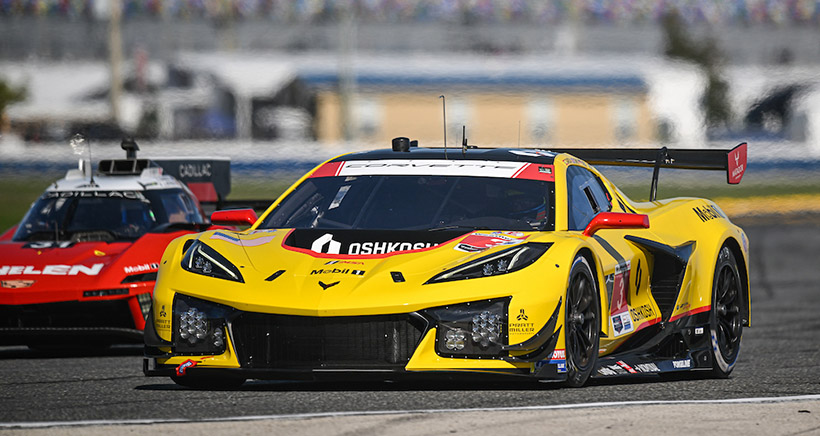
24 Hours of Daytona 2026 – Quick Facts
| Identifier | Detail | Value |
|---|---|---|
| Race Name | Official title | Rolex 24 at Daytona |
| Series | Governing championship | IMSA Weather Tech Sports Car Championship |
| Calendar Slot | Seasonal position | Opening round |
| Schedule | Timing | Late January 2026 |
| Distance | Duration | 24 hours |
| Venue | Location | Daytona International Speedway |
| Circuit Size | Length | 3.56 miles (5.73 km) |
| Configuration | Track design | Oval plus infield road course |
| Categories | Total entries | Four classes |
| Class A | GTP description | Hybrid prototypes, overall winners |
| Class B | LMP2 description | Spec prototypes, Pro-Am field |
| Class C | GTD Pro description | GT3 cars, professional drivers |
| Class D | GTD description | GT3 cars, Pro-Am crews |
| Objective | Top category aim | Overall victory |
| Entry 1 | Porsche model | 963 |
| Entry 2 | Cadillac model | V-Series.R |
| Entry 3 | BMW model | M Hybrid V8 |
| Entry 4 | Acura model | ARX-06 |
| Entry 5 | Lamborghini model | SC63 |
What Is the 24 Hours of Daytona and Why It Matters in 2026
The Rolex 24 at Daytona is a twice-around-the-clock endurance race held at the Daytona International Speedway’s 3.56-mile road course. Since its modern revival in 1966, it has become one of the most prestigious endurance races in the world, standing alongside Le Mans and Spa.
Why the 2026 Edition Is Especially Important
The 2026 race arrives at a critical moment for IMSA and global endurance racing:
The GTP (Grand Touring Prototype) era is now mature, with manufacturers fully exploiting the ruleset
Factory programs are more stable than in previous years
Driver line-ups feature unprecedented crossover between Formula 1, WEC, IndyCar, and GT racing
IMSA’s Balance of Performance philosophy is under intense scrutiny and refinement
In short, 2026 is about execution, not experimentation.
24 Hours of Daytona 2026 Date, Schedule, and Venue
Official Date (As Announced by IMSA)
Race weekend: Late January 2026
Race start: Saturday afternoon
Finish: Sunday afternoon (24 hours later)
IMSA traditionally confirms final session timings closer to race week, but the structure remains consistent:
Typical Weekend Format
Roar Before the 24 (early January): Mandatory testing and qualifying races
Practice sessions across multiple days
Qualifying to set class poles
24-hour race start on Saturday
The event once again takes place at Daytona International Speedway, using the high-speed oval combined with the infield road course—one of the most demanding circuits for both car and driver.
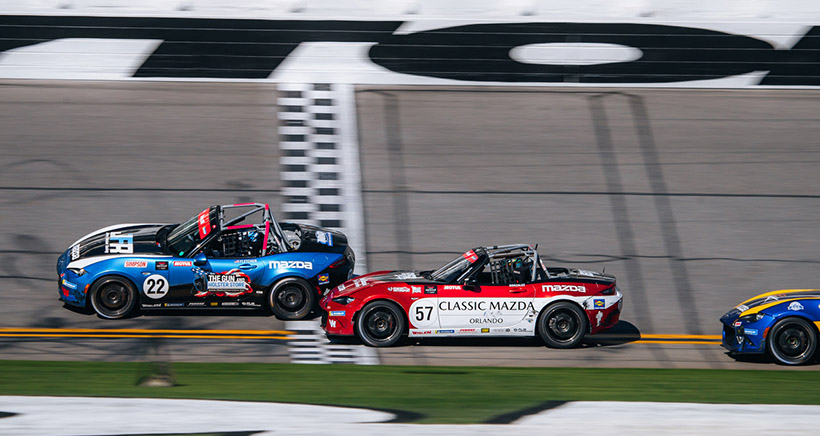
Classes Competing at the 2026 Rolex 24
IMSA has confirmed that the familiar multi-class structure continues into 2026, with four headline categories.
GTP (Grand Touring Prototype)
The top class and the overall race winner contender.
Expected manufacturers:
Porsche
Cadillac
BMW
Acura
Lamborghini
The 2026 season represents one of the strongest GTP grids yet, with continuous development and reliability gains over the past two seasons.
LMP2
Still a fan favorite for its pure racing and depth of competition.
Pro-Am-focused
Spec chassis and engines
Often produces dramatic overnight battles
GTD Pro
Factory-backed GT3 racing with professional driver line-ups.
Manufacturers expected:
Ferrari
Corvette
Porsche
BMW
Mercedes-AMG
Lexus
GTD
Customer teams with Pro-Am combinations, often delivering the most unpredictable results.
Latest Updates and Developments for Daytona 2026
Regulation Stability Brings Closer Racing
IMSA has opted for minimal rule changes for 2026, focusing instead on fine-tuning Balance of Performance rather than rewriting technical frameworks. This stability is expected to tighten gaps between manufacturers, particularly in GTP.
Manufacturer Commitment at an All-Time High
As of early 2026, IMSA officials have publicly stated that no major manufacturers are exiting, a significant shift from the volatility seen in past prototype eras.
Driver Line-Ups: Global Stars Converge
Early entry lists and team announcements suggest:
Former Formula 1 drivers returning for endurance campaigns
IndyCar champions taking part in the GTP and GTD Pro classes
WEC regulars using Daytona as a season opener
Daytona remains uniquely attractive because it offers world-class competition without clashing with major single-seater calendars.
Why Daytona Is One of the Toughest Races in Motorsport
Winning the 24 Hours of Daytona is about far more than outright speed.
Key Challenges
Night racing at high speed
Rapid weather changes, including cold nighttime temperatures
Traffic management across four classes
Mechanical reliability over 24 continuous hours
Even the smallest mistake—missing pit entry, a slow refueling stop, or a minor contact—can decide the race.
Strategic Trends to Watch in 2026
Fuel Strategy Over Raw Pace
With IMSA’s tightly controlled performance windows, races are increasingly won in the pits rather than on track.
Tire Management in Cooler Conditions
January nighttime temperatures at Daytona often drop sharply, making tire warm-up a critical factor.
Fewer Yellow Flags, Longer Green Runs
IMSA’s recent officiating trends suggest a move toward cleaner racing and fewer extended caution periods, rewarding disciplined teams.
How the 2026 Daytona 24 Impacts the Rest of the IMSA Season
The Rolex 24 is not just a standalone classic—it shapes the entire championship.
Early points advantage
Momentum for manufacturer championships
Confidence boost for new driver pairings
Critical data for future endurance races like Sebring and Petit Le Mans
Teams that perform well at Daytona often carry that success deep into the season.
What Fans and Viewers Can Expect
For spectators and global viewers, the 2026 race promises:
Non-stop action across 24 hours
Close multi-class battles
Storylines that evolve from hour one to hour twenty-four
One of the deepest fields in modern IMSA history
With expanded digital coverage, onboard cameras, and international broadcasting, the Rolex 24 continues to grow its global audience.
What Comes Next After Daytona 2026
Following the Rolex 24:
IMSA heads to Sebring for the iconic 12-hour race
Manufacturer development continues under the same regulations
Championship narratives begin to take shape early
Daytona remains the benchmark—teams that conquer it earn instant credibility.
Conclusion:
The 24 Hours of Daytona 2026 is not defined by radical change, but by refinement. With stable rules, committed manufacturers, and elite driver talent, this year’s race represents endurance racing at its most polished.
For teams, it is a test of preparation and resilience.
For drivers, it is a career-defining challenge.
For fans, it is 24 hours of racing that still means everything.
Read More >>>
FAQs
Q1: When is the 24 Hours of Daytona 2026 held?
The 24 Hours of Daytona 2026 takes place in late January 2026, with the race traditionally starting on Saturday and finishing on Sunday.
Q2: What classes compete in the Daytona 24?
The race features GTP, LMP2, GTD Pro, and GTD classes.
Q3: Which manufacturers are competing in GTP at Daytona 2026?
Manufacturers include Porsche, Cadillac, BMW, Acura, and Lamborghini, among others.
Q4: Why is the Rolex 24 so important in IMSA?
It is the season-opening race, offers major championship points, and is one of the most prestigious endurance events in the world.
Q5: Where can fans watch the 24 Hours of Daytona 2026?
The race is broadcast globally through IMSA’s official partners, with live streams and extended digital coverage available.




1 thought on “Historic 24 Hours of Daytona 2026: Full Preview, Latest Updates, Entries & Race Insights and What to Expect from IMSA’s Biggest Race”