
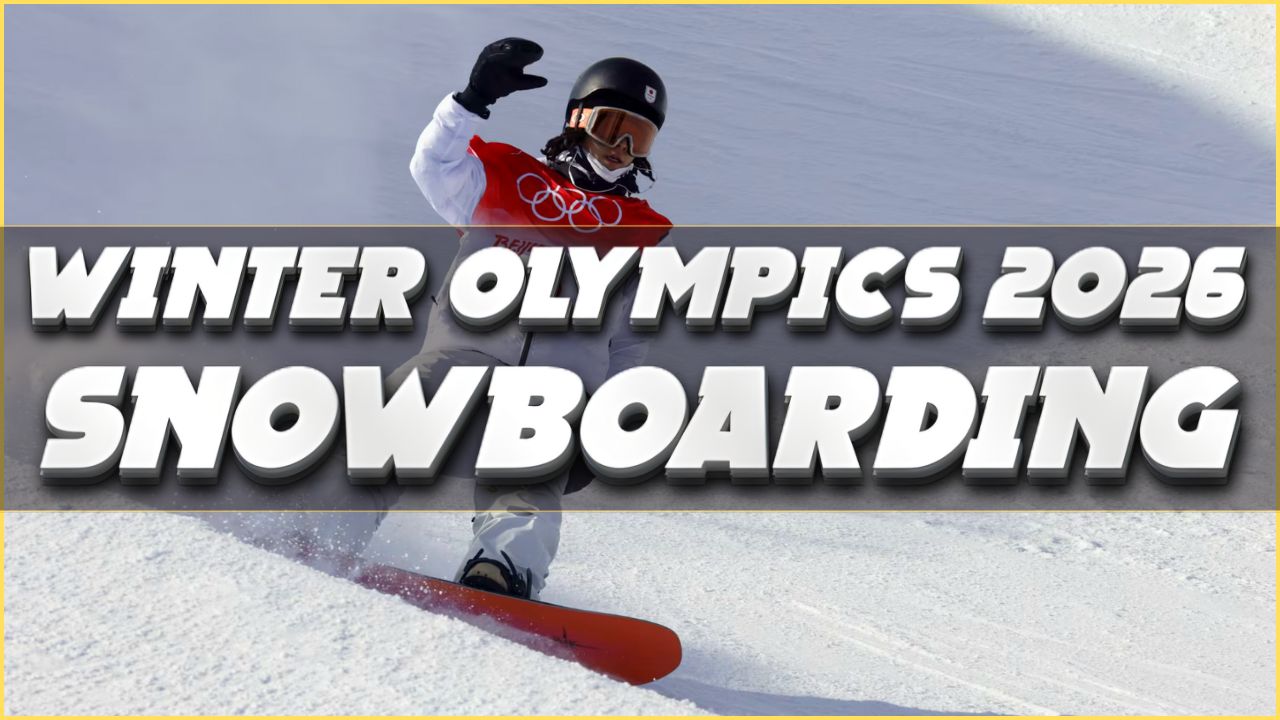

- Why 2026 Winter Olympics Snowboarding Is Set to Be the Most Exciting Yet
- Snowboarding Delivers First Big Moment at Milano–Cortina
- Snowboarding at the Winter Olympics: A Quick Context
- 2026 Winter Olympics Overview (Why These Games Are Unique)
- Snowboarding Events at the 2026 Winter Olympics
- Event-by-Event Breakdown
- Snowboarding Venues at Milano–Cortina 2026
- Current Scenario: Snowboarding Heading Into 2026
- Athletes to Watch at the 2026 Winter Olympics Snowboarding
- Judging Evolution and Scoring Transparency
- Why Snowboarding Is Crucial to Olympic Growth
- Fan Experience & Viewing in 2026
- Long-Term Impact of 2026 on Snowboarding
- Conclusion: Why 2026 Winter Olympics Snowboarding Matters
- FAQs
- 1. What events are included in 2026 Winter Olympics snowboarding?
- 2. Where will 2026 Winter Olympics snowboarding take place?
- 3. Why is 2026 Winter Olympics snowboarding important?
- 4. Which countries are strong in 2026 Winter Olympics snowboarding?
- 5. What makes 2026 Winter Olympics snowboarding different?
- 6. Will there be mixed events in 2026 Winter Olympics snowboarding?
- 7. How is judging handled in 2026 Winter Olympics snowboarding?
- 8. Who should watch 2026 Winter Olympics snowboarding?
- 9. How does 2026 Winter Olympics snowboarding impact young athletes?
- 10. Will 2026 Winter Olympics snowboarding grow the sport globally?
Why 2026 Winter Olympics Snowboarding Is Set to Be the Most Exciting Yet
Snowboarding has evolved from a countercultural winter pastime into one of the most watched, youth-driven sports of the Winter Olympics. At the 2026 Winter Olympics, snowboarding is once again set to play a defining role—blending athletic innovation, global rivalries, and fast-changing trends that reflect where winter sports are headed next.
Scheduled to take place in Italy, the 2026 Games will bring snowboarding into a new European spotlight, with iconic mountain venues, upgraded formats, and a fresh generation of riders ready to challenge Olympic history. This article offers a complete, long-form, editorial-grade guide to 2026 Winter Olympics snowboarding, covering events, venues, athletes, judging evolution, current developments, and why these Games matter more than ever.
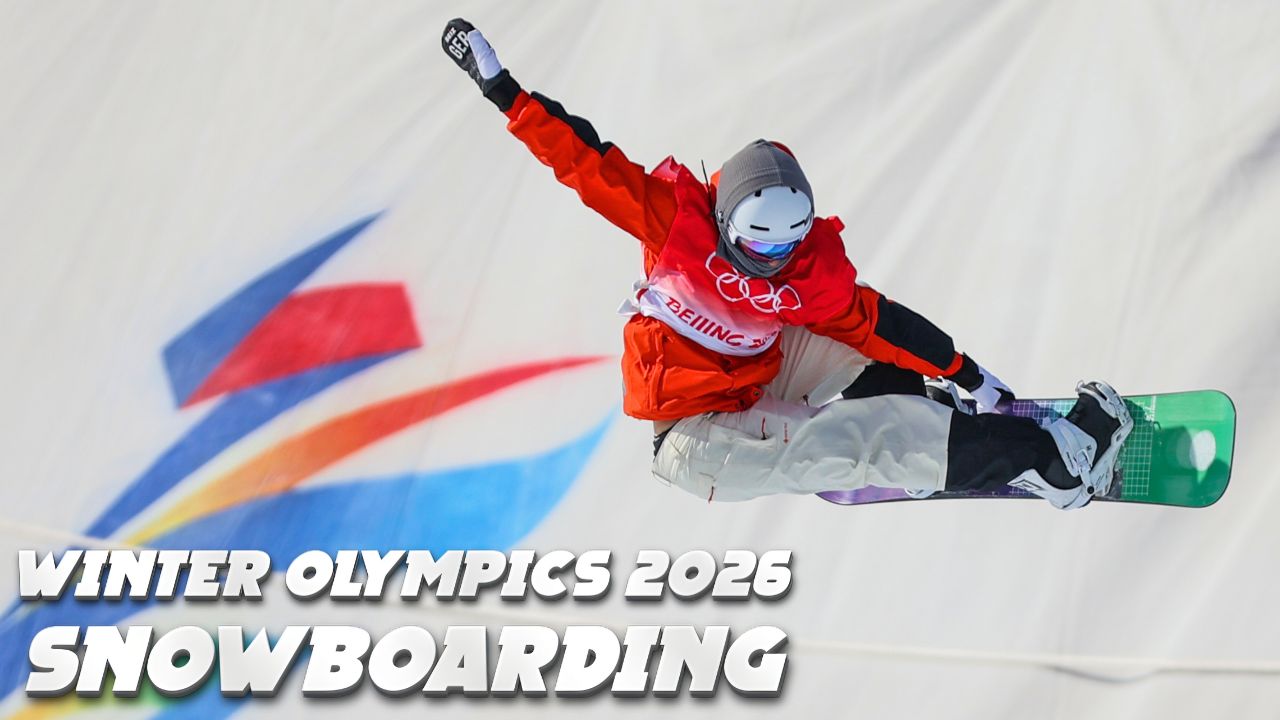
Snowboarding Delivers First Big Moment at Milano–Cortina
Snowboarding produced its first major headline at the 2026 Winter Olympics on 7 February 2026, with the men’s Big Air final setting the tone for what promises to be a fiercely competitive Games. At the Livigno Snow Park, Japan emerged as the standout nation, securing a historic one-two finish. Kira Kimura claimed the gold medal after delivering two high-difficulty, cleanly executed jumps, edging out his teammate Ryoma Kimata, who took silver. China’s Su Yiming completed the podium with bronze, reinforcing his reputation as one of the most consistent freestyle snowboarders on the Olympic stage.
Beyond the medal positions, the event highlighted the sport’s rapidly evolving competitive depth. Several young riders pushed the technical ceiling, with ambitious rotations and switch takeoffs becoming the norm rather than the exception. A few strong contenders narrowly missed the podium due to minor execution errors, underlining how unforgiving Big Air judging has become at the Olympic level. While opinions were divided on whether the final matched the intensity of the qualification round, the result clearly signaled a shift in momentum toward Asian snowboarding programs and confirmed that precision, consistency, and smart risk management will define success throughout the remaining snowboarding events at Milano–Cortina 2026.
Snowboarding at the Winter Olympics: A Quick Context
Snowboarding made its Olympic debut in Nagano 1998, initially facing skepticism from traditional winter sports circles. Over the last two decades, it has transformed into one of the Olympics’ most dynamic attractions, consistently delivering:
High TV and streaming viewership
Strong engagement among younger audiences
Viral moments across social media
Rapid technical progression in tricks and course design
By 2026, snowboarding is no longer just an “action sport add-on.” It is a core Olympic product, shaping how the Winter Games appeal to global audiences under 35.
2026 Winter Olympics Overview (Why These Games Are Unique)
The 2026 Winter Olympics, officially known as Milano–Cortina 2026, will be hosted across northern Italy. Unlike centralized Games of the past, these Olympics emphasize regional venues, sustainability, and legacy infrastructure.
Key Details at a Glance
Host Country: Italy
Host Cities: Milan & Cortina d’Ampezzo (plus regional alpine venues)
Dates: February 2026
Snowboarding Status: Core Olympic discipline with full medal slate
For snowboarding, this means world-class alpine terrain, natural elevation advantages, and courses designed with both performance and broadcast appeal in mind.
Snowboarding Events at the 2026 Winter Olympics
Snowboarding at Milano–Cortina 2026 will feature a mix of technical precision, freestyle creativity, and head-to-head racing, offering something for every type of winter sports fan.
Men’s & Women’s Snowboarding Events
Snowboarding events are expected to include:
Halfpipe
Slopestyle
Big Air
Snowboard Cross
Parallel Giant Slalom
Parallel Slalom
Mixed Team Events (where applicable)
Each event tests different skills—from amplitude and trick difficulty to tactical racing and split-second decision-making.
Event-by-Event Breakdown
Halfpipe Snowboarding
Halfpipe remains the most technically advanced snowboarding discipline at the Olympics.
What Defines Olympic Halfpipe in 2026
Massive pipe walls exceeding 7 meters
Focus on amplitude, execution, difficulty, and progression
Increased emphasis on clean landings and flow
Riders are expected to push double and triple cork combinations, while judges continue refining scoring systems to reward innovation without sacrificing safety.
Slopestyle Snowboarding
Slopestyle blends rails, jumps, and creative line choices, making it one of the most unpredictable Olympic events.
Why Slopestyle Matters
Rewards creativity and personal style
Allows riders to design unique runs
Appeals strongly to younger and digital-first audiences
At the 2026 Winter Olympics, course designers are expected to introduce modular features, allowing adaptability based on weather and snow conditions.
Big Air Snowboarding
Big Air is where snowboarding meets spectacle.
What to Expect in 2026
Single massive jump with limited attempts
Focus on maximum trick difficulty
High-risk, high-reward scoring
Big Air often produces the most viral Olympic moments—and Milano–Cortina is expected to lean heavily into prime-time presentation.
Snowboard Cross (SBX)
Snowboard Cross is the most chaotic and thrilling snowboard discipline.
Key Characteristics
Multiple riders racing simultaneously
Banked turns, jumps, rollers, and contact
Tactical positioning as important as speed
With European courses traditionally favoring technical layouts, 2026 could reward riders with strong race intelligence rather than pure aggression.
Parallel Slalom & Parallel Giant Slalom
These alpine-style events showcase snowboarding’s racing roots.
Why They Matter
Head-to-head elimination format
High precision and consistency
Strong European competitive tradition
Italy’s alpine heritage adds prestige to these events, especially with home-crowd energy expected to play a role.
Snowboarding Venues at Milano–Cortina 2026
While final venue confirmations continue, snowboarding competitions are expected to be held in established alpine locations with proven winter sports infrastructure.
Why Italian Alpine Venues Are Ideal
Natural altitude reduces reliance on artificial snow
Historic World Cup hosting experience
Spectator-friendly terrain
Strong European broadcast time-zone advantage
These factors collectively improve competition quality, athlete safety, and viewer experience.
Current Scenario: Snowboarding Heading Into 2026
Snowboarding enters the 2026 Winter Olympics at a pivotal moment.
Key Trends Shaping the Sport Right Now
1. Rapid Technical Progression
Athletes are landing tricks today that were considered impossible just one Olympic cycle ago. The gap between innovation and Olympic judging is narrowing, forcing federations to update scoring frameworks more frequently.
2. Younger Olympic Medalists
Teenage and early-20s riders now dominate podiums, reflecting:
Earlier specialization
Stronger youth development systems
Influence of X Games and World Cup circuits
3. Social Media Influence
Athletes now build global fanbases before their Olympic debut. Riders’ Instagram, YouTube, and TikTok presence directly affects sponsorships, visibility, and post-Olympic careers.
4. Athlete Safety & Longevity
Following injuries in previous Games, there is increased focus on:
Course safety
Training load management
Progressive qualification systems
These changes directly influence how snowboarding is presented at the 2026 Winter Olympics.
Athletes to Watch at the 2026 Winter Olympics Snowboarding
While final Olympic rosters will only be confirmed closer to the Games, several athlete profiles dominate pre-2026 discussions:
Established Champions
Riders aiming to defend or extend Olympic legacies
Veterans adapting to younger competition
Multi-event contenders seeking versatility medals
Rising Stars
Teenagers dominating World Cup circuits
Riders crossing over from X Games success
Athletes redefining style and trick selection
Geographic Power Shifts
Traditional dominance from the USA, Japan, and Canada
Strong European resurgence, especially in alpine disciplines
Emerging Asian programs producing elite freestyle riders
Judging Evolution and Scoring Transparency
Judging has long been one of snowboarding’s most debated topics.
What’s Improving for 2026
Clearer scoring breakdowns for difficulty, execution, and amplitude
Real-time score explanations for broadcasts
Data-assisted judging tools to reduce subjectivity
These improvements aim to boost viewer trust, athlete confidence, and competitive fairness.
Why Snowboarding Is Crucial to Olympic Growth
Snowboarding plays a strategic role beyond medals.
Olympic Value Beyond Competition
Drives younger demographics to Olympic broadcasts
Performs strongly on social and digital platforms
Attracts lifestyle and non-traditional sponsors
Bridges traditional sport and youth culture
For Milano–Cortina 2026, snowboarding is not just a sport—it’s a growth engine.
Fan Experience & Viewing in 2026
Snowboarding is built for modern consumption.
What Fans Can Expect
Enhanced camera angles and drone coverage
Slow-motion trick analysis
Athlete mic’d-up content for digital platforms
Behind-the-scenes training footage
These innovations increase dwell time, repeat viewing, and fan connection.
Long-Term Impact of 2026 on Snowboarding
The 2026 Winter Olympics will influence snowboarding well beyond the podium.
Lasting Effects
Increased participation at grassroots levels
Investment in European snow parks and training centers
Stronger pathways from youth competition to Olympic qualification
Continued blending of competitive and lifestyle snowboarding
Conclusion: Why 2026 Winter Olympics Snowboarding Matters
The 2026 Winter Olympics snowboarding events represent more than a competition—they mark a turning point in how the sport is judged, consumed, and culturally positioned. With Italy’s alpine backdrop, a new generation of fearless athletes, and evolving Olympic priorities, snowboarding in 2026 is poised to deliver some of the most memorable moments of the Winter Games.
For fans, athletes, and the Olympic movement itself, Milano–Cortina 2026 is not just another chapter—it’s a statement about the future of winter sport.
Read More >>>
FAQs
1. What events are included in 2026 Winter Olympics snowboarding?
2026 Winter Olympics snowboarding features halfpipe, slopestyle, big air, snowboard cross, parallel slalom, and parallel giant slalom events.
2. Where will 2026 Winter Olympics snowboarding take place?
2026 Winter Olympics snowboarding competitions will be held at alpine venues in northern Italy during the Milano–Cortina Games.
3. Why is 2026 Winter Olympics snowboarding important?
2026 Winter Olympics snowboarding is important due to evolving judging, younger athletes, and rising global youth engagement.
4. Which countries are strong in 2026 Winter Olympics snowboarding?
The USA, Japan, Canada, and European nations are expected to dominate 2026 Winter Olympics snowboarding events.
5. What makes 2026 Winter Olympics snowboarding different?
2026 Winter Olympics snowboarding emphasizes safety, judging transparency, and enhanced broadcast technology.
6. Will there be mixed events in 2026 Winter Olympics snowboarding?
Yes, 2026 Winter Olympics snowboarding may include mixed team formats to boost competition and viewership.
7. How is judging handled in 2026 Winter Olympics snowboarding?
Judging in 2026 Winter Olympics snowboarding focuses on difficulty, execution, amplitude, and progression.
8. Who should watch 2026 Winter Olympics snowboarding?
Fans of freestyle sports, youth culture, and elite winter competition will enjoy 2026 Winter Olympics snowboarding.
9. How does 2026 Winter Olympics snowboarding impact young athletes?
2026 Winter Olympics snowboarding inspires youth participation and strengthens global talent development pathways.
10. Will 2026 Winter Olympics snowboarding grow the sport globally?
Yes, 2026 Winter Olympics snowboarding is expected to boost global exposure, sponsorships, and long-term growth.